Choosing a mattress is no longer a simple choice between "firm" and "soft." With the average high-quality bed costing between $800 and $3,000, the stakes for your sleep health and your wallet are significant. Most shoppers arrive at a crossroads: the deep, pressure-relieving "hug" of an all-foam bed or the responsive, breathable "float" of a hybrid. The central question isn't which construction is objectively superior, but which one aligns with your body mass index (BMI), primary sleep position, and internal thermostat. This guide serves as a diagnostic tool to help you navigate the memory foam vs. hybrid mattress debate, moving past marketing buzzwords to the structural realities of steel coils and viscoelastic chemicals. By the end of this piece, you will know exactly which material profile will prevent morning back pain and midnight overheating.
Both mattress type and firmness influence how a bed feels. Understanding the mattress firmness scale can help readers compare memory foam and hybrid options based on their comfort preferences.
Quick Answer / Key Takeaway
Choose Memory Foam if: You are a side sleeper under 230 lbs, prioritize "deadening" motion transfer from a partner, and prefer a "cradled" sensation that contours deeply to joints.
Choose a Hybrid if: You weigh over 230 lbs, sleep hot, or prefer a "responsive" surface that makes it easy to change positions and get out of bed.
The Back Pain Verdict: Hybrids generally offer superior lumbar support for back sleepers, while memory foam excels at relieving sharp pressure points for side sleepers.
The Decision Matrix: Memory Foam vs. Hybrid
Feature | Memory Foam (All-Foam) | Hybrid (Coils + Foam) |
|---|---|---|
Primary Feel | Deep contouring; "Sleeping IN" | Responsive bounce; "Sleeping ON" |
Cooling Ability | Passive (Gel/PCM infusions) | Active (Structural airflow through coils) |
Motion Isolation | Exceptional (Best for light sleepers) | Moderate to High (Depends on foam thickness) |
Edge Support | Generally weak (Potential roll-off) | Strong (Often reinforced perimeter coils) |
Durability | 7–10 years (Density dependent) | 8–12 years (Steel coil longevity) |
Weight Support | Best for <230 lbs | Best for all weights, especially 250+ lbs |
Mattress materials can influence how warm or cool a bed feels, making bedroom temperature another factor worth considering. Find out what room temperature is best for sleep when comparing mattress options.
The Structural DNA: Understanding Material Composition
To make an informed memory foam vs. hybrid mattress choice, you must look beneath the polyester cover. The internal architecture determines how the mattress reacts to your body heat and weight over a decade of use. A memory foam mattress comparison reveals that while both types use foam, the way they support your spine is fundamentally different.
Memory Foam: The Science of Viscoelasticity
Memory foam was originally developed by NASA in 1966 to improve seat cushioning and crash protection for airline pilots. It was later commercialized by Tempur-Pedic in 1992. The material is technically known as viscoelastic polyurethane foam. It reacts to both heat and pressure, which allows it to soften and mold to the specific shape of your body.
When you evaluate memory foam, the most important metric is PCF, or Pounds per Cubic Foot. This measures the density of the foam. High-density foam, typically between 4.0 and 5.0+ PCF, offers the best durability and deepest contouring. It feels substantial and takes longer to return to its original shape once you move. Low-density foam, which falls below 3.0 PCF, feels lighter and more breathable, but it is prone to sagging and permanent body indentations within a few years.
The signature "hug" of memory foam comes from its slow-response energy absorption. When you lie down, the foam cells compress and spread the load across the surface. This creates a sensation of "sinking into" the bed rather than sitting on top of it. This material is excellent at deadening motion. If a partner tosses and turns, the energy is absorbed locally rather than traveling across the mattress.
The Hybrid Architecture: Best of Both Worlds
A hybrid mattress is a multi-layer bed that combines a pocketed coil support core with at least two to three inches of comfort foam on top. This design aims to provide the pressure relief of foam without the "stuck" feeling of an all-foam construction. The coils provide an active pushback that keeps the body in a more neutral, "floating" position on the surface.
The quality of a hybrid depends on its coil count and gauge. A standard high-quality Queen hybrid should contain between 800 and 1,200 coils. The gauge refers to the thickness of the steel wire. A lower gauge, such as 12 or 13, indicates a thicker and firmer wire that provides robust support. A higher gauge, like 15 or 16, is thinner and more flexible, offering a softer feel.
Unlike traditional innersprings where coils are wired together, hybrid coils are individually wrapped in fabric pockets. This allows them to move independently, which significantly improves motion isolation compared to old-fashioned mattresses. The combination of steel and foam creates a responsive surface. When you move, the coils react instantly, making it much easier to change positions or get out of bed in the morning.
Temperature Regulation: The Cooling Myth vs. Reality
Temperature is one of the most common complaints in the mattress industry. Many sleepers ask, " Do hybrid mattresses sleep cooler? The answer lies in the physics of heat dissipation and the difference between cooling memory foam and hybrid designs.
Why Memory Foam Traps Heat
Memory foam is a dense insulator. Because it contours so closely to the body, it wraps around your skin and limits the amount of air that can circulate. The chemical structure of traditional memory foam is "closed-cell," meaning air is trapped within the material. As your body temperature rises, the foam absorbs that heat and holds onto it, which can lead to a "sleeping hot" sensation.
Many manufacturers attempt to fix this by adding "cooling gel" or copper infusions into the foam. It is important to understand that these are often temporary heat sinks. A gel infusion may feel cool to the touch initially, but it typically reaches thermal equilibrium with your body after 20 to 30 minutes. Once the gel is saturated with heat, the cooling effect stops.
Modern high-end foams use open-cell structures or Phase Change Material (PCM) covers to mitigate this. PCM covers use micro-encapsulated waxes that absorb and release heat to maintain a specific temperature. While these technologies help, they are still working against the natural insulating properties of the foam itself. If you are a naturally hot sleeper, an all-foam bed will always be a challenge.
Structural Airflow in Hybrids
Hybrids have a natural advantage because of their physical structure. The support core of a hybrid is mostly space. The gaps between the pocketed coils act as a ventilation system. As you move during the night, you effectively "pump" air through the mattress, which flushes out body heat and brings in cooler room air.
This structural airflow is far more effective than chemical infusions. Because the heat has a clear path to escape the mattress through the sides and bottom, the surface stays closer to room temperature. This makes hybrids the preferred choice for anyone who suffers from night sweats or lives in a warm climate.
The Helix Midnight Luxe is a prime example of a hybrid designed for temperature regulation. It uses a breathable Tencel cover and a layer of copper-infused foam, but its primary cooling power comes from the pocketed coil layer that allows heat to exit the mattress core. This combination of material science and structural engineering ensures a neutral sleep surface throughout the night.
Readers comparing memory foam and hybrid mattresses may also want to understand how memory foam differs from latex. Explore the latex vs memory foam mattress comparison to see the advantages and limitations of each material.
The BMI Factor: Choosing by Body Weight
Your body weight determines how much you will compress the materials in a mattress. This is why a bed that feels like a "cloud" to a 130-pound person might feel like "quicksand" to someone who weighs 270 pounds. Understanding the hybrid mattress-heavy-person relationship is vital for long-term comfort.
The Heavyweight Challenge (250+ lbs)
Sleepers who weigh more than 250 pounds put significant stress on mattress materials. In an all-foam bed, a heavy sleeper often compresses the comfort layers entirely and "bottoms out" on the dense polyfoam base. This leads to painful pressure points and a lack of support. Furthermore, foam tends to soften faster under heavier loads, which can lead to sagging in the center of the bed within just a few years.
Hybrids are the best hybrid mattress for heavy people because they utilize steel for support. Steel is far more durable than polyurethane foam and provides the necessary tension to keep the spine aligned. A hybrid with 13-gauge coils offers the structural integrity required to support higher weight capacities without losing its shape.
The Titan Plus by Brooklyn Bedding is specifically engineered for this demographic. It features heavy-duty TitanCaliber coils that are stiffer than standard mattress coils. This ensures that the sleeper stays on top of the mattress rather than sinking through it. For those in higher weight brackets, the durability of steel is not just a preference; it is a necessity for spinal health.
Lightweight and Average Sleepers
Individuals who weigh under 130 pounds often have the opposite problem. They may find that high-density memory foam feels too firm. Because they do not apply enough pressure or generate enough heat to "activate" the viscoelastic properties of the foam, they end up resting on top of a hard surface rather than sinking in for pressure relief.
For lightweight sleepers, a softer memory foam or a hybrid with higher-gauge, thinner coils is the better strategy. These materials have more "give" and will contour to a lighter frame. Average-weight sleepers (130 to 230 lbs) typically have the most flexibility and can choose based on their personal preference for "sink" versus "bounce."
Sleep Positions and Pain Relief
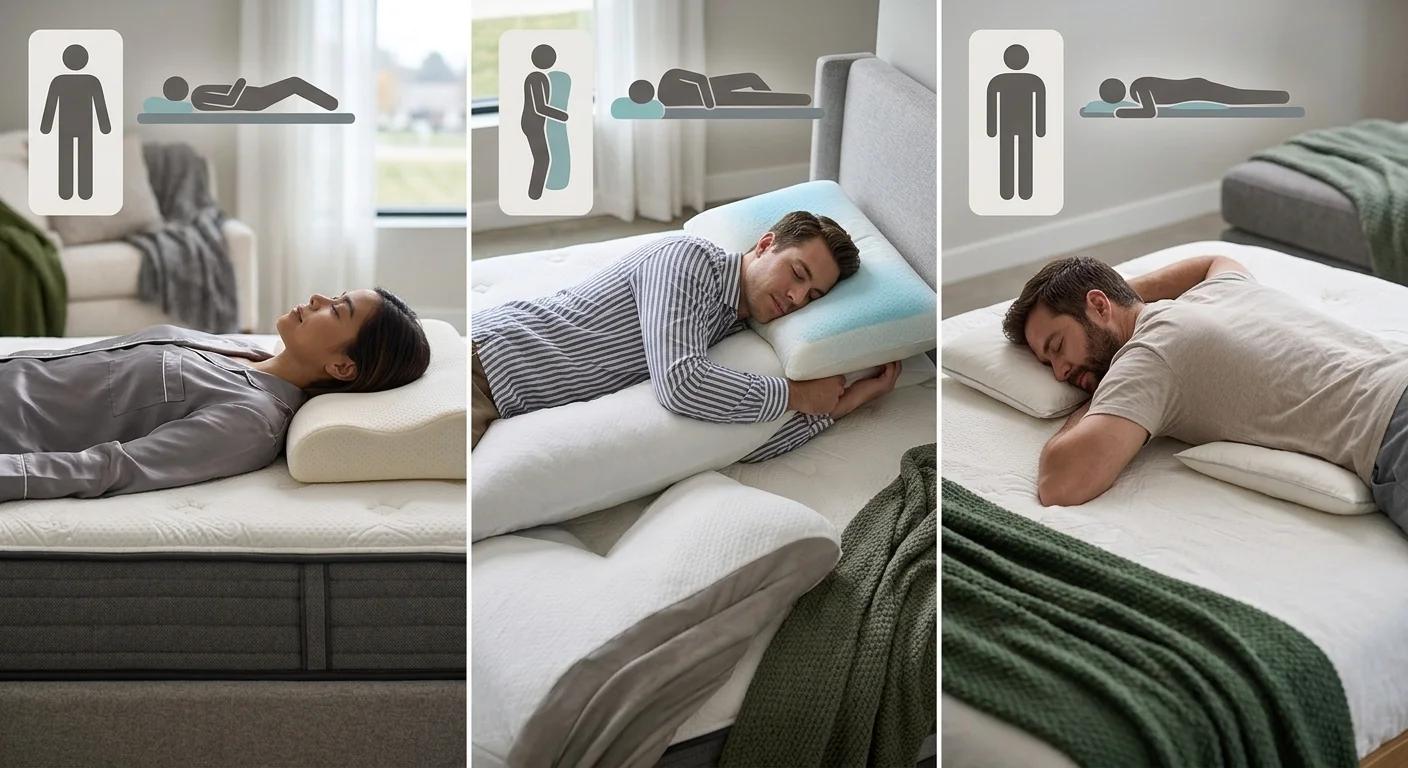
The way you position your body at night dictates where you need support. The memory foam vs. hybrid for back pain debate often comes down to whether you need a "cradle" or "pushback."
Side Sleepers and Pressure Points
Side sleeping is the most common position, but it is also the hardest on the joints. When you lie on your side, your entire body weight is concentrated on the narrow points of your shoulders and hips. If the mattress is too firm, these points push back against the body, leading to restricted blood flow and the "pins and needles" sensation.
When looking at hybrid vs. memory foam for side sleepers, all-foam memory foam beds often win. They provide the deep sinkage necessary to allow the shoulders and hips to submerge into the mattress. This keeps the spine in a straight, horizontal line. The Nectar Premier is a strong contender here because it features a thick layer of high-density memory foam that contours specifically to these heavy pressure points, preventing joint impingement.
Back Pain and Spinal Alignment
For those suffering from chronic lower back pain, the goal is neutral spinal alignment. Chiropractors generally recommend a mattress that supports the natural "S" curve of the spine. If a mattress is too soft, the hips sink too low, which rounds the lower back and strains the muscles.
The "pushback" of a hybrid is often superior for back sleepers. While the foam layers provide comfort, the coils provide an upward force that prevents the pelvis from dipping too far into the bed. This active support helps maintain the lumbar curve. If you wake up with a dull ache in your lower back, your current mattress likely lacks the structural tension provided by a coil system.
Mattress construction and firmness are both important considerations when choosing a bed for your comfort needs. Learn whether a firm mattress is better for your back before deciding which option suits you.
Expert Tips & Pro Moves
The 30-Day Rule: Never judge a mattress on the first few nights. Both foam and coils require a "break-in" period. The cells in the foam need to open up, and the coils need to lose their initial factory stiffness. Your body also needs time to unlearn old postural habits from your previous bed.
Check Your Slats: If you use a slatted frame for an all-foam bed, ensure the slats are no more than 3 inches apart. If the gaps are wider, the foam will bulge through the openings, leading to premature sagging and likely voiding your warranty. Verify with the manufacturer if a solid bunkie board is required.
The Edge Support Test: If you sit on the edge of the bed to put on shoes or if you sleep near the very edge, prioritize a hybrid. Most quality hybrids feature reinforced perimeter coils (thicker gauge steel) around the edges. All-foam beds often compress completely at the edge, which can make you feel like you are rolling off.
CertiPUR-US is the Baseline: Ensure any foam mattress carries this certification. It guarantees the foam is made without ozone depleters, PBDE flame retardants, heavy metals, or formaldehyde. It also ensures low VOC (Volatile Organic Compound) emissions for indoor air quality.
Frequently Asked Questions
Is a hybrid or memory foam mattress better for back pain?
A medium-firm hybrid is generally superior for lower back pain. The pocketed coil system provides active pushback to keep the spine aligned, while the foam top layers cushion the lumbar region. All-foam beds can sometimes allow the hips to sink too deeply, which leads to spinal misalignment and muscle strain.
Do memory foam mattresses sleep hotter than hybrids?
Yes. Memory foam is a dense material that absorbs and retains body heat. While gel infusions help, they are passive solutions. Hybrids sleep cooler because the space between the steel coils allows for constant airflow. This ventilation carries heat away from the body throughout the night.
What is the lifespan of a hybrid vs memory foam mattress?
A high-quality hybrid typically lasts 8 to 12 years because the steel coils maintain their structural integrity longer than foam. A high-density memory foam mattress lasts 7 to 10 years. Low-density foams, specifically those under 3.0 PCF, may begin to sag or show permanent body indentations in as little as 3 to 5 years.
Which mattress type is best for side sleepers?
Memory foam is usually the best choice for side sleepers. It provides the deep pressure relief necessary to "cradle" the shoulders and hips. This prevents the pressure buildup that causes people to toss and turn. Look for a "Medium" firmness level to ensure the foam has enough give to accommodate your joints.
Are hybrid mattresses better for heavy people?
Yes, hybrids are significantly better for individuals over 250 lbs. The steel coil base provides the structural integrity needed to prevent "bottoming out" on the support core. Heavy sleepers should look for hybrids with low-gauge (12 or 13) coils and high-density transition foams for maximum durability.
Why does my new memory foam mattress have a chemical smell?
This is known as "off-gassing." It is caused by the release of Volatile Organic Compounds (VOCs) trapped during the manufacturing and vacuum-sealing process. If the mattress is CertiPUR-US certified, these gases are non-toxic. The smell typically dissipates within 24 to 72 hours if you leave the mattress in a well-ventilated room.
Conclusion
Choosing between memory foam and a hybrid is a decision that dictates your physical recovery for the next decade. If you value a pressure-free "hug" and total motion isolation, an all-foam memory foam mattress is your ideal match. However, if you struggle with heat or require robust support for a higher body weight, the structural advantages of a hybrid are undeniable. Before you click "buy," verify your bed frame's slat spacing and confirm the trial period. Most reputable brands offer at least 100 nights to ensure your choice supports your spine as intended.