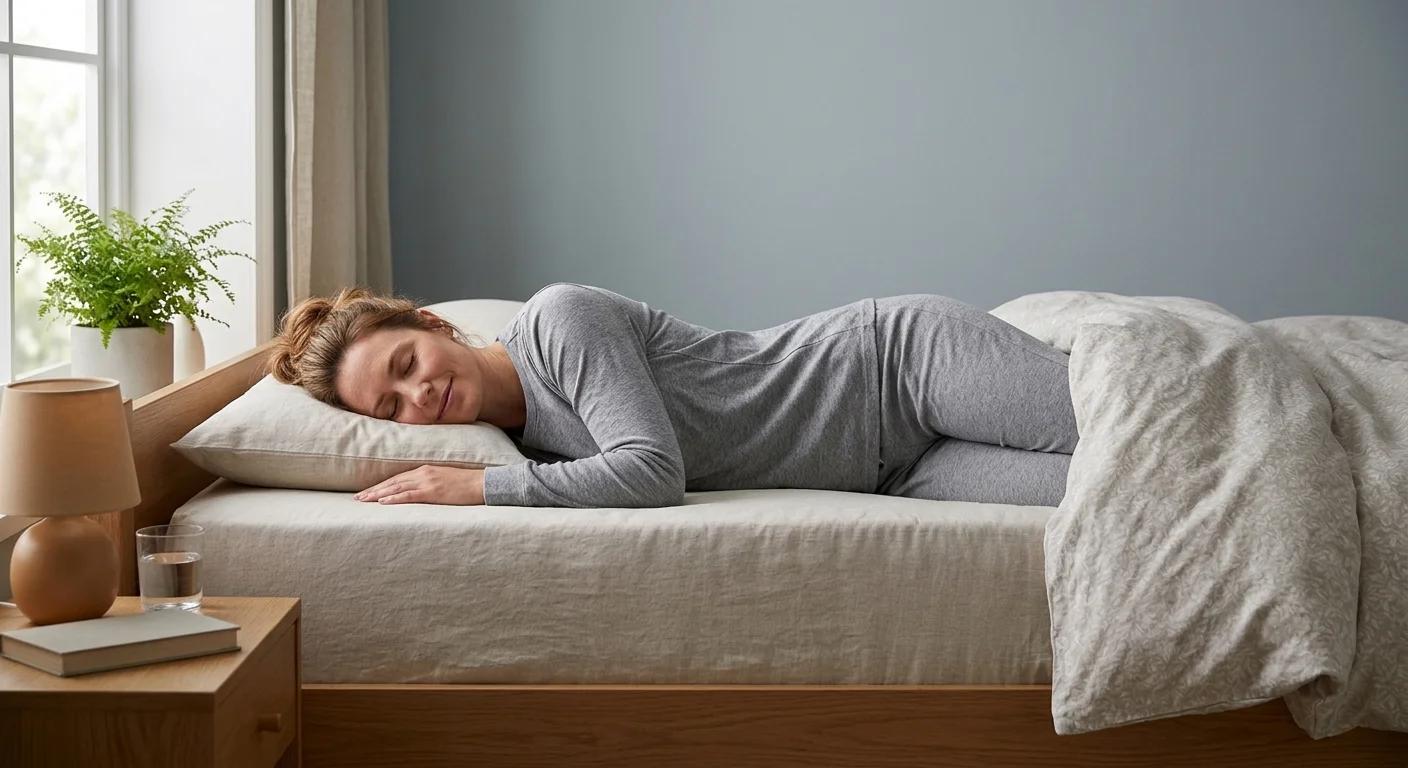
You likely arrived here because your current sleep setup is failing you. Perhaps you wake up with a dull ache at the base of your skull, or you spend half the night bunching up your pillow only for it to go flat moments later. Most people treat pillow shopping like a comfort test, squeezing a few options in a showroom and picking the one that feels softest. This is a mistake. A pillow is not just a soft landing spot for your head; it is a specialized tool designed to maintain the structural integrity of your neck while you are unconscious.
The reason a top-rated pillow might feel like a brick to you while your partner loves it comes down to biomechanics. Every person has a unique combination of shoulder width, head weight, and mattress sinkage. These factors create a specific physical gap between your ear and the mattress. If your pillow does not fill that gap precisely, your spine falls out of alignment. Learning how to choose a pillow is an exercise in engineering a neutral spine, ensuring your cervical vertebrae maintain their natural C-curve from dusk until dawn.
Your pillow and mattress should work together to keep your spine properly aligned, so understanding the mattress firmness scale can help you create a more comfortable sleep setup.
Quick Answer / Key Takeaway
Prioritize Alignment: The primary goal of any pillow is to keep your ears, shoulders, and hips in a straight, neutral line. This prevents the muscles in your neck and upper back from straining to compensate for a lack of support.
Match Loft to Mattress: Your mattress firmness is the foundation. A firm mattress requires a higher loft pillow because you sit on top of the surface. A plush mattress requires a lower loft because your torso sinks deeper into the bed, narrowing the gap.
Shoulder Width Matters: Side sleepers with broad shoulders need a significantly higher loft than those with petite frames. If the pillow is too low, the head tilts down, compressing the shoulder and neck.
Material Choice: Use shredded memory foam or latex for adjustable support and responsive pushback. Opt for low-fill down or ultra-thin foam for the minimal elevation required by stomach sleepers.
The Pillow Selection Matrix
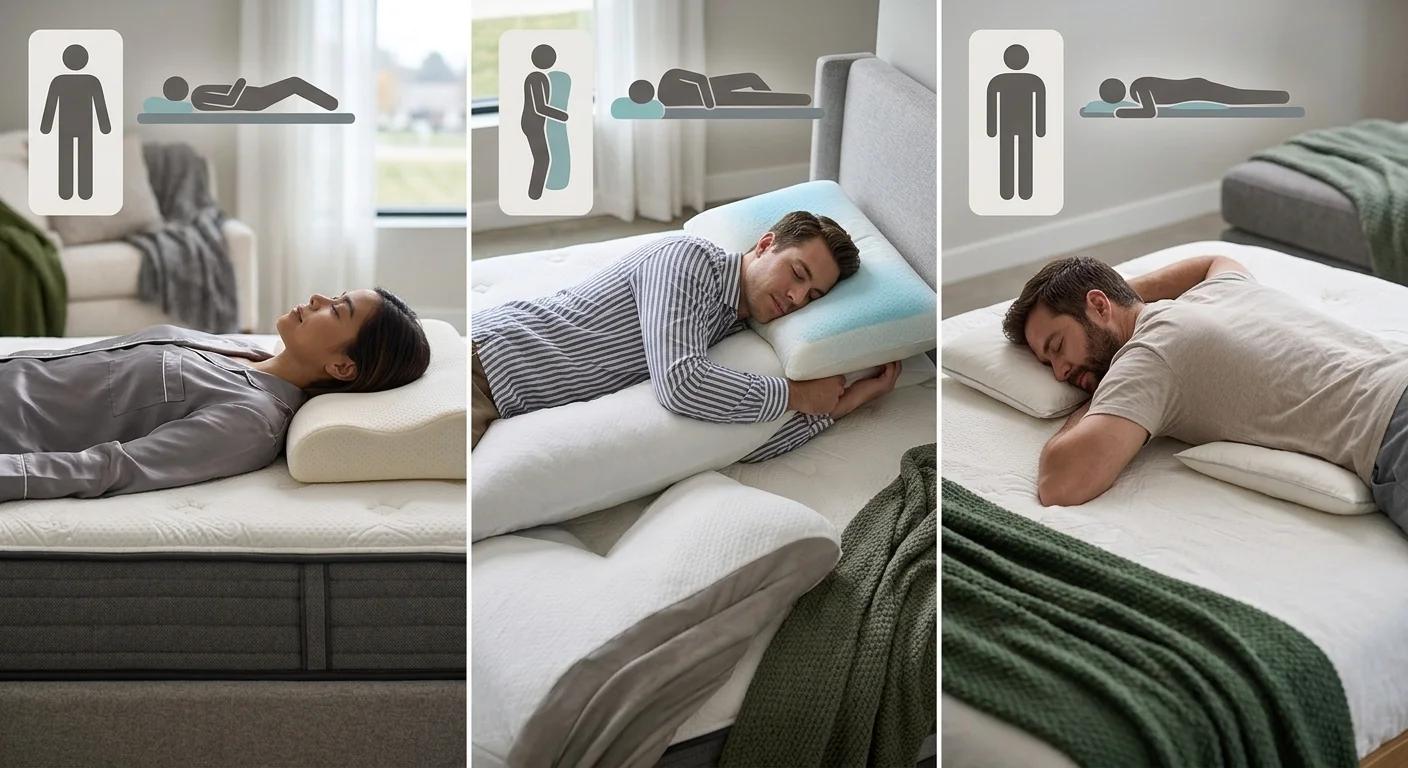
Sleep Position | Recommended Loft | Ideal Material | Key Structural Feature |
|---|---|---|---|
Side Sleeper | High (5 inches or more) | Shredded Foam / Latex | 2-inch Gusseted Side Panel |
Back Sleeper | Medium (3 to 5 inches) | Contoured Foam / Latex | Center indentation for head |
Stomach Sleeper | Low (Under 3 inches) | Soft Down / Thin Foam | Compressible, ultra-slim profile |
Combination | Adjustable | Shredded Foam and Kapok | Responsive, moldable fill |
Along with choosing a pillow that supports your sleeping position, maintaining the right room temperature for sleep can help create a more comfortable sleeping environment.
The Mechanics of Loft and Cervical Spinal Alignment
To understand how to choose a pillow, you must first master the concept of loft. Loft refers to the uncompressed height of a pillow. In the bedding industry, we categorize these into three tiers: low loft is under 3 inches, medium loft is between 3 and 5 inches, and high loft is anything over 5 inches. While these numbers provide a baseline, the real height changes the moment you lay your head down. This is where the distinction between firmness and support becomes vital.
A pillow can be firm but offer zero support if the loft is incorrect. For example, a high-loft, firm pillow used by a back sleeper will push the chin toward the chest. This position, known as cervical flexion, strains the posterior neck muscles and can lead to tension headaches. Conversely, a soft pillow with low loft used by a side sleeper allows the head to drop toward the shoulder, overstretching the side of the neck. The goal is a neutral spine where the head is not tilted up or down, but sits exactly as it would if you were standing with perfect posture.
The role of the gusset in side sleeping
If you look at the construction of high-end pillows, you will often see a vertical band of fabric connecting the top and bottom panels. This is called a gusset. Most standard pillows are "knife-edge," meaning the top and bottom fabrics are sewn directly together, causing the pillow to taper at the edges. For a side sleeper, this taper is a design flaw. It means the support is highest in the center and lowest where your neck actually rests.
A gusset, usually measuring 1 to 2 inches, creates a boxy shape that allows the fill to distribute evenly to the very edge of the pillow. This structural side panel ensures that the loft remains consistent from the center to the perimeter. When you are trying to figure out how to find the right pillow, look for this feature if you spend most of your night on your side. It provides a flat, stable surface that fills the space between your ear and the mattress without the fill shifting away under pressure.
How to Choose a Pillow Based on Mattress Firmness
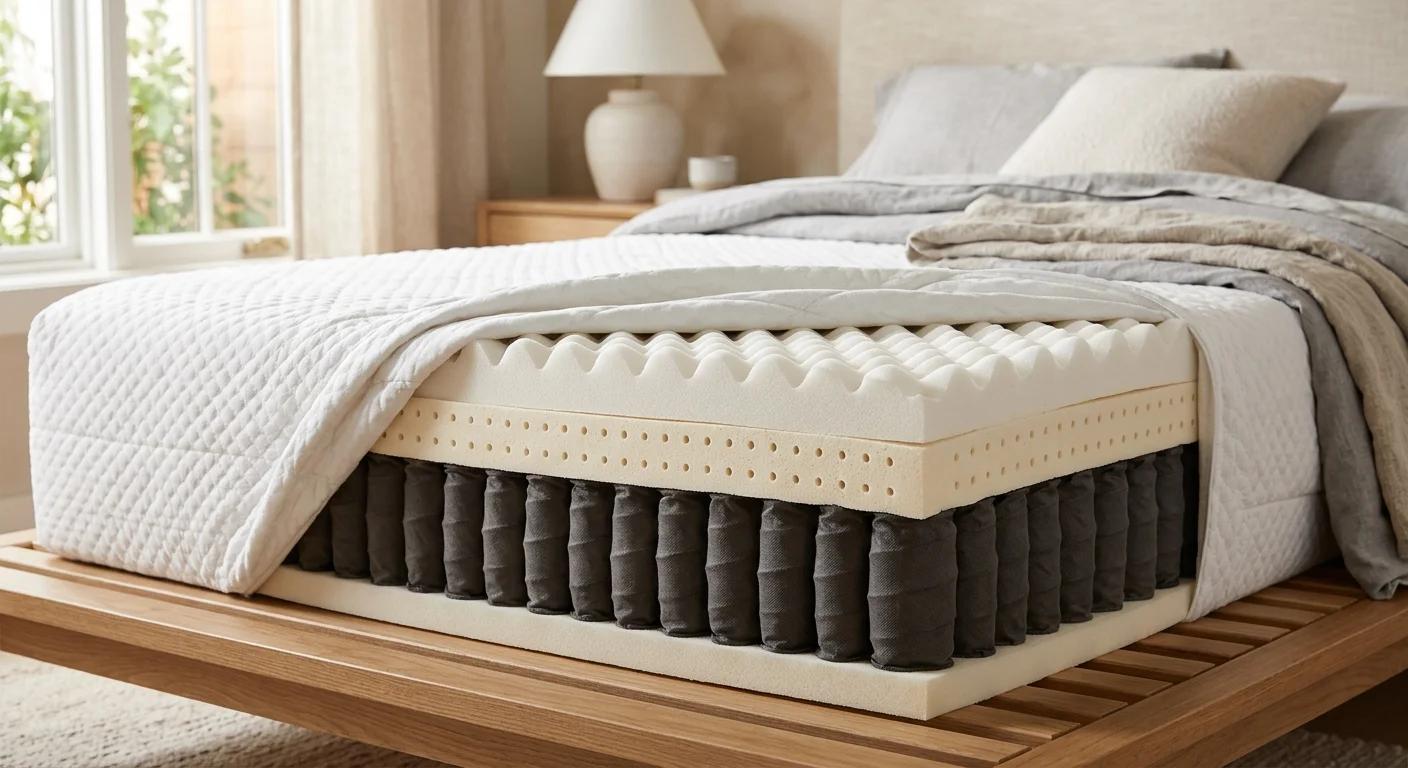
One of the most overlooked variables in sleep health is the relationship between your pillow and your mattress. They function as a single system. The firmness of your mattress directly dictates the required loft of your pillow. If you sleep on a firm mattress, your body remains on the surface. This creates a wide, cavernous gap between your head and the bed. To fill this, you need a high-loft pillow to maintain cervical spine alignment.
If you sleep on a plush or pillow-top mattress, your heavier areas, like your shoulders and hips, sink several inches into the comfort layers. This sinking action effectively brings the mattress surface closer to your head. If you use a high-loft pillow on a soft mattress, your head will be propped up at an unnatural angle because the "gap" has been reduced by your body's sinkage. In this scenario, a medium or even low loft is necessary to prevent neck strain. This is why a pillow that felt great in a store might feel terrible at home; the store mattress likely had a different firmness level than yours.
The shoulder width variable
Generic advice often tells side sleepers to just "get a firm pillow," but this ignores human anatomy. A person with a 20-inch shoulder span has a much larger distance to bridge than someone with a 14-inch span. This is the "content gap" in most retail guides. To find your specific needs, perform a simple measurement: have a partner measure from the base of your neck to the outside edge of your acromion process (the bony point of your shoulder).
This measurement is your ideal uncompressed loft. If you have broad shoulders and sleep on a firm mattress, you may need a loft as high as 6 or 7 inches. If you have a petite frame and sleep on a soft memory foam mattress, 4 inches might be your limit. Ignoring your shoulder width is the fastest way to develop rotator cuff pain, as a pillow that is too low forces your bottom shoulder to collapse forward to support your head.
Just as pillow materials affect comfort and support, mattress materials matter too, so comparing latex and memory foam mattresses can help you understand which option suits your sleep preferences.
Side Sleeper Strategy: Filling the Gap
Side sleepers face the most significant mechanical challenge because they have the largest gap to fill. In this position, the weight of the head, which is roughly 10 to 11 pounds, is concentrated on a small surface area of the pillow. Traditional down pillows are often a poor choice for side sleepers because they lack structural pushback. While they feel luxurious, they compress almost to the mattress surface within an hour, leaving the neck unsupported for the remainder of the night.
For side sleepers, the focus should be on materials that offer buoyancy. Talalay latex or high-density shredded memory foam are the gold standards here. These materials compress enough to be comfortable but provide a consistent upward force that keeps the head elevated. This "pushback" is what prevents the gradual misalignment that leads to waking up with a stiff neck.
Product solution: Adjustable shredded fill
The Coop Home Goods Original pillow is a standout solution for side sleepers because it addresses the variability of shoulder width. It is filled with a blend of shredded memory foam and microfiber that can be added or removed. This allows you to customize the loft to your exact mattress sinkage and frame size. If you find your head tilting down, you add a few handfuls of fill. If you feel your neck is being pushed upward, you remove some. This level of customization is the most reliable way to achieve the best pillow loft for side sleepers without the guesswork of buying multiple fixed-loft options. The foam is CertiPUR-US certified, ensuring it is free from harmful chemicals and heavy metals.
Back and Stomach Sleeper Solutions
Back sleepers require a delicate balance. The goal is to support the natural C-curve of the neck without causing the head to tilt forward. If the pillow is too high, it creates a "chin-to-chest" position that can restrict airways and lead to snoring. If it is too low, the head tilts backward, which can strain the throat muscles and lead to a dry mouth or acid reflux issues.
A medium-loft pillow with a slight center depression is ideal for this position. This allows the back of the head to sit lower while the neck is supported by a firmer roll of material. The Saatva Latex Pillow is an excellent choice for back sleepers. It features a shredded latex core surrounded by a down-alternative layer. This construction provides a buoyant, medium-loft feel that prevents the head from sinking too deep while maintaining the necessary support for the cervical spine.
Stomach sleepers: Minimizing Spinal Hyperextension
Stomach sleeping is widely considered the most biomechanically stressful position. It forces the neck to be turned at a 90-degree angle for hours, which can lead to significant rotation-related pain. The primary goal for a stomach sleeper is to keep the head as close to the mattress as possible to prevent the spine from arching backward into hyperextension.
A high pillow in this position is a recipe for lower back pain, as the arch in the neck creates a chain reaction that compresses the lumbar spine. If you cannot transition to side or back sleeping, you should use an ultra-thin pillow or even no pillow at all under your head. The Brooklinen Down Pillow (Plush) is a suitable option here. It is designed with a low fill power that makes it highly compressible. When you lay your head on it, it flattens out significantly, providing just enough cushion for the face without lifting the neck out of alignment. This is a key strategy when you need to choose a pillow for neck pain specifically caused by stomach sleeping.
Material Realities vs. Marketing Myths
The market is flooded with materials claiming to be the next revolution in sleep, but most fall into three categories: down, memory foam, and latex. Down is prized for its moldability and "cloud-like" feel. However, it requires frequent fluffing and lacks the structural integrity needed for long-term support. Memory foam offers excellent pressure relief by contouring to the shape of your head, but solid blocks of foam can sometimes feel too restrictive, "locking" your head in one place and making it difficult to turn over.
Talalay latex is often the preferred choice for design-conscious sleepers who want a natural, breathable option. Unlike memory foam, which reacts to heat and "sinks," latex is responsive and pushes back. It is also naturally antimicrobial and dust mite resistant. When considering pillow loft and firmness, latex provides the most consistent loft over time, as it does not "settle" or flatten like polyester or down.
The cooling pillow Myth
"Cooling" is perhaps the most overused marketing term in the bedding industry. Many brands use Phase Change Material (PCM) coatings or blue-tinted gels that feel cold to the touch in a store. However, these materials often equalize to your body temperature within twenty minutes, leaving you just as warm as before.
True cooling comes from structural airflow, not chemical coatings. Shredded fills, aerated latex with pin-core holes, or natural buckwheat hulls allow air to circulate through the pillow. If you are a hot sleeper, ignore the "cooling gel" labels and look for breathable shell materials like percale cotton, linen, or bamboo viscose. These fabrics allow heat to escape rather than trapping it against your skin.
If you sleep on your side or back, proper spinal alignment matters, so understanding whether a firm mattress is better for your back can help you choose the right combination of pillow and mattress support.
Expert Tips and Pro Moves
The Fold Test: To check if your current pillow is dead, fold it in half. If you have a polyester or down pillow and it stays folded or slowly lumbers back to shape, the internal structure has collapsed. A healthy pillow should spring back to its original flat shape immediately. If it fails the fold test, it is no longer providing the support needed for your neck.
The Break-In Period: Do not judge a new memory foam or latex pillow on the first night. High-quality materials often have a break-in period of 3 to 7 days. More importantly, your neck muscles may have spent years compensating for poor alignment. It takes time for those muscles to relax into a new, correct position.
Stop Stacking for Reading: Many people use their primary sleep pillows to prop themselves up while reading or watching television. This concentrated pressure on the edges of the pillow destroys the loft and breaks down the fibers or foam. Use a dedicated firm Euro sham or a wedge pillow for sitting up, and save your sleep pillow exclusively for lying flat.
Frequently Asked Questions
How often should I replace my pillow?
Polyester and down pillows generally last 1 to 2 years before they lose their structural integrity. Memory foam pillows can last 2 to 3 years, while high-quality latex pillows often last 4 years or more. Beyond support, pillows accumulate skin cells, oils, and dust mites over time. If you wake up with congestion or skin breakouts, it may be time for a replacement regardless of the loft.
What is the best pillow for someone who changes positions all night?
Combination sleepers need a responsive pillow that adapts quickly as they move. A shredded memory foam or latex blend is ideal because the fill can shift and "reset" every time you move. Look for a medium loft that provides enough height for side sleeping but is compressible enough to not strain the neck when you roll onto your back.
Can the wrong pillow cause lower back pain?
Yes. The spine is a continuous chain. If your neck is misaligned, the muscles in your upper back and shoulders tighten to compensate. This tension often travels down the erector spinae muscles, leading to a dull ache in the lumbar region. Achieving proper cervical alignment is often the first step in resolving mysterious lower back issues.
How do I wash a memory foam pillow?
You should never put a solid memory foam pillow in a washing machine, as the agitation can tear the foam and it may never fully dry, leading to mold. Instead, spot-clean any stains with a mild detergent and water. Most high-quality pillows come with a removable, machine-washable cover. Wash the cover frequently to protect the foam core from oils and sweat.
How do I choose the right pillow loft?
To choose the right loft, evaluate your primary sleep position and your mattress firmness. Side sleepers on firm mattresses need high loft (5+ inches). Back sleepers need medium loft (3 to 5 inches). Stomach sleepers need low loft (under 3 inches). Adjust these numbers down slightly if your mattress is very soft and you sink deeply into it.
What is a gusseted pillow used for?
A gusseted pillow is used to provide a consistent height across the entire surface of the pillow. By adding a side panel, the pillow maintains its loft at the edges rather than tapering off. This is essential for side sleepers who need the area directly under their neck to be just as supportive as the area under their head.
Conclusion
Choosing the right pillow is a technical decision that requires looking past soft fabrics and marketing buzzwords. By matching your pillow’s loft to your mattress firmness and your specific shoulder width, you move from simply sleeping to actively recovering. Your next step is to perform the "Fold Test" on your current pillow tonight. If it fails, or if you realize your current loft is forcing your neck into an awkward angle, prioritize a replacement with adjustable fill. Proper cervical alignment is the most accessible upgrade you can make to your long-term health and daily energy levels.