Roughly three in ten US adults sleep less than the recommended seven hours a night, about one in ten lives with chronic insomnia, and an estimated 80% of obstructive sleep apnea cases go undiagnosed. This guide collects the latest US sleep statistics from the CDC, the American Academy of Sleep Medicine (AASM), RAND, and the AAA Foundation, with the source and year next to every figure.
After the numbers, you will also find practical, evidence-informed ways to make your bedroom support better sleep, from temperature and lighting to bedding materials and layout.
Key Takeaways
About 30.5% of US adults sleep under 7 hours a night (CDC, 2024 data).
Chronic insomnia disorder affects roughly 10% of adults, while 30 to 35% report occasional symptoms (AASM).
Around 30 million US adults have obstructive sleep apnea by older estimates, and about 80% of cases are undiagnosed (AASM). Newer studies estimate far higher numbers.
Insufficient sleep costs the US economy up to $411 billion a year (RAND, 2016).
Employees working over 60 hours a week are far more likely to be short sleepers: 48% versus 29% for those working 40 hours or less (CDC, 2022).
The share of adults with short sleep stayed roughly flat between 2013 and 2022 (CDC).
Sleep statistics reveal that many Americans experience sleep-related difficulties, and physical discomfort can be one contributing factor, so understanding the best sleeping position for back pain may help improve nighttime comfort.
Sleep Statistics at a Glance
Metric | Figure | Source |
|---|---|---|
Adults sleeping under 7 hours | About 30.5% | CDC, 2024 |
Adults feeling well-rested most days | 54.8% | CDC, 2024 |
Chronic insomnia disorder | About 10% | AASM, 2023 |
Adults using sleep aids most days | 12.9% | CDC, 2024 |
Adults with sleep apnea (older estimate) | About 30 million, 80% undiagnosed | AASM |
Annual cost of insufficient sleep | Up to $411 billion | RAND, 2016 |
Drivers who struggled to stay awake behind the wheel in the past 30 days | 32% | AAA Foundation, 2016 |
Sleep Duration Statistics in the US
About 30.5% of US adults sleep fewer than 7 hours in 24 hours. The rate is nearly identical for men (30.6%) and women (30.4%). (CDC, 2024 data)
54.8% of adults woke up feeling well-rested most days or every day, which means roughly 45% did not. Men were more likely to feel well-rested (58.2%) than women (51.7%). (CDC, 2024 data)
Insufficient sleep varies by state, from about 30% of adults in Vermont to 46% in Hawaii. (CDC BRFSS, 2022)
Adults aged 45 to 64 are among the most affected, with 39% reporting insufficient sleep. (CDC BRFSS, 2022)
Among employed adults, 29% of those working 40 hours or less a week sleep under 7 hours, compared with 35% of those working 41 to 60 hours and 48% of those working more than 60 hours. (CDC NHIS, 2022)
The average American slept about 6.8 hours a night in 2013, more than an hour less than in 1942. The share of adults sleeping 7 or more hours fell from 84% to 59% over that period. (Gallup, 2013)
Since 1985, the share of US adults sleeping 6 hours or less has risen by 31%. (CDC, 2015)
About 77% of high school students sleep fewer than 8 hours on school nights, against a recommended 8 to 10 hours for teens. (CDC, 2021; AASM)
The AASM recommends that adults sleep at least 7 hours a night regularly. (AASM, 2015)
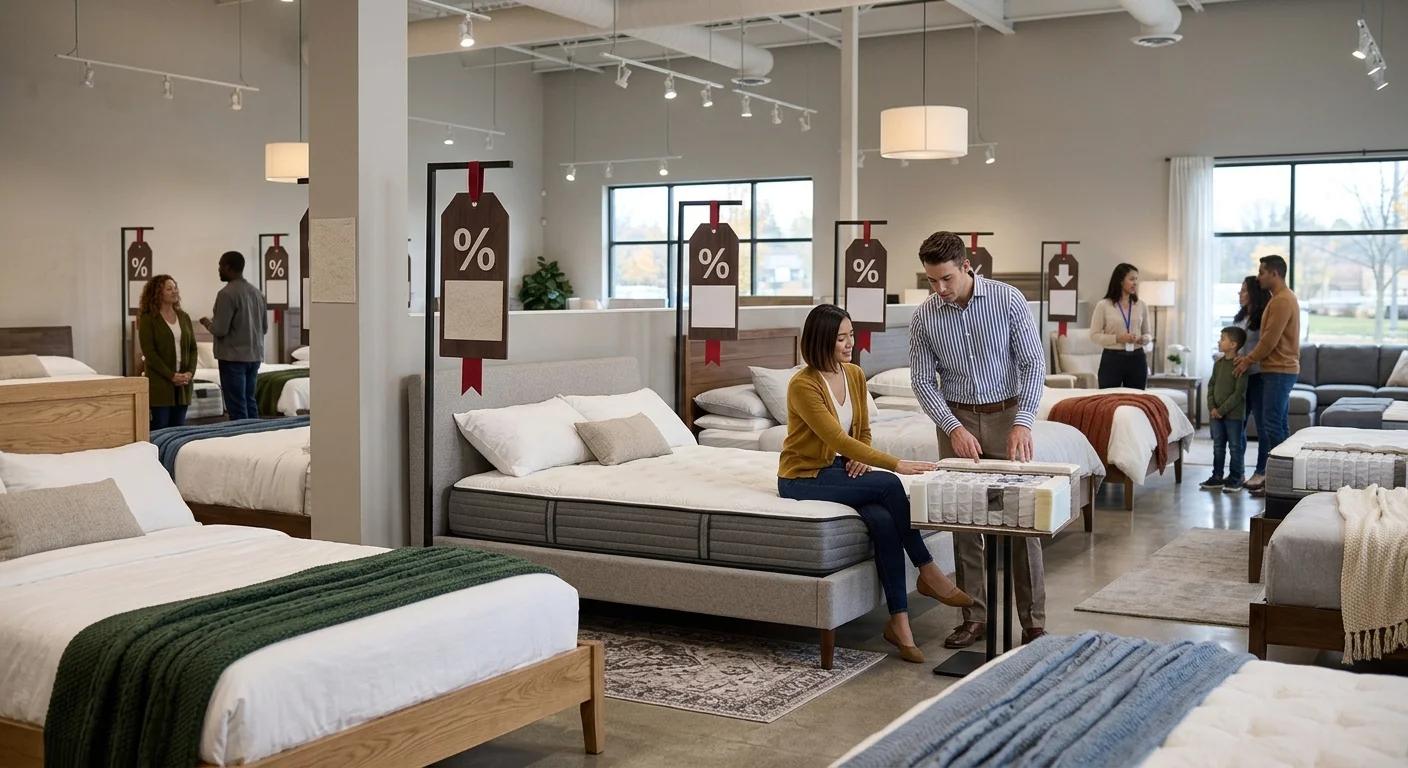
Sleep quality is influenced by more than just sleep duration, and investing in the right bedding can make a difference, so explore the best time to buy a mattress in the US when planning a bedroom upgrade.
Insomnia Statistics
30 to 35% of adults experience brief or transient insomnia symptoms. (AASM, 2023)
15 to 20% of adults develop short-term insomnia disorder (under 3 months) in a given year. (AASM, 2023)
About 10% of adults have chronic insomnia disorder, meaning symptoms at least three times a week for three months or more. (AASM, 2023)
15.4% of adults had trouble falling asleep most days or every day, and 18.1% had trouble staying asleep. (CDC, 2024 data)
Women report more difficulty than men: 18.5% versus 12.2% for falling asleep, and 21.4% versus 14.6% for staying asleep. (CDC, 2024 data)
Insomnia costs the US more than $100 billion a year, mostly from lost work performance, higher healthcare use, and accident risk. (Sleep Medicine Reviews, 2016)
Insomnia is linked to about 252.7 million lost workdays and $63.2 billion in lost work performance each year. (Sleep, 2011)
Sleep Aid Statistics
12.9% of adults used sleep aids most days or every day in the past 30 days. (CDC, 2024 data)
By type: 5.2% used prescription medication, 5.7% used over-the-counter products or supplements, and 3.7% used marijuana or CBD products. (CDC, 2024 data)
In 2020, 81.6% of adults reported never taking sleep medication, while 6.3% took it every day. (CDC, 2023)
Sleep Apnea Statistics
About 29.4 million US adults (roughly 12%) have obstructive sleep apnea, and nearly 80% are undiagnosed. (AASM and Frost & Sullivan, 2016)
Newer estimates are higher: 54 million adults with mild to severe sleep apnea and 24 million with moderate to severe sleep apnea. (Lancet Respiratory Medicine, 2019)
A 2025 analysis estimated 83.7 million US adults (32.4%) had sleep apnea in 2024. Estimates vary widely because studies use different definitions and account for obesity differently. (Respiratory Medicine, 2025)
Sleep apnea is projected to affect about 76.6 million US adults by 2050. (Lancet Respiratory Medicine, 2025)
Undiagnosed sleep apnea costs the US about $149.6 billion a year. (AASM, 2016)
Between 30 and 40% of adults with high blood pressure also have sleep apnea. (AASM)
Nearly 70% of Americans with a bed partner say their partner snores. Snoring alone is not a diagnosis, but it can be a warning sign. (AASM survey, 2021)
Treatment with PAP therapy is estimated to reduce the 10-year risk of motor vehicle crashes by 52% and the risk of stroke by 31%. (Sleep, 2011)
Since sleep quality depends partly on your sleeping environment and physical comfort, learning how to choose a mattress in 2026 can help you create a more supportive sleep setup.
Economic Cost of Poor Sleep
Insufficient sleep costs the US economy up to $411 billion a year, about 2.28% of GDP. (RAND Europe, 2016)
The US loses roughly 1.2 million working days a year to sleep deprivation. (RAND, 2016)
Workers who sleep under 6 hours have a 13% higher mortality risk than those sleeping 7 to 9 hours. (RAND, 2016)
If people sleeping under 6 hours increased to 6 to 7 hours, the US economy could gain an estimated $226.4 billion. (RAND, 2016)
Chronic insomnia is associated with 45 to 54 lost productive days per affected worker. (RAND, 2023)
Drowsy Driving Statistics
Drowsy driving causes an average of 328,000 crashes a year in the US, including 6,400 fatal crashes. (AAA Foundation, 2014)
32% of drivers said they drove in the past 30 days while so tired they struggled to keep their eyes open. (AAA Foundation, 2016)
Drivers who usually sleep under 5 hours have 5.4 times the crash rate of those who sleep 7 hours or more. (AAA Foundation, 2016)
The AAA figures are older than the CDC data above, so treat them as a guide to scale rather than a 2026 snapshot.
How the US Compares Globally
Sleep loss is expensive everywhere, but the United States has the highest total cost among the five countries RAND studied. These are annual estimates of losses from insufficient sleep (RAND Europe, 2016):
Country | Estimated annual loss | Share of GDP |
|---|---|---|
United States | Up to $411 billion | 2.28% |
Japan | Up to $138 billion | 2.92% |
Germany | Up to $60 billion | 1.56% |
United Kingdom | Up to $50 billion | 1.86% |
Canada | Up to $21.4 billion | 1.35% |
Japan loses the largest share of its GDP, while Canada had the best sleep outcomes of the group.
Your sleeping environment can influence how comfortably you rest, and understanding the best room temperature for sleep may help you create conditions that support better sleep quality.
How to Build a Bedroom That Supports Better Sleep
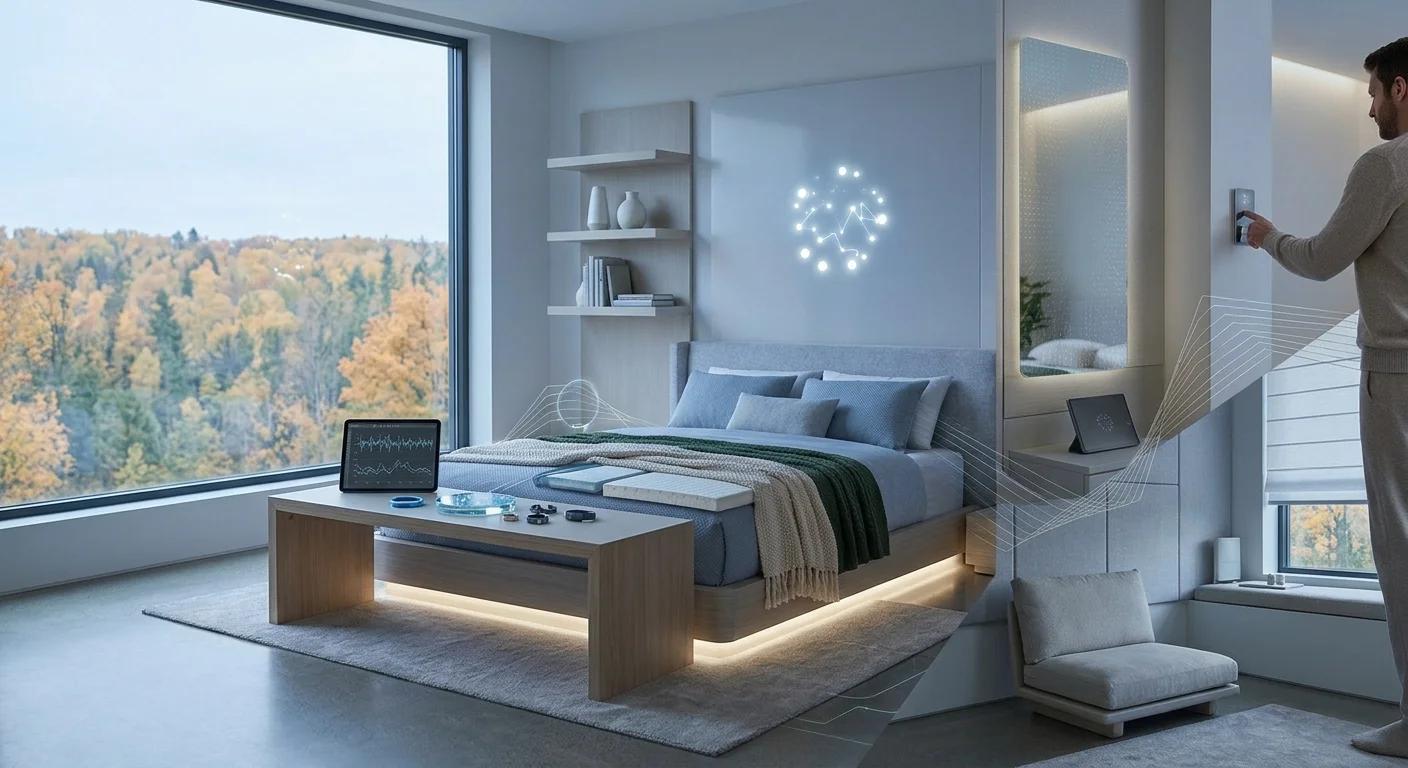
Statistics describe the problem, but your bedroom is the part you can control. Temperature, light, bedding, and layout all affect how easily you fall and stay asleep. The advice below is general guidance, not medical treatment, and it will not replace care for a sleep disorder.
Keep the Room Cool
Most sleep organizations recommend a bedroom temperature of about 60 to 67°F (15.5 to 19.4°C) for adults. Being too warm is one of the common reasons people wake during the night. If you wake up hot even with the air conditioning running, check your bedding and mattress. Synthetic polyester sheets, dense sateen weaves, and low-quality foam can all trap heat.
Use Warm, Dim Light in the Evening
Light strongly influences your body clock. Bright, blue-rich light in the evening can delay melatonin release, while warm light around 2700K or lower signals that the day is ending. Smart bulbs that dim and warm up automatically after about 8 PM make this easy. Also try to put screens away for the last hour before bed.
Choose a Mattress by Support and Feel
Firmness is sometimes described with Indentation Load Deflection (ILD). As rough, manufacturer-dependent ranges, plush foam is around 19 to 22 ILD, medium-firm around 25 to 31, and firm around 32 to 36. Many people with back pain find a medium-firm surface comfortable, and some studies suggest it can help, but personal comfort matters most. Always choose a brand with a generous trial period.
Pocketed coils: many individually wrapped coils reduce motion transfer and provide zoned support.
Memory foam: higher-density foam (about 4 lb per cubic foot or more) gives pressure relief and holds up better over time.
Latex: very durable. Dunlop latex is denser and suits the support core, while Talalay is lighter and more breathable, which makes it a good comfort layer.
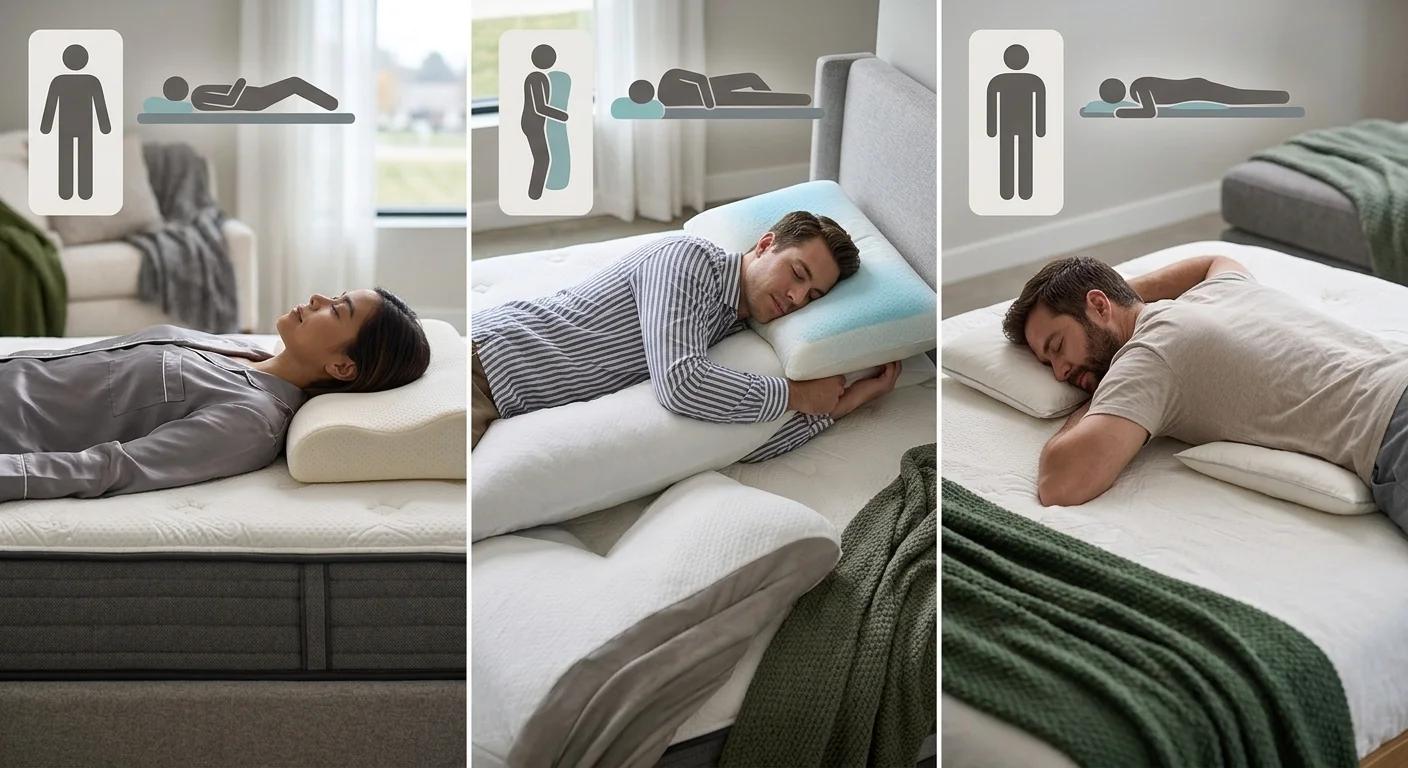
Side sleepers generally prefer a plusher surface so the shoulders and hips can sink in slightly, while stomach sleepers usually need a firmer one.
Pick Breathable Bedding
Material | Best for | Why it works |
|---|---|---|
Linen (flax) | Hot sleepers, humid climates | Open weave allows airflow and wicks moisture away |
Percale cotton (about 200 to 400 thread count) | Year-round use | Crisp one-over-one weave feels cool and does not trap heat |
Merino wool | Winter and cold sleepers | Insulates while staying breathable and helping regulate temperature |
Talalay latex (comfort layer or pillow) | Toppers and pillows | Open-cell structure lets body heat escape |
Thread count is not a measure of quality. A 200 to 400 thread count percale usually sleeps cooler than a dense 1,000 thread count sateen, which can trap heat.
Layout and Air Quality
A simple design guideline is to leave at least 30 inches of clearance on both sides and at the foot of the bed. Open floor space makes the room easier to move through and feel calm in, and some research links cluttered environments with higher stress, which can make it harder to wind down. For air, a HEPA filter can reduce irritants, and keeping humidity around 30 to 50% is commonly recommended to avoid dry or stuffy air.
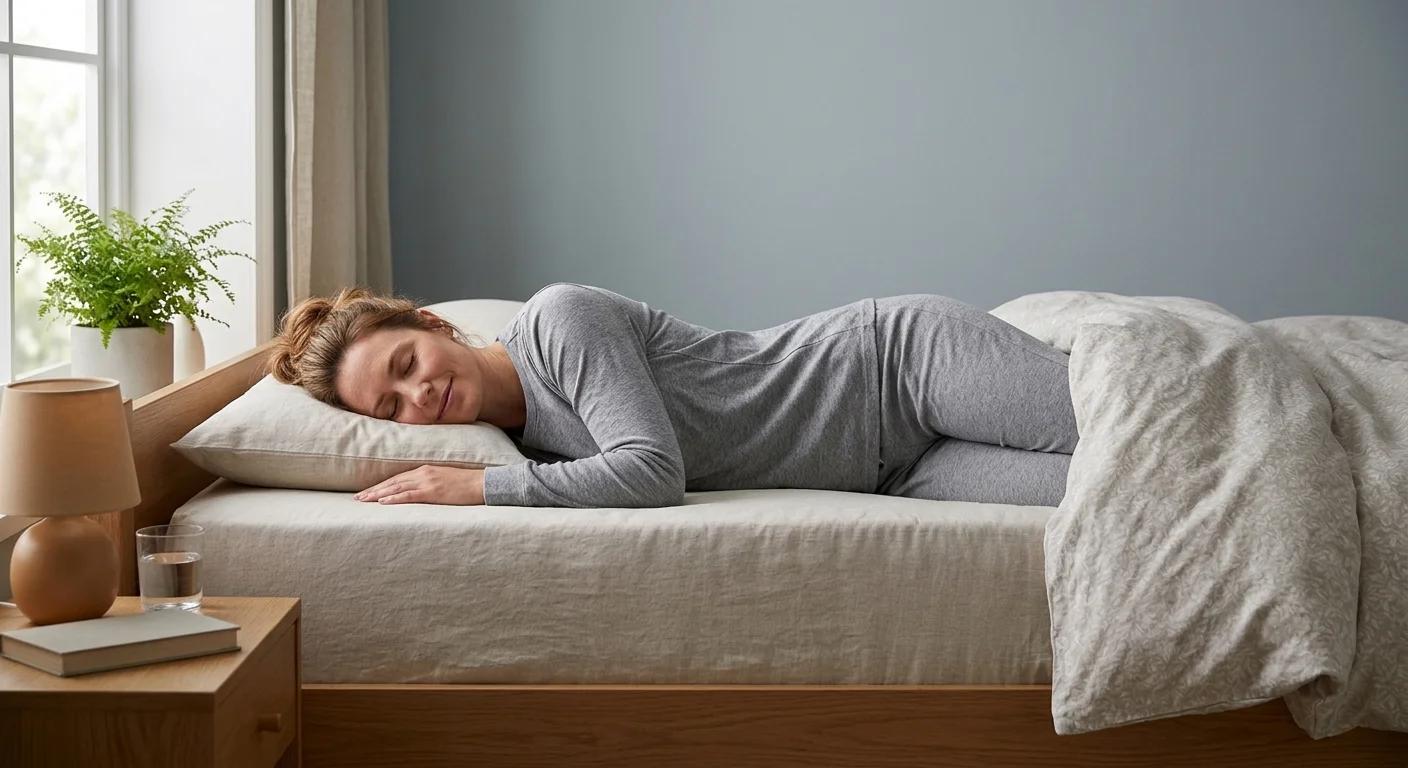
Physical discomfort can interfere with restful sleep, so understanding whether a firm mattress is better for your back may help you identify potential ways to improve nighttime comfort.
Frequently Asked Questions
How many Americans don't get enough sleep?
About 30.5% of US adults sleep fewer than 7 hours a night, based on CDC data for 2024. Other surveys put the figure between roughly 30 and 35%, depending on the year and method.
How many hours of sleep do adults need?
The AASM recommends that adults get at least 7 hours of sleep on a regular basis. Teenagers need 8 to 10 hours.
What percentage of Americans have insomnia?
It depends on the definition. Around 30 to 35% have occasional symptoms, 15 to 20% have short-term insomnia disorder within a year, and about 10% have chronic insomnia disorder (AASM).
How common is sleep apnea in the US?
Older AASM estimates say about 30 million adults, with roughly 80% undiagnosed. Newer analyses estimate much higher numbers, from 54 million to over 80 million, because definitions and methods differ.
How many Americans use sleep aids?
About 12.9% of adults used a sleep aid most days or every day in the past 30 days (CDC, 2024 data). That includes prescription drugs (5.2%), over-the-counter products or supplements (5.7%), and marijuana or CBD (3.7%).
How much does lack of sleep cost the US economy?
RAND estimates up to $411 billion a year, about 2.28% of GDP. Insomnia alone is estimated to cost over $100 billion a year.
Do men or women sleep worse?
Short sleep is about equal (30.6% of men, 30.4% of women). Women report more trouble falling asleep (18.5% vs 12.2%) and staying asleep (21.4% vs 14.6%), while men are more likely to wake up well-rested (58.2% vs 51.7%).
Which US state gets the least sleep?
In 2022 CDC data, Hawaii had the highest share of adults with insufficient sleep (46%), and Vermont the lowest (30%).
Does work affect how much people sleep?
Yes. Among employed adults, 48% of those working over 60 hours a week sleep fewer than 7 hours, compared with 29% of those working 40 hours or less (CDC, 2022).
How common is drowsy driving?
AAA Foundation surveys found that 32% of drivers had driven in the past 30 days while struggling to stay awake, and drivers sleeping under 5 hours had 5.4 times the crash rate of those sleeping 7 hours or more.
Are Americans sleeping less than in the past?
Gallup polling showed average sleep falling to 6.8 hours in 2013, more than an hour less than in 1942. More recent CDC data show the short-sleep rate staying roughly flat from 2013 to 2022.
What is the best bedroom temperature for sleep?
Most sleep organizations recommend about 60 to 67°F (15.5 to 19.4°C) for adults. Individual preference and age matter, so adjust within or slightly outside that range if needed.
The latest US data shows that roughly three in ten adults are short on sleep and millions live with untreated sleep disorders. The good news is that the overall short-sleep rate has held steady rather than spiraling, and many of the factors behind poor sleep, such as late screen use, a warm room and unsuitable bedding, are within your control. Start with the basics: a consistent schedule, a cool and dim bedroom, and bedding that does not trap heat.
This article is for information only and is not medical advice. If you have ongoing trouble sleeping, loud snoring with breathing pauses, or extreme daytime sleepiness, talk to a doctor or a sleep specialist.