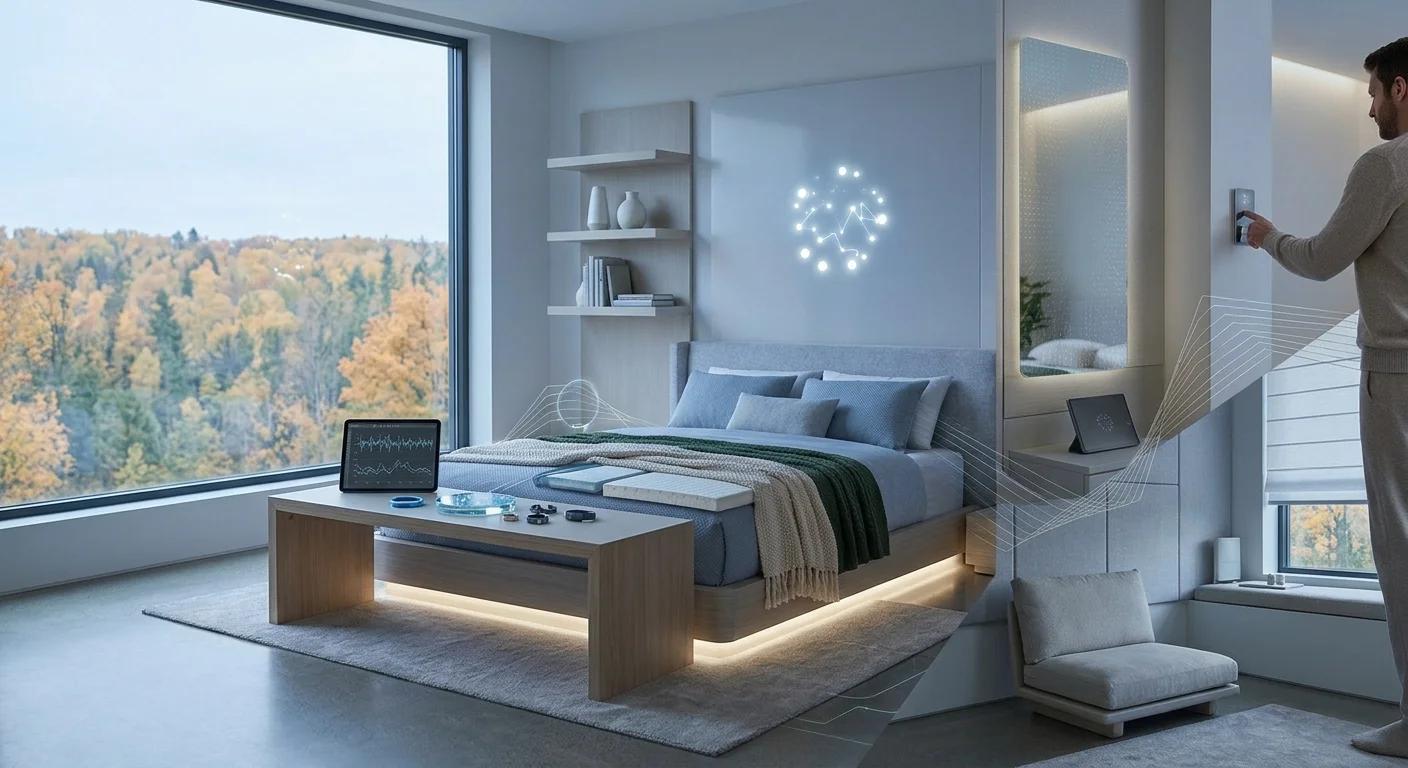
For the modern homeowner, curating a bedroom sanctuary goes far beyond visual aesthetics; it requires integrating expert lifestyle and wellness advice to ensure your environment actively supports your circadian rhythm. Whether you are bracing for Daylight Saving Time or recovering from a transatlantic flight, learning exactly how to adjust to the time change requires a blend of biological timing and environmental design. The biannual clock shift is notorious for disrupting our internal rhythms, leaving us fatigued, irritable, and out of sync with our daily lives. However, the bedroom is not just a place to rest—it is an engineered environment for physical recovery. By combining the principles of chronobiology with intentional interior styling, you can master this transition seamlessly.
Sleep duration and common sleep disruptions provide useful context for understanding why a clock change can affect rest. Explore these sleep statistics in the US to learn more about sleep habits and challenges.
The Science of the Shift: How Long Does It Take to Adjust to the Time Change?
A common question that arises every spring and autumn is: How long does it take to adjust to the time change? From a biological standpoint, the human body typically requires about one full day to adjust to each hour of time shift. This process is governed by the Suprachiasmatic Nucleus (SCN), a tiny region in the brain’s hypothalamus that acts as your master internal clock, regulating sleep and wakefulness primarily through light exposure.
When the external clock changes abruptly, your SCN falls out of alignment with your environment. Left to its own devices, the body will eventually catch up. However, if you want to know how to adjust to a time change quickly, passive waiting is not the answer. By actively manipulating your light exposure, thermal environment, and sleep surface, you can compress this biological lag into a highly efficient 5-day protocol.
Day 1 & 2: Manipulating Light and Room Styling Rules
The first two days of your adjustment protocol should focus entirely on your visual environment. Because the SCN relies on light to dictate melatonin production, controlling the illumination in your bedroom is paramount.
If you are wondering how to adjust to time change, fall back versus spring forward, the strategy shifts slightly. During the "spring forward," you lose an hour of sleep, making morning light crucial to wake you up earlier. Conversely, during the "fall back," you gain an hour, meaning you need to delay evening light to push your bedtime later.
To achieve this level of control, your bedroom requires layered window treatments. We recommend a dual-layered approach: sheer linen curtains to allow diffused, gentle morning light to enter, paired with heavy velvet drapes or blackout linings to plunge the room into total darkness at night.
Furthermore, audit your artificial lighting. Transition your bedside lamps to amber or red-spectrum LED bulbs (measuring under 2000 Kelvin) at least two hours before your target bedtime. This mimics the natural hues of sunset, signaling to your brain that it is time to wind down, regardless of what the clock on the wall says.
Bedroom temperature can influence sleep comfort while you adjust your bedtime and wake-up routine. Find out what room temperature is best for sleep to create a more comfortable environment.
Day 3: Optimizing the Sleep Surface and Microclimate
By the third day, your body is physically feeling the strain of the transition. Navigating a disrupted circadian rhythm is nearly impossible on an unsupportive mattress. Upgrading your sleep surface is a foundational element of effective sleep hygiene tips. When evaluating your bed, look for a hybrid construction that pairs the zoned support of individually wrapped pocket coils with the temperature-neutral breathability of Talalay latex.
High-carbon steel pocket coils (typically 8 inches in height) provide crucial zoned support, keeping the spine in neutral alignment while isolating motion—a necessity if you or your partner are tossing and turning during the night. For the comfort layers, Talalay latex offers a responsive, buoyant feel that dissipates heat beautifully.
If you are a side sleeper seeking deep pressure relief, look for high-density (4-5 lbs/cu ft) gel-infused memory foam. This material alleviates stress on the hips and shoulders, allowing for restorative deep sleep even when your internal clock is confused. Universally, a medium-firm profile—typically a 6 to 6.5 out of 10 on the firmness scale—is recommended by ergonomists for optimal spinal support during transitional sleep periods.
Day 4: Temperature Control and Material Science
As you near the end of the protocol, shift your focus to thermoregulation. To initiate deep sleep, your body’s core temperature must drop by 1 to 2 degrees Fahrenheit. If your bedroom is too warm, or your bedding traps heat, your body will fight to stay awake.
Dressing the bed is an exercise in material science. Layer your mattress with Belgian flax linen. Linen is highly porous and naturally moisture-wicking, capable of absorbing up to 20% of its weight in moisture before ever feeling damp to the touch. This makes it the ultimate textile for temperature-neutral sleeping.
For insulation, incorporate Merino wool either in your mattress batting or as a luxury throw at the foot of the bed. Wool acts as a natural climate control system; it insulates during the chilly "fall back" months and breathes effortlessly during the warm "spring forward" transition.
Spatially, ensure your bed is positioned at least 3 feet away from HVAC vents or radiators. Direct airflow or radiant heat can artificially disrupt your body’s natural thermal drop. Finally, set your bedroom thermostat to an optimal 65°F (18.3°C) to create the perfect microclimate for biological recovery.
Bedroom Material & Thermoregulation Guide
Material | Primary Function | Ideal Application | Biological Benefit |
|---|---|---|---|
Talalay Latex | Breathability & Buoyancy | Top comfort layer of mattress | Prevents heat trapping; supports neutral spine. |
Gel Memory Foam | Pressure Relief | Transition layer (4-5 lbs/cu ft) | Alleviates joint stress for side sleepers. |
Belgian Flax Linen | Moisture-Wicking | Sheets and duvet covers | Absorbs moisture; maintains a dry microclimate. |
Merino Wool | Climate Control | Mattress batting or luxury throws | Insulates in winter, breathes in summer. |
A comfortable bedroom can make it easier to maintain a relaxing bedtime routine. Explore cozy fall bedroom ideas for inspiration on creating a restful sleep environment.
Day 5: Family Protocols: How to Adjust Baby and Toddler to Time Change
Adults can rationalize a time change, but children rely entirely on routine. If you are researching how to adjust a baby to time change travel or how to get a toddler to adjust to time change, the secret lies in micro-adjustments and strict environmental cues.
Implement the "15-Minute Rule." Rather than forcing a full hour shift on Sunday night, begin shifting your child’s bedtime, naptime, and meal times by 15 minutes each day leading up to the time change. By Day 5, they will have naturally bridged the 60-minute gap.
Maintain uncompromising environmental cues. The sequence of a warm bath (which artificially raises body temperature so it can rapidly drop afterward) followed by dimming the lights in their nursery is critical. These tactile and visual signals bypass the clock, directly triggering melatonin production in young, developing brains.
Beyond the Bedroom: How to Adjust to Time Change When Traveling
The principles of the biannual clock shift apply tenfold when crossing time zones. If you are wondering how to adjust to time changes when traveling—particularly how to adjust to time changes in Europe after a long-haul flight from the Americas—you must employ aggressive circadian tactics.
First, consider fasting on the plane. Digestion is tied to peripheral clocks in your organs. By fasting during the flight and eating a high-protein meal at the local breakfast time upon arrival, you effectively reset your digestive rhythm.
Second, seek immediate exposure to local sunlight upon arrival. Do not wear sunglasses. Let the natural daylight hit your retinas to forcefully reset your SCN.
Finally, replicate your luxury home sleep environment in your hotel. Request a specific pillow loft to maintain spinal alignment, ensure the room’s thermostat is set to 65°F, and use heavy blackout curtains to block out unfamiliar city lights.
A comfortable and inviting bedroom can help make your adjusted bedtime routine more appealing. Learn how to make your bed like a hotel for practical ideas to improve your sleep environment.
Frequently Asked Questions
Does taking melatonin help with the time change?
Yes, but timing is everything. A micro-dose of melatonin (0.5mg to 1mg) taken about 90 minutes before your new target bedtime can help signal to your brain that it is time to sleep, easing the transition during the first two days of a time shift.
Should I nap during the 5-day protocol if I feel exhausted?
It is best to avoid napping if possible, as it reduces your "sleep drive" (the biological pressure to sleep at night). If you must nap for safety or function, keep it under 20 minutes and schedule it before 2:00 PM.
How does the "fall back" biologically differ from the "spring forward"?
Falling back" is generally easier on the body because it aligns with our natural tendency to delay sleep. "Springing forward" forces us to wake up when our body temperature is still at its lowest, which is why it feels much more jarring and carries a higher risk of cardiovascular stress.
Can I use exercise to speed up my adjustment?
Absolutely. Morning cardiovascular exercise outdoors exposes you to sunlight and raises your core body temperature, signaling to your body that the day has begun. Avoid heavy workouts within three hours of bedtime, as the lingering heat will prevent the necessary thermal drop for sleep.
Conclusion
Mastering how to adjust to the time change is an exercise in intentional living. It requires us to view our bedrooms not merely as spaces decorated for aesthetic pleasure, but as highly functional sanctuaries designed for biological restoration. By respecting the science of the Suprachiasmatic Nucleus, investing in the right ergonomic support, and curating a microclimate with premium, breathable textiles, you can conquer the clock. Whether navigating the biannual daylight saving shift or touching down in a new time zone, this 5-day protocol ensures your body and your environment work in perfect, restful harmony.