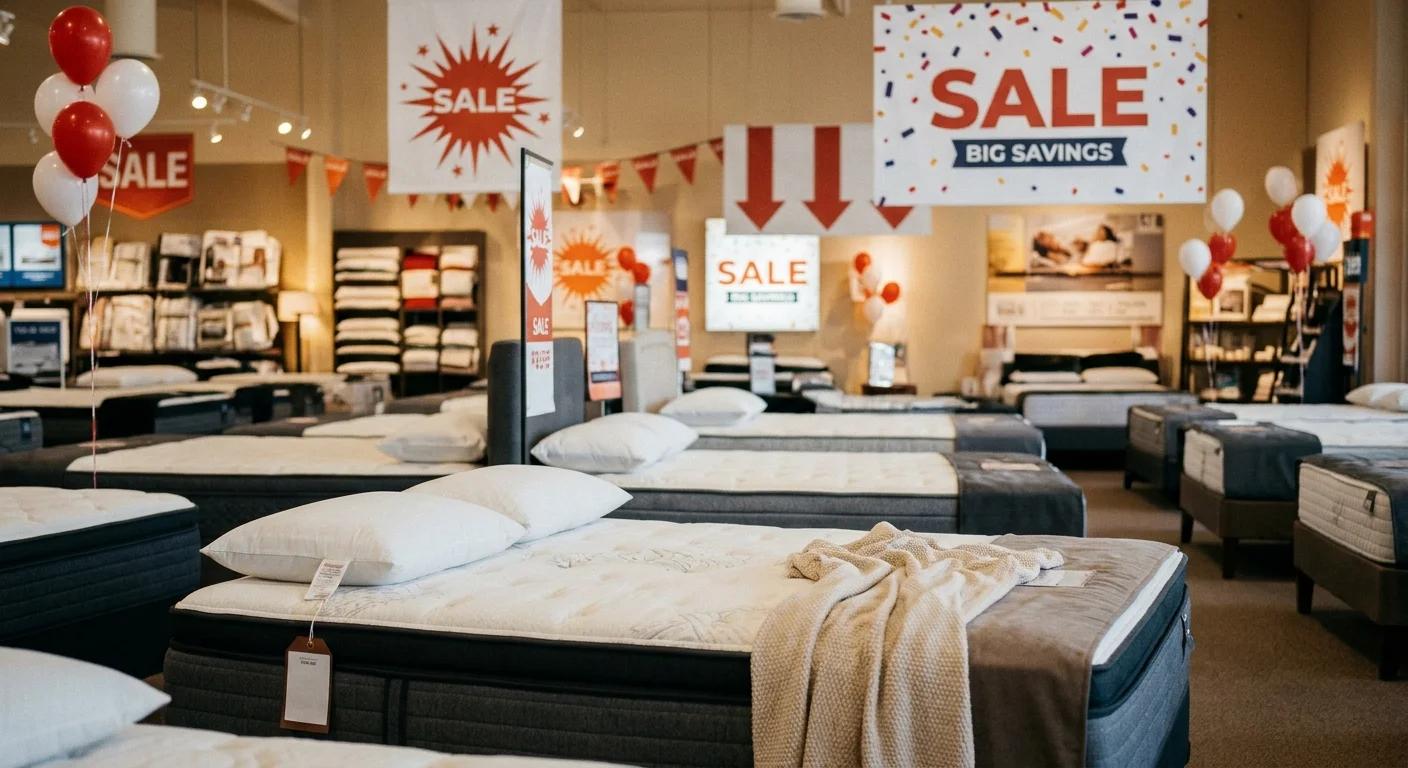
Waking up with persistent lower back pain or a "crick" in your neck is a clear signal from your body, but the mattress industry’s opaque pricing often makes shoppers hesitate. You likely arrived here asking one specific question: when is the best time to buy a mattress to ensure you are not overpaying by hundreds of dollars? While the short answer involves federal holidays, the reality is more nuanced, split between traditional brick-and-mortar clearance cycles and the digital-first strategies of Direct-to-Consumer (DTC) brands.
This guide moves beyond the generic holiday list to decode the "May Rule," the psychology of the "perpetual sale," and the specific months when inventory logistics force retailers to slash prices. By the end of this piece, you will know how to distinguish a fake countdown timer from a genuine clearance event and whether you should wait for Black Friday or pull the trigger on Memorial Day.
Quick Answer / Key Takeaway
The "May Rule": Memorial Day is the absolute best time for traditional in-store brands like Serta, Sealy, and Stearns & Foster because new models arrive in June.
The DTC Sweet Spot: Black Friday and Cyber Monday offer the steepest discounts and most valuable accessory bundles for "bed-in-a-box" brands like Helix or Casper.
The First Opportunity: Presidents Day in February is the first major sale of the year and often matches Labor Day pricing.
Negotiation is Key: In-store prices are rarely final. Treat a mattress showroom like a car dealership to secure an extra 10 to 15 percent off or free white-glove delivery.
Mattress Buying Decision Matrix
Buying Goal | Best Time to Buy | Target Retailer | Typical Discount/Offer |
|---|---|---|---|
Lowest Cash Price | Memorial Day | Mattress Firm / Local Shops | 30 to 50 percent off floor models & discontinued lines |
Best Value (Bundles) | Black Friday | Online DTC Brands | $200 to $400 off + free pillows/sheets |
Luxury/Premium | Labor Day | Tempur-Pedic / Saatva | Flat $300 off or free adjustable base upgrade |
Budget/Guest Room | Prime Day (July) | Amazon | 20 to 40 percent off brands like Zinus or Linenspa |
First-of-Year Need | Presidents Day | All Retailers | 15 to 25 percent off sitewide |
The Traditional Retail Cycle and the "May Rule"
Traditional mattress manufacturers operate on a rigid production schedule that dictates the mattress sales cycle timing for physical showrooms. Understanding this cycle allows you to exploit the moment when retailers are most desperate to move units. The industry functions on a "new year" that begins in early summer, which creates a massive backlog of older inventory that must be cleared at any cost.
Why May is the Gold Standard for In-Store Clearance
The industry secret is that manufacturers typically release their new flagship models in June. To make room for the incoming "new and improved" versions, retailers must clear out existing warehouse stock and floor models. This makes May the peak window for when new mattress models come out and the subsequent clearance of the previous year's inventory.
Retailers like Mattress Firm are highly motivated to clear floor models in May. These are the beds that customers have laid on for a few minutes while testing, and they can often be negotiated for 50 percent off the original MSRP. While some shoppers are wary of floor models, they are usually sanitized and offer the deepest possible discount on high-end legacy brands. The budget range for these premium lines, such as Beautyrest Black or Stearns & Foster, typically falls between $1,500 and $3,500 for a Queen during this window. If you see a model with a "clearance" tag in May, it is likely because the manufacturer has already shipped the June replacement to the regional warehouse.
Navigating the Memorial Day Mattress Clearance
A Memorial Day mattress clearance is not just a marketing gimmick: it is a logistical necessity. During this window, focus on "legacy" brands that rely on physical distribution. This is the best time to test beds in person and leverage the "June turnover" to your advantage. Because showrooms are crowded, sales associates are under pressure to hit high volume targets, making them more likely to agree to aggressive price matching.
When shopping these sales, look for "White-Glove Delivery" to be included for free as a closing incentive. This service, which includes in-home setup and the removal of your old mattress, usually costs between $150 and $250. During Memorial Day, it is a common "throw-in" to seal the deal. You should also verify if the manufacturer's warranty still applies to floor models. Some retailers may list them "as-is," which could void your protection against sagging or structural failure. Always ask the manager to put the warranty status in writing on your receipt.
The DTC Disruption: Online Sales Cycles
Direct-to-Consumer (DTC) brands do not have the same floor-space constraints as traditional shops, so their sales are driven by digital acquisition costs and consumer spending habits rather than inventory turnover. These companies, which include names like Casper, Leesa, and Purple, focus their heaviest discounts around the major digital shopping holidays.
Black Friday vs. Memorial Day Mattress Sales
When comparing black friday vs. Memorial Day mattress deals, the winner depends on how you want to save. Memorial Day wins for in-store price cuts on physical inventory, but Black Friday is the undisputed king for online brands. DTC companies use Cyber Week to hit annual sales targets, often offering their lowest prices of the year to satisfy investors before the fiscal year ends.
The DTC budget range for a high-quality Queen hybrid is typically $900 to $1,800 during Cyber Week. Brands like Saatva often use tiered discounts rather than flat percentages. For example, you might see an offer for "Save $200 on $1,000, Save $300 on $2,500." This encourages shoppers to add an adjustable base or a high-end topper to reach the next discount tier. If you are buying a single mattress without accessories, the flat percentage sales found on Memorial Day might actually be more beneficial. However, for a full bedroom overhaul, the tiered Black Friday discounts usually provide the better bottom-line price.
The Rise of the Bundle Strategy
Many direct-to-consumer mattress sales have shifted away from deep percentage discounts on the mattress itself. Instead, they offer "Bundle Deals" to protect the perceived value of the mattress. This is a strategic move to increase the "Average Order Value" while providing the customer with a complete sleep system. By giving away accessories, the brand maintains its premium price point for the mattress while still offering the customer a "win."
Common bundles include $300 to $400 worth of free pillows, sheets, and mattress protectors. Brands like Helix or WinkBeds frequently use this strategy to avoid devaluing their core product. When evaluating a bundle, ask yourself if you actually need the items. A "free" $150 weighted blanket is only a deal if you were planning to buy one. If you already have high-quality bedding, you are better off looking for a brand that offers a straight cash discount, even if the total "value" of the promotion seems lower.
Spotting Marketing Tactics and Fake Sales
The mattress industry is notorious for high-pressure tactics. Learning how to find the lowest mattress prices online requires a healthy dose of skepticism regarding "limited time" offers. Many online retailers use psychological triggers to force a quick purchase, but a savvy buyer knows that the same price will likely be available next week.
Identifying Perpetual Sales and MSRP Inflation
The most common trap is the "perpetual sale." Brands like Nectar and DreamCloud are famous for using countdown timers that reset every 24 hours. This creates a false sense of urgency for a "sale" that is actually the standard everyday price. If a mattress is "30% off" every single day of the year, then that discounted price is the true MSRP, and the original higher price is a fiction.
To avoid this, use the Wayback Machine or price-tracking tools like CamelCamelCamel (for Amazon) to verify historical pricing. Spotting fake mattress sales involves ignoring the "percent off" and looking only at the final cart price. If a Queen mattress is $1,199 in March and $1,199 during a "Huge July 4th Blowout," the sale is a marketing fabrication. True sales will show a genuine dip below the average 90-day price.
The Luxury Exception: MAP Pricing
Premium brands like Tempur-Pedic strictly enforce a Minimum Advertised Price (MAP). This means you will rarely see a 50 percent off sale on these models at any retailer. The price is set by the manufacturer, and every authorized dealer must follow it. If you see a Tempur-Pedic for significantly less than the official website price, verify with the manufacturer that the seller is an authorized dealer to ensure your warranty is valid.
Instead of price cuts, look for "value-add" promotions where the retailer includes a free adjustable base. This is a common tactic for luxury Queen models that typically range from $2,500 to $5,000. An adjustable base can retail for $600 to $1,000, so receiving one for free is a significant saving that does not technically violate MAP pricing agreements. Waiting for a massive percentage-off sale on Tempur-Pedic or Aireloom is usually a waste of time.
Strategic Buying: Costco and Amazon
If you are not shopping during a major holiday, specific retailers offer consistent value through different mechanisms. These outlets do not follow the standard federal holiday schedule as strictly as specialized mattress stores.
The Best Time to Buy a Mattress at Costco
Knowing the best time to buy a mattress at Costco involves watching their "MVM" (Multi-Vendor Mailer) booklets. Costco rotates its mattress stock quarterly, often featuring brands like Casper or Kirkland Signature at significant discounts that bypass traditional holiday windows. The Kirkland Signature models are particularly noteworthy because they are often manufactured by Stearns & Foster, offering high-end construction at a warehouse price.
Costco's return policy is the most generous in the industry. They often allow returns years later if the mattress sags or fails to meet expectations. This "satisfaction guarantee" provides a safety net that most DTC brands, with their 100-night trials, cannot match. If you see a "Manufacturer's Rebate" in the Costco mailer for $150 to $300 off a mattress, that is usually the lowest price that model will hit all year.
Prime Day and Budget Guest Bed Timing
For guest rooms or college apartments, the best time to buy a mattress on sale is during Amazon Prime Day in July or the "Prime Early Access" event in October. These events target budget-friendly brands that are already high-value. Because these mattresses are often made with lower-density foams, they are easier to compress and ship in high volumes, allowing for steep temporary discounts.
Focus on highly-reviewed budget brands like Zinus or Linenspa during these windows. The budget range for these events is typically $200 to $500 for a Queen. While these beds may not last twenty years, they are excellent for temporary housing or rooms that see occasional use. Just be sure to check the "Sold By" field on Amazon: only buy if the mattress is sold directly by Amazon or the official brand store to avoid third-party scams.
Expert Tips and Pro Moves
Negotiate Like a Pro: At traditional retailers, margins are high. Always ask: "Is this the best you can do?" If they will not budge on price, request free removal of your old mattress and a free protector to close the deal. Salespeople often have a "discretionary fund" of accessories they can give away to hit their monthly quota.
Watch the Return Fees: A "sale" price loses its value if you have to pay a $99 to $150 restocking or return shipping fee. Always read the fine print of the 100 to 365 night sleep trial. Some brands offer free returns, while others require you to coordinate a donation to a local charity before they will issue a refund.
The 8-Year Myth: Do not let a salesperson tell you that you must replace your bed every 8 years. This is an industry standard designed to keep the sales cycle moving. High-density memory foam or natural latex, like the models from Avocado, can easily last 12 to 20 years if cared for properly with a waterproof protector.
The "Off-Season" Strategy: If you must buy in a "dead" month like October or March, call a local shop and ask for discontinued floor models. They are often happy to move them at a loss just to clear space for the next shipment. Mention that you are ready to buy today if the price is right.
Frequently Asked Questions
What month is the best time to buy a mattress?
May is widely considered the best month because retailers must clear out old inventory to make room for new models arriving in June. This leads to massive clearance sales, particularly on floor models and discontinued lines.
Are Memorial Day mattress sales actually good deals?
Yes, Memorial Day sales are among the best of the year for traditional brands. Because of the June inventory refresh, retailers are more willing to negotiate and offer deep discounts on existing warehouse stock that they no longer want to store.
How can you tell if a mattress sale is fake?
If you see a countdown timer that resets every time you refresh the page, it is likely a "perpetual sale." To find the true value, ignore the "MSRP" and compare the final cart price against historical data using tools like the Wayback Machine or CamelCamelCamel.
Do bed-in-a-box brands have seasonal sales?
Yes, bed-in-a-box brands follow a seasonal schedule, but they focus more on digital holidays. You will find their best offers during Black Friday, Cyber Monday, and Prime Day, often in the form of "bundles" that include free pillows and sheets.
Is Black Friday a good time to buy a mattress?
Black Friday is the best time for online DTC brands. These companies often offer their deepest cash discounts or most valuable accessory bundles during Cyber Week to meet year-end sales goals.
How much should a high-quality mattress cost?
For a Queen size, expect to pay $1,000 to $1,800 for a high-quality online hybrid. For luxury retail models with advanced cooling or specialized support, the price range typically jumps to $2,000 to $3,500. Anything under $500 is likely a budget model with a shorter lifespan.
Conclusion
The best time to buy a mattress is a balance between the industry's logistical needs and your own sleep quality. While waiting for Memorial Day or Black Friday can save you hundreds, no discount is worth months of poor sleep and rising chiropractic bills. If you are within four weeks of a major holiday, wait for the promotion. Otherwise, use the negotiation tactics and price-tracking tools mentioned above to secure a fair price today. Your next step is to determine if you prefer an in-store legacy brand or a DTC hybrid, then check the calendar for the nearest "Big Five" holiday: Presidents Day, Memorial Day, July 4th, Labor Day, or Black Friday.