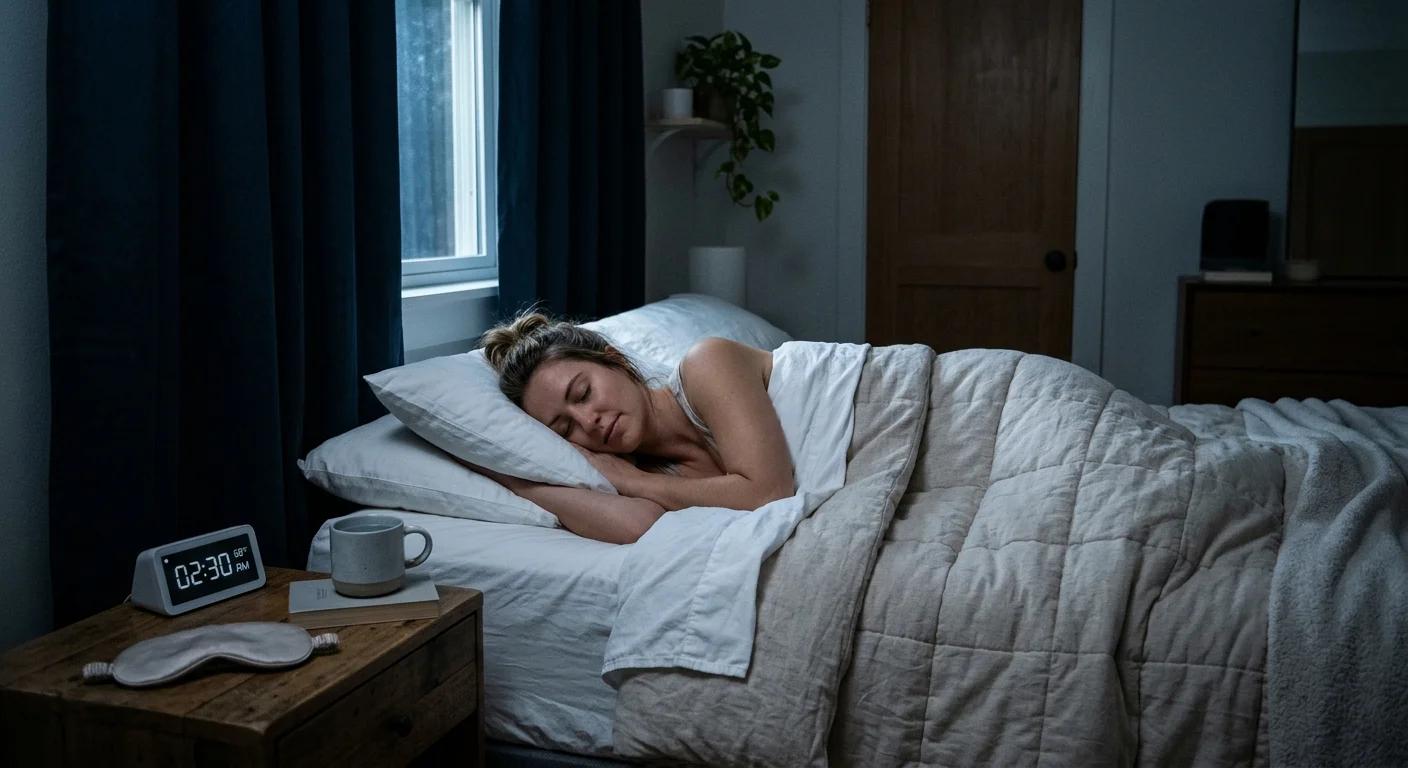
Waking up with a stiff, aching spine is more than a morning nuisance: it is a signal that your body’s nightly recovery phase has been compromised. Finding the best sleeping position for back pain is the first step toward reclaiming restorative rest and long-term orthopedic health. While clinical guides often offer rigid instructions, the reality of sleep is more fluid. The goal isn't just to lie flat, but to achieve neutral spine alignment. This is a state where the natural S-curve of your cervical, thoracic, and lumbar regions is supported without compression or twisting.
This guide bridges the gap between medical ergonomics and lifestyle application, showing you how to use strategic pillow placement, zoned support, and high-quality bedding to transform your bedroom into a recovery suite. Whether you are dealing with acute sciatica or chronic lower back tension, the right configuration can provide immediate relief tonight.
Quick Answer / Key Takeaway
The Gold Standard: Back sleeping (supine) with a bolster under the knees is generally considered the most effective for neutral alignment.
The Side Sleeper’s Fix: If you sleep on your side, a firm pillow between the knees and ankles is mandatory to prevent pelvic rotation.
Know Your Pain: Flexion-biased pain, which feels better when bending forward, benefits from the fetal position. Extension-biased pain, which feels better when bending back, often requires a flatter profile or modified stomach sleeping.
The 3-4 Week Rule: It takes approximately 21 to 30 days to sleep-train your body into a new position. Use physical barriers like body pillows to prevent rolling.
The Sleep Position Matrix
Position | Best For | Pillow Strategy | Spine Alignment Level |
|---|---|---|---|
Back (Supine) | General lower back pain, Sciatica | Medium-loft under head; Bolster under knees | High |
Side (Lateral) | Pregnancy, Spinal Stenosis, Hip pain | Firm pillow between knees and ankles | Medium-High |
Fetal | Herniated discs, Flexion-biased pain | Knees tucked; Pillow between legs | Medium |
Stomach (Prone) | Specific disc bulges (Extension-biased) | Thin pillow under pelvis; No head pillow | Low |
Zero-Gravity | Spondylolisthesis, Acid Reflux | 15-30 degree head & knee elevation | Very High |
The Science of Neutral Spine Alignment
To achieve neutral spine alignment while sleeping, you must support the three natural curves of the back. The Rule of Threes in ergonomics dictates that support must be evaluated simultaneously at the neck, the lower back, and the knees. If the knees are unsupported, the lower back compensates by arching. If the neck is too high, the upper back muscles remain under tension all night.
Not all back pain is created equal. Flexion-biased pain feels better when the spine is slightly rounded, which is common in conditions like spinal stenosis. Conversely, extension-biased pain feels better when the spine is straight or slightly arched, which is often the case with herniated discs. This distinction determines whether you should aim for a flatter back or a more curled fetal position.
The McKenzie Method, a popular physical therapy approach, introduces the concept of centralizing pain. This means moving the sensation from the limbs back to the center of the spine. The best position is the one that reduces the specific mechanical stress on your vertebrae and encourages this centralization. To maintain neutral spine alignment, you must ensure your chosen position does not force any segment of the spine into its end-range of motion for hours at a time.
The Supine Lumbar Bridge: Back Sleeping for Relief
Sleeping on the back is the most recommended position because it distributes weight evenly across the body's widest surface. This is often the best sleeping position for back pain relief because it minimizes pressure points. To make this effective, you should utilize the Lumbar Bridge technique. This involves using a medium-loft pillow for the head and a dedicated bolster or half-moon pillow directly under the knees.
This knee elevation flattens the lumbar spine slightly, taking immediate pressure off the lower vertebrae. For those learning how to sleep with sciatica pain, the supine position prevents the twisting that often triggers sciatic flares. A dedicated knee pillow, such as the Cushion Lab Orthopedic Knee Pillow, provides the exact elevation needed to keep the pelvis from tilting into an unnatural hammock shape.
A common error is using a pillow under the knees that is too high. The goal is a slight 15-degree bend, not a 45-degree lift. Excessive lift can cause hip flexor tightness, which eventually pulls on the lower back when you stand up the next morning. If you feel a pull in your groin while lying down, your bolster is likely too large.
The Lateral Alignment System: Side Sleeping Strategy
Most people are side sleepers, but they often allow the top hip to drop forward, which twists the lumbar spine. This creates a rotational force that can aggravate lower back pain relief efforts. To fix this, a pillow must be placed between the knees and the ankles. Supporting only the knees leaves the lower leg to pull the hip down, creating a slow-motion torque on the lower back all night.
When considering the sleeping position for back pain during pregnancy, the lateral position is vital for blood flow. Specifically, sleeping on the left side is recommended by obstetricians to optimize circulation to the placenta. To maintain comfort, use a U-shaped or C-shaped body pillow, like the Yana Sleep Pillow. This provides a physical barrier to prevent the sleeper from rolling onto their back or stomach, which can become uncomfortable as the pregnancy progresses.
The shoulder-to-mattress ratio is another critical factor for side sleepers. The height of the head pillow must match the width of the shoulder. If the pillow is too thin, the head tilts down, causing upper back pain, sleep issues, and neck strain. If it's too thick, it crunches the neck upward. Your goal is a straight line from the center of your forehead through your chin to the center of your chest.
Advanced Sleep Systems: Adjustable Beds and Wedges
The Zero-Gravity position simulates weightlessness by elevating the head and knees above the heart level. This is particularly effective for individuals with isthmic spondylolisthesis or chronic lower back pain that isn't relieved by lying flat. By tilting the pelvis back, it opens up the spinal joints and reduces the load on the intervertebral discs.
An adjustable bed sleep position for chronic pain offers micro-adjustments that a standard mattress cannot provide. An adjustable base, such as the Tempur-Ergo Smart Base, allows you to find the exact degree of flexion needed to silence nerve pain. This setup is the ultimate lifestyle upgrade for those who need to sleep in a flexed position without the instability of stacked pillows.
Many people make the pillow stack mistake, using standard bed pillows to prop up the head. This creates a sharp bend in the neck and mid-back. A dedicated wedge system provides a consistent, gradual incline that supports the entire thoracic spine. This is much better for the best sleeping position for back pain because it maintains the integrity of the upper spine while providing the benefits of elevation.
The Mattress Factor: Support Beyond Position
No position can save a spine on a sagging mattress. Zoned support is a manufacturing technique where the center third of the bed is firmer to support the heavy pelvic region. This prevents the hammock effect, where the hips sink lower than the shoulders. If your hips sink too deep, your spine remains in a state of constant flexion, leading to ligament strain.
There is a long-standing myth that firmer is always better for back pain. Modern research suggests a medium-firm mattress with contouring pressure relief is the actual standard. It must be firm enough to support the spine but soft enough to let the shoulders and hips sink in slightly. This ensures the mattress fills the gaps in your body’s silhouette rather than forcing your body to flatten against it.
Orthopedic support doesn't have to look clinical or uninviting. You can integrate these tools into a high-end bedroom aesthetic by wrapping support pillows in high-quality textiles like washed linen or brushed cotton. Choose restorative tones like Benjamin Moore’s Quiet Moments or Sherwin-Williams Sea Salt to create a calming environment. These soft greens and blues are scientifically shown to lower heart rates, which aids in the muscle relaxation necessary for the best sleeping position for lower back pain.
Expert Tips & Pro Moves
Side sleepers should avoid the shoulder crush fix. This happens when you tuck your bottom arm under your head pillow. This action elevates the shoulder and twists the upper spine, often leading to numbness in the arm and tension in the traps. Instead, keep arms below the chest level or hug a secondary body pillow to keep the shoulders square.
If you are trying to transition to a new position, use a 3-week strategy. A weighted blanket or a pillow fort of long bolsters on either side of your body can physically prevent you from rolling into your old, painful positions. It takes about 21 days for the neurological pathways to adjust to a new sleeping posture.
Perform a morning audit to diagnose your issues. If your back only hurts for the first 20 minutes after waking, it is almost certainly a sleep ergonomics issue rather than a chronic injury. Use this as a diagnostic tool for your mattress age. If the pain persists throughout the day, the issue may be more structural, but the right sleep position will still provide a necessary foundation for recovery.
Finally, follow the reading wedge rule. Never fall asleep against a stack of pillows used for reading or watching television. The sharp angle of the cervical spine will guarantee upper back pain by 3:00 AM. If you enjoy reading in bed, ensure you move to your primary sleeping configuration the moment you feel drowsy.
Frequently Asked Questions
Is it better to sleep without a pillow if you have back pain?
This is generally only recommended for stomach sleepers to prevent the neck from being craned at a sharp angle. Back and side sleepers need the support of a pillow to maintain the alignment of the neck with the rest of the spine. Without one, the head drops, putting significant strain on the cervical ligaments.
How long does it take to get used to a new sleeping position?
It typically takes 3 to 4 weeks to fully adjust. During this time, you may wake up in your old position. Using physical barriers, like a long body pillow or even a tennis ball taped to the back of a sleep shirt, can speed up the process by providing a physical reminder to stay in the new position.
Why does my back hurt only in the morning?
This is a classic indicator of poor sleep ergonomics or a sagging mattress that lacks lumbar support. When the mattress fails to support the heavy pelvic area, the spine sags into a curve for eight hours, leading to muscle fatigue and ligamentous "creep" that manifests as morning stiffness.
Can a mattress topper fix back pain?
A mattress topper can soften a bed that is too firm, providing better pressure relief for the hips and shoulders. However, it cannot fix a mattress that is already sagging or hammocking. If the core support of the mattress is gone, a topper will simply follow the dip in the bed, providing no orthopedic benefit.
How should I sleep with a herniated disc?
The ideal position depends on the disc location and whether the pain is centralized by flexion or extension. Usually, back sleeping with significant knee support or a modified fetal position is best. These positions help open the spinal canal and reduce the pressure on the affected nerve root.
Is sleeping on the floor good for your back?
While some people find acute relief from the extreme firmness of the floor, it is generally not recommended for long-term use. The floor does not contour to the body's natural curves, which creates intense pressure points on the joints. This can lead to secondary pain in the hips and shoulders.
Conclusion
Achieving a pain-free night is a combination of orthopedic discipline and the right environmental tools. By identifying whether your pain responds better to flexion or extension and supporting your spine’s natural S-curve with strategic pillow placement, you can stop the cycle of morning stiffness.
Your next action should be a sleep audit. Tonight, lie in your usual position and have someone check if your ears, shoulders, and hips form a straight line. If they don't, it’s time to introduce the bolsters and zoned support systems that will finally allow your back to heal while you rest. Investing in the best sleeping position for back pain is an investment in your entire day's productivity and comfort.