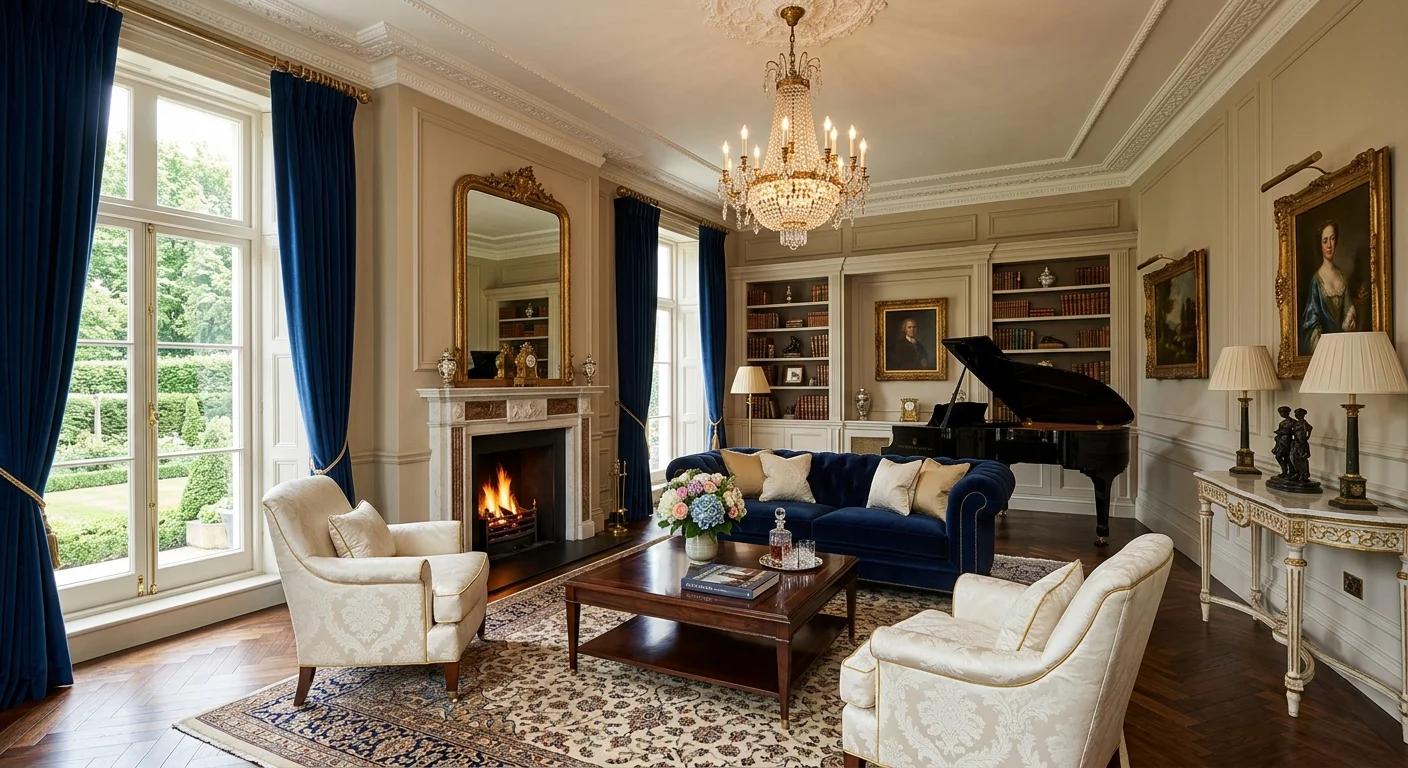
The distinction between a standard living area and a true luxury drawing room lies in the intent of the space. Historically known as the "withdrawing room," this area serves as a formal sanctuary for hosting, conversation, and post-dinner drinks, rather than casual media consumption. To master luxury drawing room design, one must look beyond superficial decor and focus on the architectural envelope. This includes the foundational millwork, lighting plans, and bespoke furnishings that signal sophisticated entertaining.
This guide moves past generic gold accents and into the realm of quiet luxury. It provides the specific material standards, historical proportions, and layout rules required to design a room that feels developed over generations rather than purchased from a single showroom. A successful drawing room is not merely a place to sit. It is a curated environment where architecture and comfort exist in a state of high-tension balance.
Quick Answer / Key Takeaway
Purpose over comfort: Prioritize a conversational layout where no seat is more than 8 feet from another. The room should facilitate eye contact, not face a television.
The architectural shell: Invest in boiserie* (wood paneling) and deep crown molding before purchasing furniture. The "envelope" defines the luxury tier of the home.
Material integrity: Use natural, high-touch fibers like silk damask, alpaca bouclé, and 8-way hand-tied upholstery suspension systems for longevity and tactile depth.
Lighting layers: Eschew recessed "can" lights for a three-tier system: ambient (chandelier), task (reading lamps), and accent (unlacquered brass picture lights).
Luxury isn't only about expensive finishes; a well-planned layout can also make a drawing room feel more spacious and refined. Explore these 10x10 drawing room layout ideas for inspiration on balancing furniture placement, comfort, and style.
Drawing Room vs. Living Room: The Decision Matrix
Feature | Drawing room | Living room | Family room |
|---|---|---|---|
Primary purpose | Formal entertaining | Daily socializing | Casual relaxation |
Focal point | Fireplace or art | Television or view | Media console or play area |
Seating style | Tailored and symmetrical | Comfortable and sectional | Oversized and reclining |
Tech integration | Hidden or absent | Visible | Centralized |
Rug style | Hand-knotted silk or wool | Durable synthetic or wool | High-traffic or washable |
The Architectural Envelope: Defining Drawing Room Wall Design
The walls of a drawing room are the most important investment in the home. Without proper architectural "bones," even the most expensive sofa will look like it is floating in a void. A high-end luxury drawing room design begins with the installation of millwork that provides texture and shadow.
Mastering boiserie and millwork
Boiserie, the French term for intricate wood paneling, provides historical depth to boxy new builds. In a luxury setting, this is not just about adding a few strips of molding. It involves a full-scale application of floor-to-ceiling panels that create a rhythm around the room. These architectural details for luxury drawing rooms provide a sense of permanence and weight.
For those looking for a high-end alternative to traditional plaster or heavy solid wood, Orac Decor offers high-density polyurethane moldings. These products allow for crisp, deep profiles that mimic the look of hand-carved wood but offer better stability in climate-controlled environments. When selecting wainscoting, ensure the height is either one-third of the wall or a full two-thirds. Avoid splitting the wall exactly in half, as this creates a visual "horizon" that shortens the room.
High-gloss and dead-flat finishes
The interplay of light on a wall determines the mood of the evening. A sophisticated drawing room wall design often utilizes the contrast between different paint sheens. One effective technique is monochromatic color-drenching, where the walls, trim, and ceiling are all painted the same hue.
To make this look expensive, use Farrow & Ball 'Estate Emulsion' for a chalky, dead-flat wall finish. This absorbs light and hides imperfections. Pair this with 'Full Gloss' on the millwork and doors. The reflective, lacquer-like effect on the trim creates visual friction against the matte walls. This contrast highlights the architectural details and makes the color feel more complex. If you choose a dark shade like 'Railings' or 'Studio Green', the high-gloss trim will reflect the warm glow of lamps, adding a layer of mystery to the space.
Even an upscale drawing room can feel awkward if furniture blocks walkways or disrupts the room's proportions. Discover how to arrange furniture in a long and narrow room to create a more balanced and inviting interior.
Elevating the Fifth Wall: Drawing Room Ceiling Design
The ceiling is often the most neglected surface in a home, yet it is the "lid" that completes the luxury experience. A flat white ceiling can instantly deflate the sophistication of a room. A drawing room ceiling design should be as considered as the flooring.
Plaster medallions and cornice details
A central chandelier requires an anchor. Without a plaster ceiling medallion, a light fixture can look like an afterthought. These medallions should be scaled to the size of the fixture: generally, the medallion should be the same diameter as the widest part of the chandelier.
The cornice, or crown molding, is the bridge between the wall and the ceiling. For a modern luxury drawing room ceiling design, follow the rule of proportions. In a room with 10-foot ceilings, the cornice should have a depth of at least 7 to 9 inches. In grander spaces with 12-foot ceilings, you can go as deep as 12 inches. This prevents the ceiling from feeling like it is simply "resting" on the walls and instead makes it feel integrated into the structure.
Texture and sheen overhead
To create a "jewel box" effect, consider applying a subtle grasscloth wallpaper or a metallic leaf to the ceiling. This reflects light downward in a soft, diffused manner. If paint is preferred, using a deep color like Farrow & Ball 'Hague Blue' on the ceiling creates an intimate, cocoon-like atmosphere. This is particularly effective in rooms used primarily in the evening. The dark ceiling makes the boundaries of the room disappear, focusing the eye on the lit areas at seating level.
The Conversational Core: Formal Drawing Room Layout
The layout of a drawing room must prioritize human interaction. Unlike a media room where furniture is oriented toward a screen, a formal drawing room layout is built around a central axis, usually a fireplace or a significant piece of art.
The rule of proximity and symmetry
Intimacy is the goal of a luxury space. Follow the 8-foot rule: no two seats should be further than 8 feet apart. If the room is exceptionally large, create multiple "conversation islands" rather than one massive, spread-out grouping.
Symmetry is the hallmark of traditional luxury. A classic arrangement involves two identical sofas facing each other, separated by a large coffee table and anchored by the fireplace. To close the circle without blocking the flow of the room, place a pair of swivel chairs opposite the fireplace. These chairs allow guests to turn toward the fire or back toward the main seating group. This luxury drawing room design ensures that the room feels full and inviting even when only two people are present.
Eliminating the television focal point
A television is the enemy of the drawing room. If the room must contain a screen, it should be concealed. Options include motorized art that slides over the screen or a bespoke armoire with pocket doors. While the Samsung Frame TV is a popular compromise, a true formal space is better served by a large-scale oil painting or a custom-framed mirror. The goal is to keep the focus on the people in the room and the architectural features, not the technology.
A thoughtfully designed entertainment unit can complement an upscale interior while keeping electronics and accessories neatly organized. Explore these sleek TV showcase designs for ideas on combining modern style with practical storage.
Bespoke Furnishings and Heritage Textiles
In a luxury interior, the quality of what you cannot see is as important as the upholstery itself. Upscale drawing room furniture is defined by its construction and the provenance of its materials.
The anatomy of luxury seating
Avoid "fast furniture" that uses sinuous springs or drop-in coils. The industry standard for luxury is the 8-way hand-tied suspension system. This involves a craftsman hand-tying heavy-gauge coils in eight different directions, which ensures the sofa maintains its shape and support for decades.
For the cushions, specify a down-wrapped foam core. This provides the "sink-in" comfort of feathers with the structural integrity of high-density foam. Baker Furniture is a reliable source for bench-made, heirloom-quality pieces that offer these specifications. Using bespoke furniture for formal drawing rooms allows you to customize seat depths. A standard 22-inch depth is ideal for formal upright sitting, whereas a 24-inch depth offers a more relaxed, lounge-like feel.
Passementerie and textile curation
Details like passementerie—the use of tassels, fringes, and gimps—add a layer of haute couture to furniture. A simple velvet sofa is transformed when finished with a bullion fringe along the base. This hides the legs and adds a sense of weight to the piece.
When selecting textiles, prioritize natural fibers. Use silk damasks from Schumacher or heavy cotton velvets from Pierre Frey. These materials have a "hand" or a tactile quality that synthetic polyesters cannot replicate. For window treatments, the "drapery break" is a vital detail. Curtains should either "kiss" the floor or "puddle" with an extra 1 to 3 inches of fabric. Anything shorter looks like a mistake and cheapens the room.
Small Space Sophistication: Small Luxury Drawing Room Design Ideas
A lack of square footage does not preclude luxury. In fact, small drawing rooms often feel more exclusive and intimate than their larger counterparts.
Scaling for impact
In a smaller footprint, use "leggy" furniture. Sofas and chairs with exposed, tapered legs allow the eye to see more of the floor, which creates the illusion of more space. Use oversized mirrors to double the visual depth of the room. A floor-to-ceiling mirror placed opposite a window will pull the outdoors in and brighten the space.
When styling, follow the "Rule of Three" for coffee tables. A stack of Assouline travel books, a sculptural bronze bowl, and a single-variety floral arrangement (such as all-white hydrangeas) create a clean, expensive look without cluttering the surface. These small luxury drawing room design ideas focus on quality over quantity.
The monochromatic jewel box
Small rooms are the perfect candidates for dark, moody colors. Contrary to the belief that dark colors make a room feel smaller, "color drenching" actually hides the corners of the room. When the walls, baseboards, and crown molding are all the same dark shade, the boundaries disappear. This creates a sophisticated, "jewel box" effect that feels intentional and high-end.
For a cohesive upscale home, the drawing room's finishes and design choices can work alongside updated kitchens and bathrooms. Explore the latest kitchen and bathroom remodeling trends for ideas on maintaining a consistent style throughout your home.
Expert Tips and Pro Moves
The 12-18 inch border: When sourcing a hand-knotted Oushak or Persian rug, ensure it is large enough for all furniture legs to sit on it. Leave exactly 12 to 18 inches of hardwood exposed around the perimeter of the room to frame the rug properly.
Unlacquered brass: Avoid gold-plated or "shiny brass" finishes. Use unlacquered brass for picture lights, door hardware, and switch plates. It develops a living patina over time that signals authentic luxury.
The coffee table ratio: A coffee table should be exactly one-half to two-thirds the length of the sofa it serves. This maintains the proper visual balance and ensures everyone on the sofa can reach the table.
Eye-level lighting: Put all recessed lights on dimmers and keep them low. Rely on sconces and table lamps at eye level during parties. This creates flattering shadows and a warm, amber glow that is much more inviting than overhead light.
Frequently Asked Questions
What is the difference between a drawing room and a living room?
A drawing room is a formal space designed for entertaining guests and conversation, historically used for "withdrawing" after dinner. It typically lacks a television and features more tailored, symmetrical furniture. A living room is a casual, multi-purpose space intended for daily family use, often centered around a media console or a large sectional sofa.
How do you arrange furniture in a formal drawing room?
The most effective arrangement is a symmetrical layout centered on a fireplace or a large window. Place two sofas facing each other with a coffee table in between. Use a pair of armchairs to close the grouping. Ensure all seating is within 8 feet of each other to facilitate easy conversation without shouting.
What are the best ceiling designs for a luxury drawing room?
A luxury ceiling should avoid being flat and white. Use deep cornices (7 to 12 inches), plaster ceiling medallions for chandeliers, and varied paint sheens. Applying a high-gloss paint or a subtle grasscloth wallpaper can add texture and reflect light, making the "fifth wall" a focal point of the room.
How can I make my drawing room look more expensive?
Focus on the architectural envelope. Adding high-quality millwork, such as boiserie or wainscoting, provides a foundation of luxury. Upgrade to natural fiber textiles like silk, mohair, and velvet. Finally, ensure all lighting is layered, using lamps and sconces rather than relying on overhead recessed lights.
What architectural elements are needed for a luxury drawing room?
The essential "bones" include deep crown molding, wainscoting or full wall paneling, a well-proportioned fireplace mantel, and integrated lighting layers. These elements create a sense of history and permanence. High-quality flooring, such as herringbone white oak or marble, also serves as a critical architectural foundation.
Conclusion
Designing a luxury drawing room is an exercise in restraint and architectural integrity. By shifting the focus from temporary decor trends to the permanent "envelope" of the room, you create a space that transcends the casual nature of modern living. The millwork, the lighting layers, and the bespoke seating are the pillars of an upscale interior.
Your next step is to evaluate the "bones" of your space. Before selecting a new sofa or rug, determine if your walls possess the architectural depth required to support a truly upscale interior. Begin by sampling a complex neutral or a deep jewel tone from a heritage paint house like Farrow & Ball. This simple act of defining the color and sheen of your walls will set the foundation for a complete transformation into a space of quiet, enduring luxury.