The average person sheds 500 million skin cells and sweats up to half a pint of liquid every single night. Over time, your bed becomes a microscopic ecosystem for Dermatophagoides farinae, commonly known as dust mites, and a repository for biological proteins. Knowing how to clean a mattress is not just about aesthetics: it is about preserving a high-value investment and protecting your respiratory health.
Most owners wait for a visible spill to act, but the real dangers, like mold-inducing moisture and fiberglass exposure, often stem from incorrect cleaning methods. This guide moves beyond generic DIY hacks to provide a material-specific blueprint for sanitization. We will explore the chemistry of enzymatic breakdown for biological stains and the critical moisture mitigation rules that prevent permanent foam degradation. By the end of this piece, you will know how to restore your sleep surface without voiding your warranty or compromising the structural integrity of your bed.
A clean, comfortable sleep environment can support better rest, alongside these science-backed ways to fall asleep faster.
Quick Answer / Key Takeaway
Never Saturate: Modern memory foam acts as a sponge. Liquid saturation leads to internal black mold and hydrolysis, which is the chemical breakdown of the foam.
Blot, Don't Rub: Rubbing pushes stains deeper into the ticking and causes fabric pilling. Always use a pressing motion with a white microfiber cloth.
The 12-Hour Rule: Baking soda requires a minimum of 12 to 24 hours to physically absorb lipid-based odors. A 15-minute sprinkle is ineffective.
Check for Fiberglass: Never unzip a mattress cover unless the tag explicitly states it is machine washable. Many bed-in-a-box brands use fiberglass fire barriers that can contaminate your home if released.
Use HEPA Filtration: Only vacuum with a HEPA-certified machine to ensure dust mite feces are trapped rather than exhausted back into the air.
Mattress Cleaning Method Matrix
Stain/Issue | Primary Cleaning Agent | Application Method | Recommended Wait Time |
|---|---|---|---|
Urine/Vomit | Protease Enzyme Cleaner | Indirect Blotting (Cloth to Mattress) | 15-30 Mins (Active) |
Blood | 3% Hydrogen Peroxide | Foaming Action (Dab only) | 10 Mins |
Sweat/Yellowing | Peroxide + Dish Soap | Surface Mist & Blot | 1 Hour |
General Odors | Sodium Bicarbonate | Sifted Powder | 12-24 Hours |
Dust Mites | HEPA Vacuuming | Motorized Brush Roll | N/A |
Material Science: Why Your Mattress Type Dictates the Method
The cleaning approach for a 1990s innerspring mattress will destroy a modern hybrid or memory foam bed. Understanding the cellular structure of your sleep surface is the first step in learning how to clean a mattress at home.
The vulnerability of memory foam and hybrids
Memory foam is an open-cell polyurethane structure designed for airflow and pressure relief. However, this open-cell nature means it is highly susceptible to hydrolysis. This is a chemical breakdown caused by the introduction of heat and moisture. If you saturate these layers, the foam loses its viscosity and memory properties.
Furthermore, because these mattresses lack the internal airflow of traditional coils, trapped moisture becomes a breeding ground for toxic black mold. Manufacturers like Tempur-Pedic and Casper frequently void warranties if they find evidence of liquid saturation. Moisture mitigation is the golden rule when you clean memory foam mattress surfaces. You must treat the foam as a delicate chemical compound rather than a simple fabric.
The hidden danger: fiberglass fire barriers
Many consumers assume a zippered cover is meant to be removed for washing. In brands like Zinus, Nectar, or Ashley Furniture, the zipper is often for manufacturing purposes only. Beneath the ticking lies a fire-retardant (FR) sock made of continuous glass filament.
Unzipping this can release millions of microscopic fiberglass shards into your home. These shards contaminate your HVAC system and cause severe skin and respiratory irritation. Before you touch a zipper, check the care tag for the words "machine washable." If the tag says "spot clean only," do not remove the cover. This is a vital safety step in cleaning a mattress without causing a domestic environmental crisis.
Regular mattress cleaning is one part of maintaining healthy sleep hygiene habits that support a cleaner, more comfortable sleeping environment.
Eradicating Biological Stains: Urine, Sweat, and Vomit
Biological stains are protein-based. Traditional soap and water merely dilute the surface. They do not break down the urea or proteins that harbor bacteria and cause lingering smells.
The power of protease enzymes
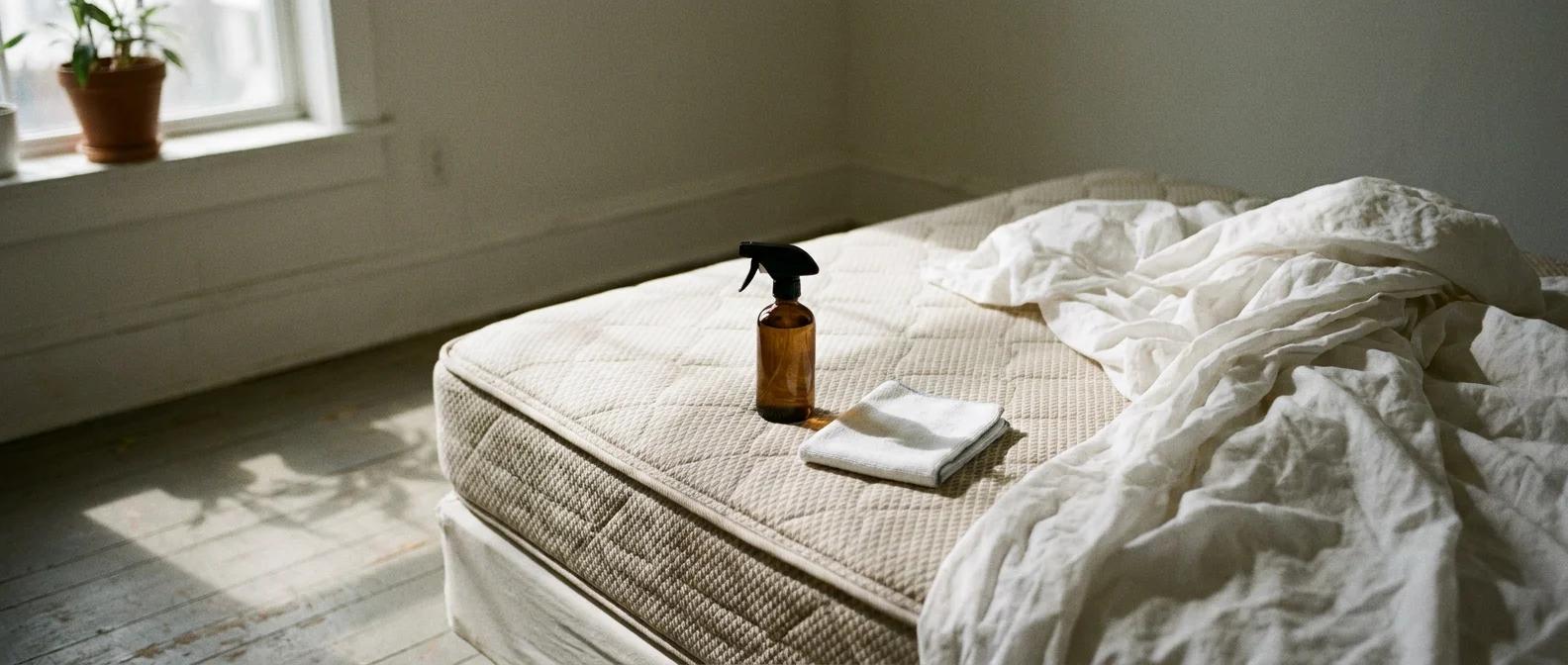
To clean mattress urine stains, you must use a cleaner containing protease enzymes. These enzymes act as biological catalysts. They literally eat the protein chains in urine and vomit. The key is to spray the enzyme cleaner for mattress onto a clean, white microfiber cloth first.
Press that cloth into the stain with firm pressure. This transfers the cleaner without soaking the underlying foam. Products like Rocco & Roxie Professional Strength Stain & Odor Eliminator are specifically formulated for this type of protein breakdown. The enzymes require a dwell time of about 15 to 30 minutes to finish their chemical work before you blot the area dry.
Reversing oxidation: how to clean a mattress with pee
When dealing with accidents, the goal is to neutralize the ammonia. If the urine is already dried, a slightly more aggressive blotting technique is required. You may need to repeat the enzyme application three or four times.
Avoid using a hair dryer to speed up the process. High heat bakes the proteins into the fibers. This makes the yellow stain permanent and can damage the heat-sensitive adhesives used in hybrid mattress construction. Use a floor fan on a high setting to encourage evaporation instead. This is the safest way to approach how to clean a mattress with pee.
Lifting yellow sweat stains
Yellowing occurs when the urea in sweat oxidizes over months of use. To remove yellow sweat stains from mattress surfaces, create a foam using 3% hydrogen peroxide and a single drop of Dawn Ultra dish soap.
Apply only the foam to the yellowed area using a soft-bristled brush. Let it sit for 15 minutes. Hydrogen peroxide breaks the chemical bonds of the chromophores that cause the yellow color. Blot the area with a damp, but not soaking, cloth to remove the residue. Dawn Ultra is effective here because it breaks down the lipids found in human skin oils that often trap the yellow pigment. This method is the standard for anyone looking to remove yellow sweat stains from mattress ticking without using harsh bleaches.
Dust Mite Extraction and Allergen Control
Dust mites do not bite, but their feces contain a protein called Der p 1 that triggers allergic rhinitis and asthma. A standard vacuum is insufficient for this task because it lacks the filtration necessary to trap these microscopic particles.
The HEPA requirement for dust mites
To effectively get rid of mattress dust mites, you must use a vacuum with a sealed HEPA system. Non-HEPA vacuums often have leaky seals that exhaust microscopic allergens back into the room. Use a motorized upholstery tool, as the one found on a Dyson V15 Detect, to vibrate the mattress surface.
This vibration pulls mites and skin cells from the top two inches of the ticking. Vacuuming should be done in slow, overlapping passes. Spend at least five minutes on each side of the bed to ensure deep extraction. This is the most reliable way to remove dust mite populations from mattresses without introducing chemicals.
Why you should never steam clean a mattress
While many DIY guides suggest steam to kill mites, industry experts strongly advise against it. Steam cleaners inject moisture at temperatures exceeding 200 degrees Fahrenheit. This heat melts the cellular structure of memory foam.
The moisture that is injected cannot be fully extracted by a home vacuum. This creates a mold bomb inside your bed. Within 48 hours, the damp, dark interior of the mattress can develop fungal colonies that are impossible to remove. Steam cleaning voids almost every major mattress warranty for this reason.
Along with cleaning your mattress, learning how to wash a comforter at home helps keep your entire bed fresh and hygienic.
Deep Odor Neutralization and Finishing
Once stains are removed, the final step is neutralizing the musty smell that accumulates from body oils and ambient humidity. This requires a dry chemical approach.
The 24-hour baking soda protocol
To clean a mattress with baking soda, you cannot simply sprinkle and vacuum immediately. Sodium bicarbonate needs time to physically absorb lipid-based odors through a process called adsorption. Use a fine mesh sieve to sift a generous, even layer over the entire surface.
Leave it for a minimum of 12 hours. If the mattress has not been cleaned in years, 24 hours is the gold standard for deep neutralization. The baking soda will turn slightly clumpy as it draws out moisture and oils. When the time is up, use your HEPA vacuum to remove every trace of the powder. This is the most effective way to clean a mattress with baking soda at home.
Blood stain removal via oxidation
Blood is particularly difficult because of hemoglobin. Always use ice-cold water for blood. Warm water cooks the blood into the fabric, making it a permanent part of the fiber. Apply 3% hydrogen peroxide directly to the spot and watch for the bubbling action.
This bubbling is the oxidation process breaking down the blood cells. After 10 minutes, blot the area with a cold, damp cloth. This is a foundational part of any mattress stain removal guide. Repeat until the red pigment is gone. If the stain is stubborn, a paste made of salt, cornstarch, and hydrogen peroxide can be applied and left to dry before vacuuming.
Expert Tips and Pro Moves
The Sunlight Sanitizer: If possible, strip your bed and open the windows to let direct morning sunlight hit the mattress. UV-C light is a natural disinfectant that helps kill surface bacteria and neutralize odors.
The White Towel Test: Always use pristine white microfiber cloths for blotting. Colored towels can bleed dye into the mattress ticking when they come into contact with cleaning solutions like peroxide or alcohol.
High-Velocity Drying: After spot cleaning, place a high-velocity floor fan directly on the damp area. Reducing the drying time from hours to minutes is the best way to prevent mold spores from activating in the foam.
The Encasement Strategy: Once the mattress is clean, install a six-sided, polyurethane-backed protector like the SafeRest Premium Mattress Protector. This makes future deep cleaning unnecessary by creating a 100% waterproof and mite-proof barrier.
If persistent odors, deep stains, or damage remain despite cleaning, check how often you should replace your mattress and which signs indicate it may be time for a new one.
Frequently Asked Questions
How do you get dried urine out of a mattress?
Use an enzymatic cleaner to rehydrate and break down the uric acid crystals. Apply the cleaner to a cloth and press it into the dried area for 30 seconds to allow the enzymes to work. Blot with a dry towel and repeat until the scent and stain are gone. Avoid scrubbing, as this can fray the delicate mattress fibers.
Can I use hydrogen peroxide to clean a mattress?
Yes, 3% hydrogen peroxide is excellent for organic stains like blood or sweat. However, it is a mild bleaching agent. Always test a small, inconspicuous area first to ensure it does not discolor the ticking. Use it sparingly to avoid oversaturating the internal foam layers.
How do you remove dust mites from a mattress?
The most effective way is through dry extraction using a HHEPA-certifiedvacuum with a motorized brush head. Vacuuming once a month significantly reduces the allergen load. For those with severe allergies, a dedicated UV-C mattress vacuum can also help neutralize mites on the immediate surface.
Is it safe to remove my mattress cover to wash it?
Only if the care tag explicitly says "Machine Washable." Many modern mattresses use a fiberglass fire barrier beneath the cover. If you unzip it, you risk releasing glass shards into your bedroom. If the tag says "Spot Clean Only," do not remove the cover under any circumstances.
How do you clean a mattress that was peed on?
Act quickly by blotting up as much liquid as possible with paper towels. Apply an enzyme-based cleaner to a cloth and press it into the spot. Follow up with a heavy layer of baking soda left for 24 hours to pull out the remaining moisture and neutralize the ammonia scent.
How long should baking soda sit on a mattress?
For effective odor removal, baking soda needs at least 12 hours. For mattresses with heavy odors, such as those from smoke or years of sweat, 24 hours is recommended. A short 15-minute application only cleans the very surface and will not impact deep-set smells.
Conclusion
Cleaning a mattress is a delicate balance between chemical extraction and moisture control. By using enzymatic cleaners for biological stains and HEPA filtration for allergens, you can extend the life of your bed by years. Remember that the best cleaning strategy is a preventative one. Once your mattress is dry and deodorized, your next action should be to install a high-quality, breathable encasement. This simple barrier ensures that skin cells, sweat, and mites never reach the core of your mattress again. This keeps your sleep environment fresh, clinical, and free of allergens for the long term.