The frustration of staring at the ceiling at 2:00 AM is a universal modern grievance. Whether you are dealing with acute stress or chronic restlessness, the question of how to fall asleep fast usually leads to generic advice like "drink chamomile tea" or "avoid screens." However, sleep is not a passive event. It is a biological transition governed by specific physiological levers. To understand how to fall asleep fast right now, you must move beyond the vague concept of relaxation and into the realm of neurobiology. This involves manipulating your core temperature and down-regulating your nervous system. This guide provides a blueprint for bypassing the sleep effort that keeps you awake. It utilizes protocols like NSDR and thermal dumping to physically force your body into a sleep state. By the end of this piece, you will understand how to shave minutes off your sleep onset and transform your bedroom into a high-performance recovery sanctuary.
Quick Answer / Key Takeaway
Target Sleep Onset Latency (SOL): A healthy transition to sleep should take 10 to 20 minutes. Falling asleep instantly is often a sign of exhaustion rather than efficiency.
The 2-Degree Rule: Your core body temperature must drop by 2 to 3 degrees Fahrenheit to initiate sleep. Use warm baths or cooling bedding to trigger this drop.
NSDR and Breathing: Protocols like Non-Sleep Deep Rest (NSDR) and the 4-7-8 breath act as natural tranquilizers for the nervous system.
The Morning Anchor: Sleep onset at night is determined by viewing sunlight within 60 minutes of waking to set your internal melatonin timer.
Your mattress size can affect how comfortably you sleep, especially if you share your bed or need more room to change positions at night. Compare a King vs California King mattress to find the right fit for your sleeping needs.
Sleep Onset Protocol Comparison Matrix
Protocol | Primary Mechanism | Best For | Time to Execute |
|---|---|---|---|
Military Method | Progressive Muscle Relaxation | Physical Tension | 120 Seconds |
4-7-8 Breathing | Parasympathetic Activation | Racing Thoughts / Anxiety | 2 Minutes |
NSDR / Yoga Nidra | Neurological Down-regulation | Deep Mental Fatigue | 10–20 Minutes |
Thermal Dumping | Core Temperature Manipulation | Physical Restlessness | 60–90 Mins (Pre-bed) |
Paradoxical Intention | Cognitive De-arousal | Sleep Effort Anxiety | Immediate |
Understanding the Mechanics of Sleep Onset Latency
To reduce sleep onset latency, you must first understand the two forces governing your desire for rest: Process C and Process S. Process C is your circadian rhythm, the internal 24-hour clock that regulates alertness based on light exposure. Process S is your homeostatic sleep drive, or sleep pressure. This pressure builds throughout the day as a molecule called adenosine accumulates in the brain. Adenosine is a byproduct of energy consumption. When you consume caffeine, you are not actually removing this pressure. You are simply blocking the receptors that allow your brain to feel it.
Sleep Onset Latency (SOL) is the technical term for the time it takes to transition from full wakefulness to the first stage of sleep. The goal is not zero minutes. A healthy SOL falls between 10 and 20 minutes. If you find yourself unconscious the moment your head hits the pillow, you are likely suffering from a significant sleep debt. Conversely, if it takes longer than 30 minutes, your parasympathetic nervous system sleep signals are being overridden by cognitive arousal or environmental factors.
Triggering the parasympathetic "rest and digest" state is a physiological requirement for sleep. This state is the opposite of the sympathetic "fight or flight" response. Modern stressors like work emails or social media scrolling keep the body in a state of high cognitive arousal. This prevents the heart rate from dropping and keeps heart rate variability (HRV) low. To fall asleep, you must actively signal to your brain that the environment is safe. This shift involves a decrease in core temperature, a drop in heart rate, and a change in brain wave activity from active beta waves to calmer alpha and theta waves.
Mastering Core Body Temperature for Instant Sleep
One of the most effective ways to lower core body temperature is actually to get into a hot bath or shower. This seems counterintuitive, but the science of thermal dumping is well-documented. When you submerge yourself in warm water 60 to 90 minutes before bed, you trigger vasodilation. This process brings blood flow to the surface of your skin. Once you exit the bath, the heat rapidly escapes your body through your hands and feet. This causes your internal core temperature to plummet.
This 2- to 3-degree Fahrenheit drop is the biological green light your brain needs to initiate sleep. If your core remains too high, your brain will stay in a state of alertness. This is why many people struggle to sleep in warm environments or after late-night exercise. You are effectively trapped in a state of heat retention that prevents the necessary neurological transitions.
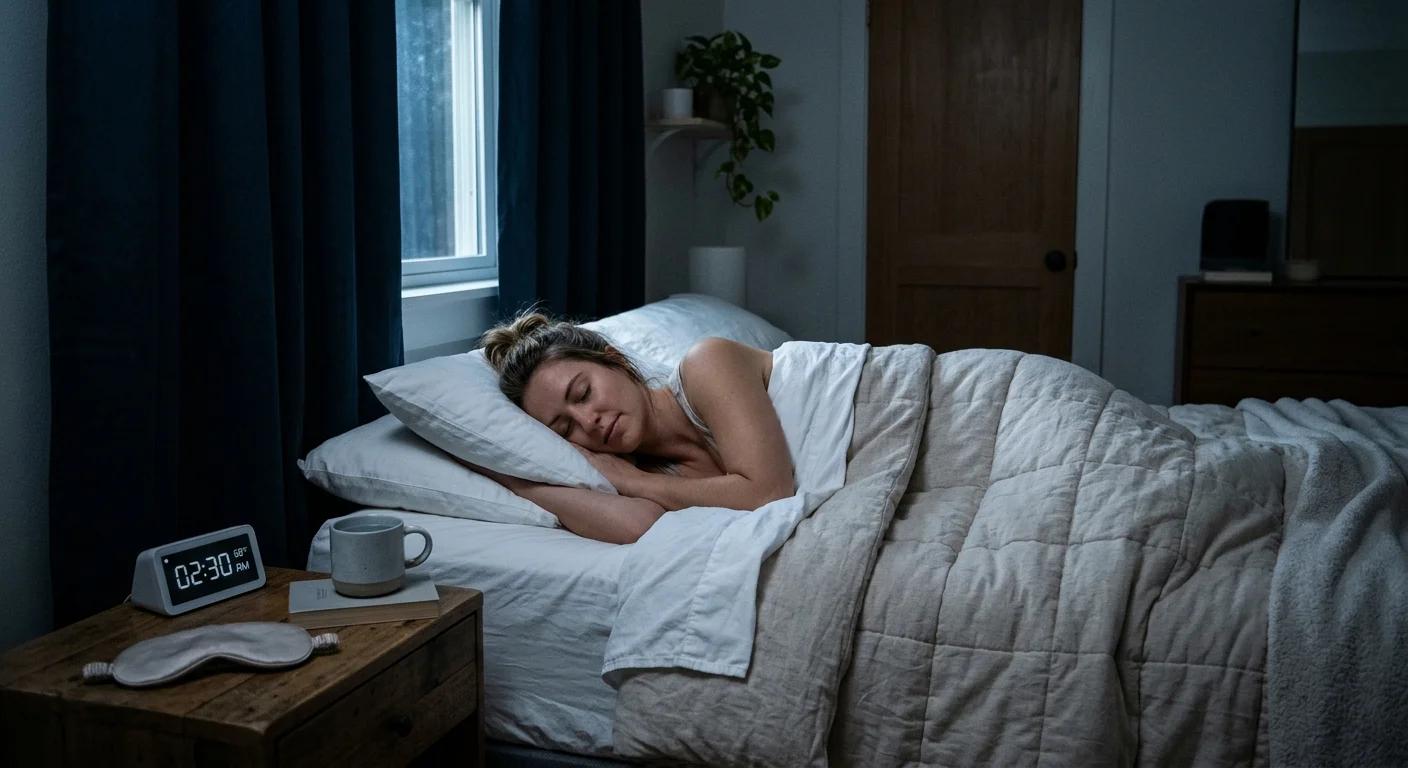
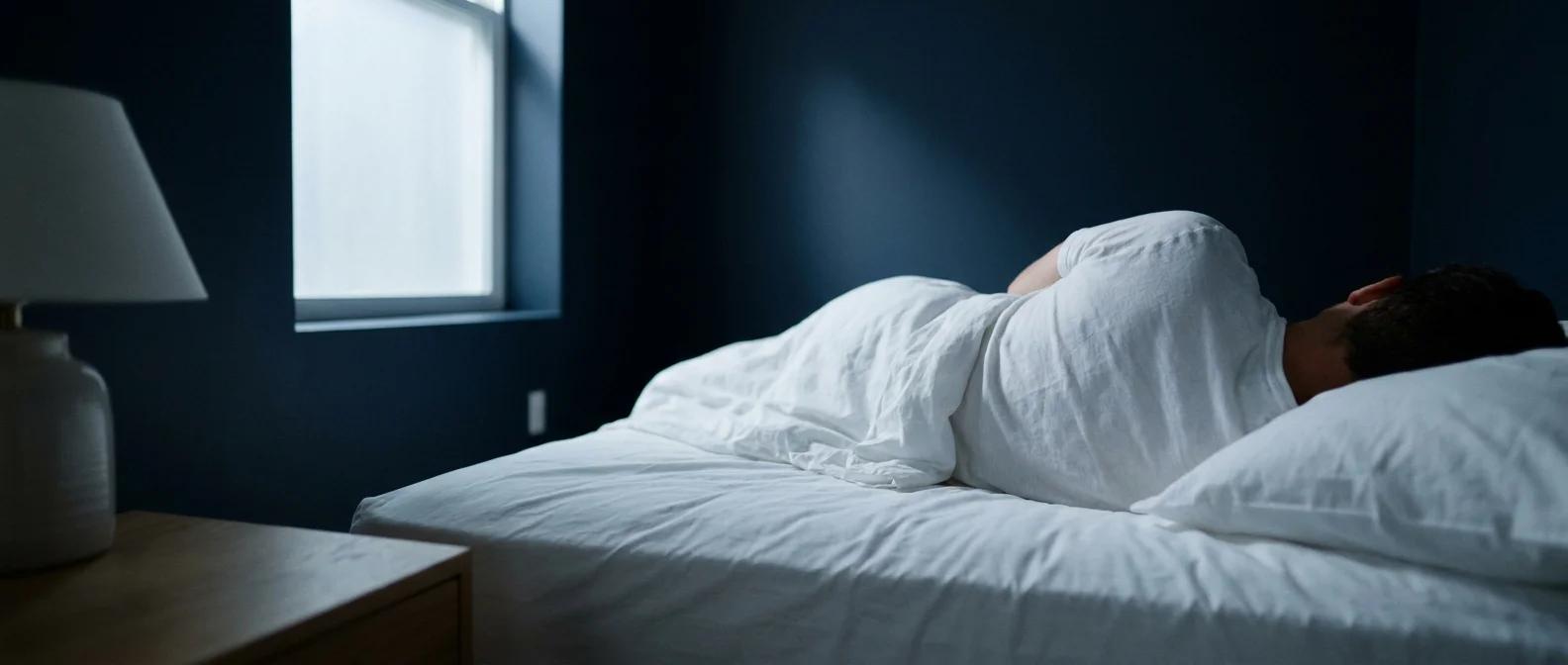
Designing a high-performance sleep sanctuary requires maintaining an ambient room temperature between 60 and 67 degrees Fahrenheit. For those who struggle with chronic "hot sleeping," an active cooling system is a significant upgrade. The Eight Sleep Pod allows for precise temperature regulation throughout the night, adjusting based on your sleep stages. If you prefer a traditional approach, high-breathability percale cotton sheets are a superior choice over sateen or synthetic blends. The environment also benefits from a low Light Reflectance Value (LRV). Using a deep, receding color like Benjamin Moore’s Hale Navy on the walls can help create a cave-like atmosphere that reinforces the signal for lower core body temperature for sleep.
Along with a consistent bedtime and a relaxing nighttime routine, good sleep habits can make it easier to fall asleep. Explore these sleep hygiene habits to build a routine that supports better rest.
Neurological Hacks: From NSDR to the Military Method
Non-Sleep Deep Rest (NSDR) is a term popularized by Dr. Andrew Huberman to describe protocols like Yoga Nidra. These techniques involve a guided body scan that shifts the brain from active beta waves into the restorative states of alpha and theta. Unlike meditation, which often requires focus, NSDR is about radical non-effort. You lie still and follow a specific sequence of sensory awareness. This "teaches" the nervous system how to turn off. It is particularly effective for those who want to know how to fall asleep fast with insomnia because it provides a structured path to relaxation without the pressure of "trying" to sleep.
The fall asleep fast military method is another powerful tool for neurological down-regulation. Developed by the U.S. Navy Pre-Flight School, this technique was designed to help pilots fall asleep in under two minutes, even in high-stress environments. The protocol begins with systematically relaxing every muscle in the face, including the tongue and the muscles around the eyes. You then drop your shoulders as low as possible and exhale, relaxing your chest. Finally, you clear your mind for ten seconds.
The visualization component of the military method is essential. Pilots are instructed to imagine themselves lying in a canoe on a calm lake under a clear blue sky, or snuggled in a black velvet hammock in a pitch-black room. If thoughts intrude, they repeat the phrase "don't think" for ten seconds. Reports indicate that after six weeks of consistent practice, 96% of pilots could fall asleep within 120 seconds. This success rate demonstrates that sleep onset is a skill that can be trained through physical repetition.
Cognitive Offloading and the 20-Minute Rule
If you need to know how to fall asleep fast right now, the 4-7-8 breathing protocol is your most immediate lever. Developed by Dr. Andrew Weil, this technique acts as a natural tranquilizer for the nervous system. You inhale through your nose for 4 seconds, hold your breath for 7 seconds, and exhale forcefully through your mouth for 8 seconds. The long exhale is the specific "hack" that stimulates the vagus nerve. This signals the heart to slow down and forces the body into a parasympathetic state. Repeat this for exactly four cycles to achieve immediate physiological calm.
Stimulus control is another vital component of managing how to fall asleep fast with insomnia. This includes the "20-Minute Rule" from Cognitive Behavioral Therapy for Insomnia (CBT-I). If you are not asleep within 20 minutes, you must leave the bed. Staying in bed while frustrated creates a psychological association between your mattress and wakefulness. Go to another room, keep the lights low, and perform a dull task until you feel the "wave" of sleepiness return.
Paradoxical Intention is a cognitive technique where you lie in bed and try to stay awake with your eyes open. This removes the "sleep effort" and performance anxiety that often keeps insomniacs awake. By giving yourself permission to stay awake, the pressure to perform sleep vanishes, often leading to a faster transition. To assist with cognitive offloading, keep a physical notebook like a Leuchtturm1917 on your nightstand. Writing down a "brain dump" of tomorrow's to-do list or current worries moves those thoughts from your active working memory onto the page, reducing the mental chatter that prevents sleep.
Circadian Lighting and the Morning Anchor
Falling asleep fast at night actually begins the moment you wake up. To understand how to fall asleep when not tired, you must look at your light exposure. Viewing 10 to 30 minutes of outdoor sunlight within an hour of waking triggers a neural circuit that sets a timer for melatonin release. This release will happen approximately 14 to 16 hours later. If you miss this morning anchor, your body does not have a clear signal of when the day started, leading to a delayed sleep onset at night. Note that viewing sunlight through a window is significantly less effective. Window glass filters out the specific blue-sky wavelengths required to trigger this hormonal response.
As the evening approaches, you must eliminate blue and green light to prevent melatonin suppression. Modern LED lighting and screens emit high concentrations of blue light that trick the brain into thinking it is midday. Transitioning your home into "sunset mode" two hours before bed is a professional-level move. Using Philips Hue White Ambiance bulbs set to a warm amber (2700K or lower) mimics the natural shift of the sun. This environment signals the pineal gland to begin the transition to sleep.
It is also important to address "Orthosomnia," a term used to describe the anxiety caused by wearable sleep trackers. Devices like the Oura ring or Whoop strap provide valuable data, but obsessing over a "sleep score" can create the very stress that prevents a good night's rest. To stop sleep tracking anxiety, focus on how you feel upon waking rather than the data on the screen. If you find yourself checking your stats the moment you wake up, consider taking a break from the device. Use it as a tool for long-term trends rather than a daily grade on your performance.
A clean, comfortable sleeping environment can make your bedtime routine more pleasant and inviting. Learn how to clean a mattress to remove stains, odors, and accumulated dust that can affect your sleep environment.
Expert Tips and Pro Moves
The Face Dunk Protocol: If your heart is racing due to anxiety, splash ice-cold water on your face or submerge your face in a bowl of cold water for 15 seconds. This triggers the Mammalian Dive Reflex. It is a biological response that instantly lowers your heart rate and redirects blood flow to the brain and heart, forcing a state of calm.
Hide the Clock: Turn your alarm clock away from the bed. The act of "clock watching" and calculating how many hours of sleep you have left spikes cortisol. This resets your sleep onset timer and makes it significantly harder to drift off.
The Caffeine Half-Life: Be mindful of the 6-hour half-life of caffeine. If you have a cup of coffee at 4:00 PM, 25% of that caffeine is still active in your brain at 4:00 AM. For optimal sleep onset, aim to stop caffeine consumption by noon or 2:00 PM at the latest.
Nose Breathing Only: Focus on nasal breathing throughout the evening. Mouth breathing can lead to over-oxygenation and lower CO2 levels in the blood, which can be stimulating. Nasal breathing increases CO2 slightly, which has a natural sedative effect on the nervous system. Some experts even suggest using medical-grade mouth tape to ensure nasal breathing during sleep.
Frequently Asked Questions
How long should it take a normal person to fall asleep?
A healthy Sleep Onset Latency is 10 to 20 minutes. If you fall asleep in under 5 minutes, you are likely suffering from significant sleep debt. If it takes longer than 30 minutes, you may be experiencing high cognitive arousal or a circadian mismatch.
Does the military sleep method actually work?
Yes. It is a form of progressive muscle relaxation (PMR) that systematically reduces physical tension. Physical relaxation is a biological prerequisite for mental relaxation. With consistent practice, it becomes a conditioned response.
Is it bad to fall asleep with the TV on?
Yes. The blue light emitted by the screen suppresses melatonin production. Furthermore, the variable audio levels and sudden changes in light intensity can prevent you from entering the deeper, more restorative cycles of REM sleep.
What is the 4-7-8 breathing trick?
It is a rhythmic breathing pattern that alters the oxygen and carbon dioxide balance in your blood. By extending the exhale, you force the vagus nerve to signal the parasympathetic nervous system to take over.
Why do I always wake up at 3 AM?
This is often due to a blood sugar dip or the metabolism of evening alcohol. Alcohol fragments sleep and prevents you from reaching deep stages. It can also be caused by the natural trough in your core body temperature, which occurs in the early morning hours.
Does magnesium help you fall asleep faster?
Magnesium Glycinate or Threonate can be helpful. These forms of magnesium can cross the blood-brain barrier to support GABA, which is the neurotransmitter responsible for quieting the brain's activity. Always verify dosages with a healthcare provider.
Conclusion
Falling asleep fast is not a matter of willpower. It is a matter of biological signaling. By manipulating your core temperature, utilizing NSDR protocols, and anchoring your circadian rhythm with morning light, you take the guesswork out of rest. Instead of trying to sleep, which only creates the anxiety that keeps you awake, focus on the physiological triggers that make sleep inevitable. Tomorrow morning, step outside for ten minutes of sunlight. It is the first and most important step toward falling asleep faster tomorrow night. Your body knows how to rest. You simply need to provide the correct environment and signals to allow it to happen.