The industry standard suggests a new bed every seven to ten years, but your body often tells a different story long before the calendar does. If you are waking up with localized stiffness or noticing a permanent valley where you sleep, you are likely asking: how often should you replace your mattress to protect your spinal health? The answer is not a fixed date. Instead, it is a calculation of material density, sleeper weight, and structural integrity. While a high-quality natural latex bed might remain supportive for fifteen years, a low-density "bed-in-a-box" might lose its Indentation Load Deflection (ILD) in five. This guide moves beyond generic timelines to provide a technical blueprint for measuring mattress fatigue. You will learn how to perform a "Broomstick Test" to quantify sagging and understand why your foundation might be the silent killer of your mattress’s lifespan.
Quick Answer / Key Takeaway
The 1-inch rule: If an unweighted sag measures 1 inch or deeper using a straight edge, the support core has failed.
Material matters: Natural latex lasts 12 to 15 plus years, memory foam 7 to 10 years, and traditional innersprings 5 to 7 years.
Pain is the proxy: Morning lower back pain is the primary clinical indicator that your mattress can no longer maintain a neutral spinal alignment.
Warranty vs. comfort: A 20-year warranty covers manufacturing defects, not the gradual softening of foam that leads to discomfort.
Mattress Lifespan and Failure Matrix
Mattress type | Average lifespan | Primary failure sign | Replacement trigger |
|---|---|---|---|
Natural Latex | 12–15+ Years | Edge softening or crumbling | Visible "pitting" in the latex core |
Memory Foam | 7–10 Years | "Bottoming out" sensation | Foam fails to recover shape after 30 seconds |
Hybrid | 7–10 Years | Comfort layer sagging | Deep body impressions (>1 inch) |
Innerspring | 5–7 Years | Squeaking or metal fatigue | Coils felt through the quilting |
Polyfoam (Budget) | 3–5 Years | Rapid loss of firmness | Significant dip in the center (troughing) |
The Material Hierarchy: Understanding Mattress Lifespan by Material
The longevity of your bed is dictated by the fatigue rate of its internal components. Not all materials are created equal. For instance, how long do memory foam mattresses last compared to organic alternatives? It comes down to the cellular structure and its resistance to heat and pressure. When you buy a mattress, you are essentially buying a specific amount of "work" the material can do before its molecular bonds break down.
Natural latex vs. memory foam durability
Natural latex, often found in brands like Avocado Green, is the gold standard for longevity because it is highly resilient and resists body impressions. While memory foam mattress models are prone to cell breakdown over 7 to 10 years due to repeated exposure to body heat, natural latex can easily exceed 15 years. This is because latex is a vulcanized rubber product. It pushes back with equal force to the weight applied.
When evaluating foam, look for high-density ratings. Memory foam should ideally have a density of 4 to 5 pounds per cubic foot. Lower-density foams, often found in entry-level models, soften rapidly. This leads to a "stuck" feeling where the foam no longer contours but simply collapses. The technical term for this is a loss of Indentation Load Deflection (ILD). This is the measure of how many pounds of pressure it takes to compress a foam sample by 25 percent of its thickness. As ILD drops, your support vanishes.
The hybrid and innerspring reality
Hybrid mattresses, such as the Saatva Classic, utilize pocketed coils which generally outlast the foam layers placed on top of them. In these models, the failure usually happens in the comfort layers rather than the steel. You might feel the coils are fine, but the two inches of "euro-top" foam have compressed into a hard disk. This creates a deceptive feeling where the bed feels both hard and unsupportive at the same time.
Traditional innersprings with lower coil gauges are more durable than thinner wires. A 12-gauge coil is thick and stiff, while a 15-gauge coil is thinner and more prone to "coil fatigue." This is the point where the steel loses its tension and begins to squeak or sag. This is the average mattress life expectancy for most mid-range department store beds. Once the metal loses its temper, there is no way to restore the loft of the bed.
Physical indicators: signs you need a new mattress
You cannot always see a mattress failing with the naked eye, especially if the quilted cover hides the internal breakdown. You must use objective measurements to determine how to tell if a mattress is bad. Visual inspections are often misleading because high-loft quilting can mask deep depressions in the foam layers beneath.
The broomstick test for structural sagging
To perform this test, strip all bedding and lay a straight broomstick or PVC pipe across the width of the mattress. Use a ruler to measure the gap between the mattress surface and the stick. If the unweighted gap is 1 inch or more, the structural integrity has failed. This is the most reliable way to distinguish between normal settling and a defect.
Normal settling is usually around 0.5 inches and is considered a "body impression." However, once that impression hits the 1-inch mark, the materials have reached their compression limit. At this stage, the mattress can no longer provide the counter-pressure needed to keep your heavy midsection from sinking. This is one of the most definitive signs you need new mattress intervention. If you see this gap, no amount of rotating or flipping will fix the underlying foam collapse.
Waking up with back pain
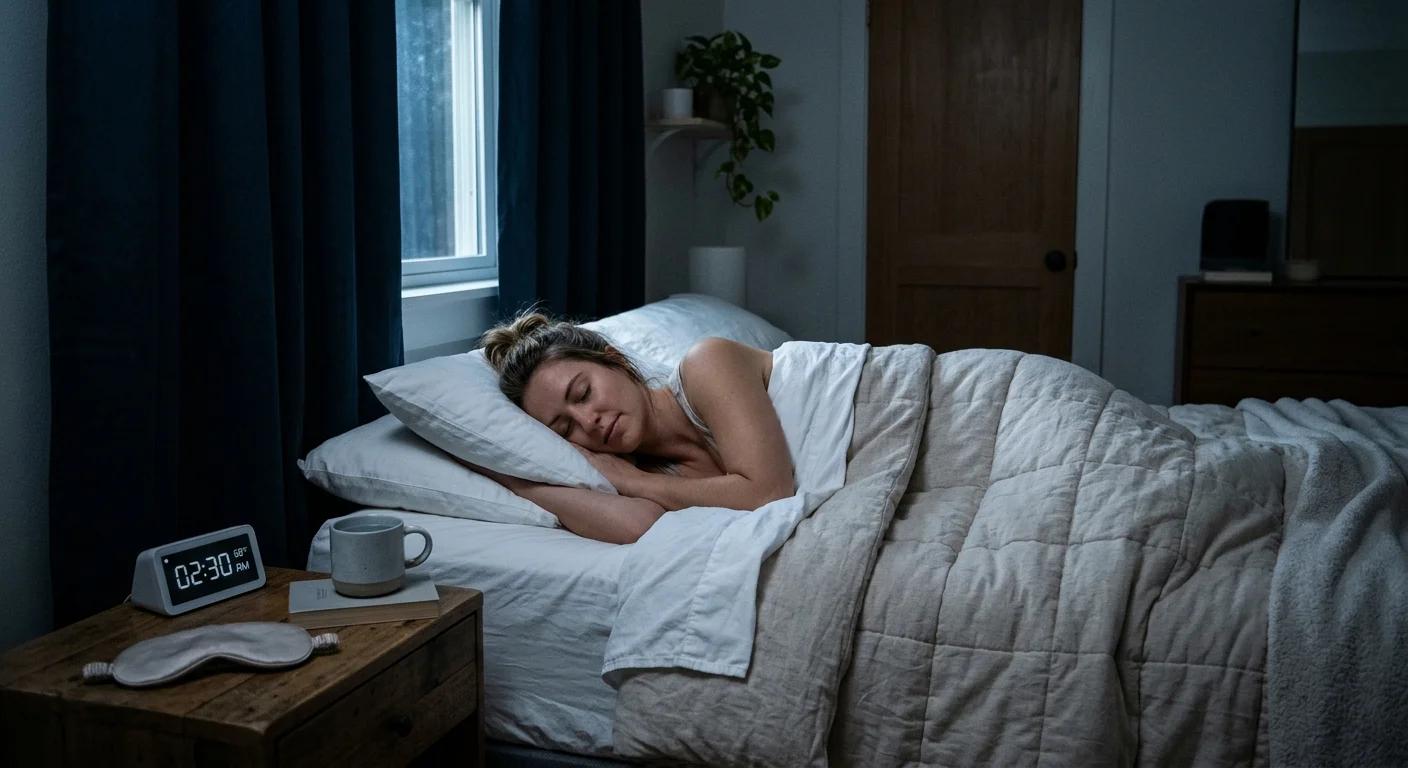
If you feel better after 30 minutes of moving around than you did the moment you woke up, your mattress is likely the culprit. Waking up with back pain: Mattress issues occur when the heaviest parts of the body sink too deeply. This forces the spine out of a neutral, horizontal alignment. Your hips are the heaviest part of your anatomy. When the mattress core softens, the hips drop lower than the shoulders and knees.
This "hammocking" effect strains the ligaments and muscles of the lower back overnight. Instead of resting, your core muscles stay engaged all night trying to protect your spine. This results in that familiar morning stiffness. If this pain dissipates once you are upright and moving, it is a clear sign that your sleep surface is failing to provide a neutral platform. Chronic pain that persists all day may be medical, but morning-only pain is almost always environmental.
The external factors: weight and foundation
A mattress does not exist in a vacuum. Two identical beds will have vastly different lifespans depending on who is sleeping on them and what they are sitting on. The environment beneath the mattress is just as vital as the layers within it.
Does sleeper weight affect mattress lifespan?
Yes, significantly. A sleeper weighing over 250 lbs will compress foam and steel layers with more force, accelerating material fatigue. For heavier individuals, a standard mattress may only last 5 years, whereas a heavy-duty model with high-density foams and reinforced coils will reach the 10-year mark.
When considering whether sleeper weight affects mattress lifespan, think of it in terms of cycles. Every time you sit or lie on the bed, you are "cycling" the foam cells. Heavier weights put more stress on the cell walls of the foam. Over time, these walls crack and lose their air-trapping ability. For those in higher weight brackets, looking for "Titan" or "HD" (High Density) designated mattresses is the only way to ensure the 7-to-10-year window is met.
The foundation audit: box springs vs. slats
Many people ask if they should replace mattress and box spring at the same time. If you are moving from an innerspring to a foam or hybrid bed, your old box spring may actually damage the new mattress. Modern foam beds require a solid foundation or slats no more than 2.75 to 3 inches apart.
If the gaps are wider, the mattress will "bulge" through the spaces. This causes premature sagging because the mattress has nothing to push against. If you have a quality mattress on a bad frame, you can use a Zinus Bunkie Board. This is a $50 to $150 fix that provides a flat, rigid surface over wide slats. This simple addition can often save a mattress that feels like it is sagging but is actually just falling through the cracks of the bed frame.
Modern Challenges: Bed-in-a-Box and One-Sided Designs
The shift from flippable mattresses to one-sided, compressed shipping models has changed the rules of durability. The convenience of a box arriving at your door comes with a trade-off in material density.
When to replace a bed in a box
Most "bed-in-a-box" models use lower-density polyfoam to allow for compression during shipping. While convenient, these materials often have a shorter average mattress life expectancy. You should monitor these for "troughing." This is a dip in the center of the bed that often appears within 3 to 5 years in budget models.
Because these beds are shipped tightly rolled, the foam cells are pre-stressed before they even reach your home. If you notice that you and your partner are rolling toward the middle of the bed, the center support has likely given way. This is a common issue with "all-foam" budget constructions that lack a dedicated edge-support system or a high-density base layer.
Flippable vs. one-sided mattress durability
Before the 2000s, two-sided mattresses were the norm. Today, most mattresses are "no-flip." This means they have a specific support core on the bottom and comfort layers on top. Attempting to flip a one-sided mattress results in sleeping on hard base foam, which is not designed for comfort.
While one-sided designs are more convenient, they wear out faster because you are always compressing the same side. To combat this, these must be rotated head-to-foot every 3 to 6 months to ensure even wear. This distributes the weight of your torso across different sections of the foam. If you ignore this rotation schedule, you will likely develop deep body impressions in the exact shape of your torso within the first two years.
Maintenance and Stopgap Measures
If you are not ready for a $2,000 investment, there are ways to mitigate minor wear, but they have physical limits. You cannot fix a broken spring or a collapsed foam core with accessories.
New mattress vs. mattress topper
A common question is: can a mattress topper extend the life of my bed? A topper, like the Sleep On Latex Pure Green Topper, can add comfort to a bed that is too firm or has very minor surface wear. However, a topper cannot fix a sag.
Because foam is flexible, a topper will simply follow the contour of the hole beneath it. It provides no additional support for your spine. If your mattress is dipping, adding a topper is like putting a new carpet over a hole in the floor. You will still fall into the hole. Use a topper only if the mattress is structurally sound, but the surface feels too hard or "crispy" due to aging fibers. This is a common way to replace memory foam mattress feel without the full cost of a new unit, provided the base foam is still intact.
The impact of biological debris
Over a decade, a mattress accumulates pounds of biological debris. This includes dead skin, sweat, and dust mites. This is not just an allergy issue. The oils and moisture from your body can actually accelerate the breakdown of synthetic foams. Moisture acts as a catalyst for "oxidation" in polyfoams, making them brittle and prone to crumbling.
Using a waterproof, breathable protector is the single best way to ensure your mattress reaches its maximum theoretical lifespan. It prevents the salt and acidity of human sweat from reaching the foam layers. If you notice your mattress has developed a yellowed hue or a distinct odor, the biological load has likely compromised the material integrity. This is a subtle way of knowing how to tell if a mattress is bad beyond just the physical shape.
Expert Tips and Pro Moves
Ignore the warranty for comfort: A "Lifetime Warranty" usually only covers sags deeper than 1.5 inches. If your bed is uncomfortable at a 0.75-inch sag, the warranty will not help you, but your back will suffer. Replace based on feel, not the certificate.
Check for certifications: To ensure you are not sleeping on low-quality foams that off-gas and degrade quickly, look for CertiPUR-US, GOTS (Organic Textiles), or GOLS (Organic Latex) labels. These ensure the materials meet specific density and purity standards.
The medium-firm standard: If you are replacing a bed due to back pain, aim for "medium-firm." Clinical studies suggest this level of resistance provides the best balance of pressure relief and spinal support for the majority of sleepers. It prevents the hips from sinking too far while still cushioning the shoulders.
Frequently Asked Questions
Can an old mattress cause lower back pain?
Yes. As the internal support layers fatigue, they lose the ability to push back against your body weight. This causes your hips to sink too deeply, pulling your spine out of its neutral alignment and causing the muscles in your lower back to remain tense all night.
How do I know if my mattress is sagging too much?
Use the "Broomstick Test." Strip the bed and lay a straight edge across the surface. Measure the gap between the mattress and the stick. If the dip is 1 inch or deeper without any weight on the bed, the mattress has structurally failed and needs replacement.
Does a mattress topper extend the life of a mattress?
A topper can protect the surface and adjust the firmness of a bed that is still structurally sound. However, it is a temporary fix. It cannot fill in a sag or restore the lost support of a collapsed inner core. It will merely sink into the existing depression.
Why is my memory foam mattress getting softer?
Memory foam undergoes fatigue from repeated compression and exposure to body heat. Over time, the microscopic cells within the foam break down and lose their ability to spring back. This leads to a permanent softening and a loss of the original Indentation Load Deflection (ILD).
How often should you rotate your mattress?
To prevent deep body impressions and ensure the materials wear evenly, you should rotate your mattress 180 degrees every 3 to 6 months. This is especially important for one-sided mattresses that cannot be flipped.
Do latex mattresses really last longer than memory foam?
Yes. Natural latex is a highly resilient, rubber-based material that maintains its shape and support for 12 to 15 years or more. Unlike synthetic memory foam, it does not trap as much heat and is far more resistant to the permanent dipping caused by body weight.
Conclusion
Determining when to move on from your current bed is a balance of physical evidence and personal comfort. If your mattress passes the Broomstick Test but you are still waking up with persistent stiffness, the material has likely softened beyond its supportive limit. Your next action should be a "Foundation Audit." Strip your bed tonight and check the spacing of your slats or the tension of your box spring. If your base is failing, even a brand-new mattress will not save your sleep. Invest in a solid foundation first, then choose a mattress material that matches your long-term durability expectations. Taking these steps ensures that your next investment provides the decade of restorative sleep you deserve.