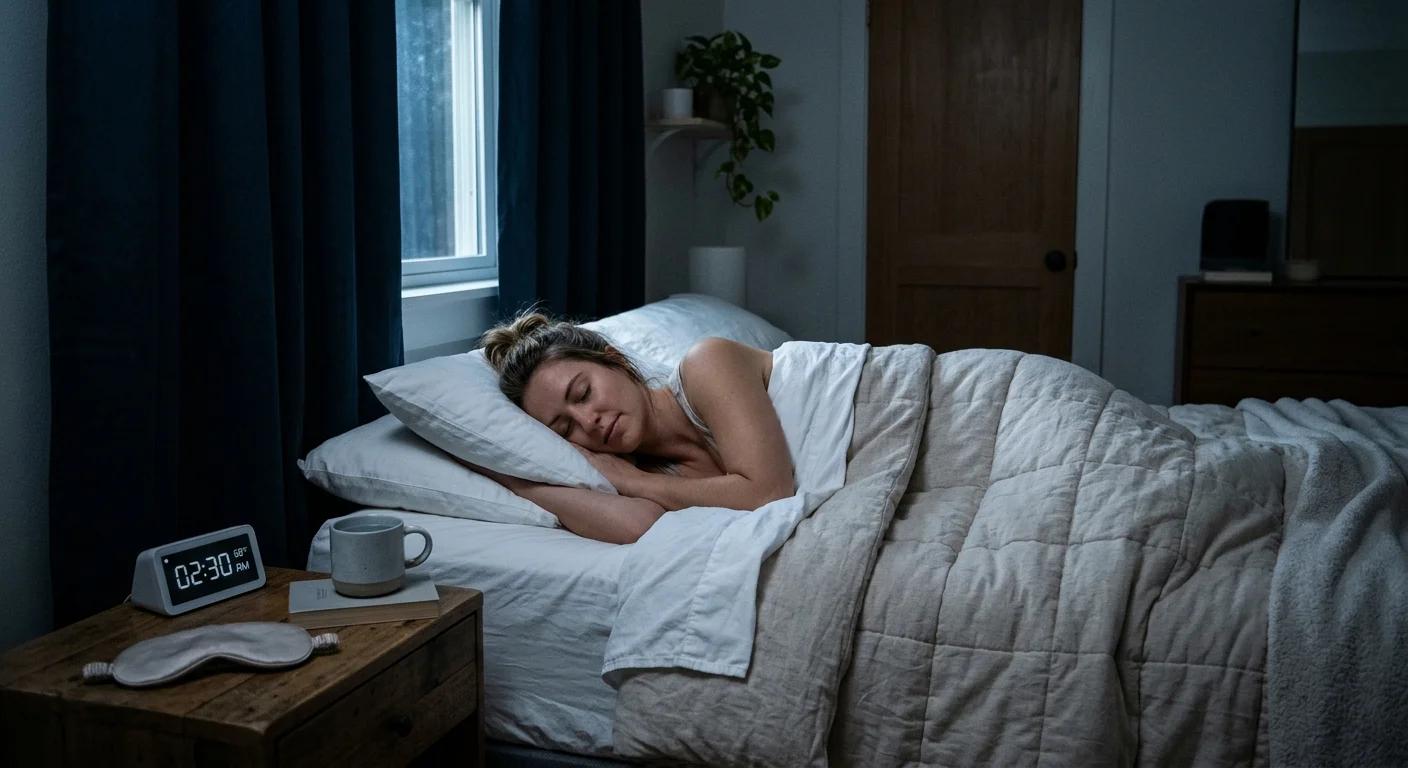
Waking up in the pitch-black of 3:00 AM is a uniquely isolating experience. You are not quite rested, yet your mind suddenly races with a precision it lacked at 10:00 PM. If you find yourself asking, "Why do I wake up at 3 amM?" nearly every night, you are not alone, and you are not broken. This phenomenon is a predictable intersection of human sleep architecture and modern physiological stressors. While it feels like a random glitch, it usually results from a specific chemical shift, such as a cortisol spike or a blood sugar crash, that jolts you out of a light sleep stage. This guide moves beyond generic stress-less advice to provide a science-backed blueprint for identifying your specific triggers and implementing the environmental and biological protocols needed to anchor your sleep until dawn.
Quick Answer / Key Takeaway
Sleep Architecture: By 3:00 AM, the body has finished most restorative Deep Sleep and transitioned into lighter REM sleep, making you more susceptible to waking from minor internal or external stimuli.
The Cortisol Spike: Chronic stress causes the Cortisol Awakening Response to happen prematurely, signaling your brain to become alert hours before the sun rises.
Blood Sugar Dips: If blood sugar drops too low, a condition known as nocturnal hypoglycemia, the brain triggers an adrenaline release to stabilize glucose, which effectively shocks you awake.
The 15-Minute Rule: If you cannot fall back asleep within 20 minutes, you must leave the bed to prevent your brain from associating the mattress with wakeful anxiety.
3 AM Wake-Up Diagnostic Matrix
Primary Trigger | Physiological Sign | Likely Culprit | Immediate Fix |
|---|---|---|---|
Blood Sugar Crash | Waking up hungry, shaky, or with a racing heart. | High-carb dinner or long fast before bed. | Small protein and fat snack like almond butter. |
Cortisol Spike | Mind racing immediately: tired but wired feeling. | Chronic daytime stress or high caffeine intake. | NSDR (Non-Sleep Deep Rest) or Yoga Nidra. |
Alcohol Rebound | Waking up hot, thirsty, or with fragmented dreams. | Evening nightcap or wine with dinner. | Hydration and 72-hour alcohol elimination. |
Temperature Spike | Night sweats or kicking off the covers. | Bedroom above 67°F or synthetic bedding. | Lower thermostat to 65°F: switch to linen. |
Bladder Pressure | Immediate urge to urinate. | Late-night fluids or light sleep sensitivity. | Limit fluids 2 hours before bed; dim bathroom lights. |
The Science of Sleep Architecture: Why 3 am is the Vulnerable Hour
REM Sleep vs. Deep Sleep: The Lighter Side of the Night
Human sleep occurs in 90-minute cycles that repeat throughout the night. However, these cycles are not identical. The first half of the night, roughly from 10:00 PM to 2:00 AM, is dominated by NREM (Non-Rapid Eye Movement) deep sleep. This is the stage where the body performs its most intense physical repairs, releases growth hormones, and clears metabolic waste from the brain. It is notoriously difficult to wake someone from deep sleep. If you have ever been nudged at 11:30 PM and felt completely disoriented, you were likely in this stage.
By 3:00 AM, the ratio of sleep stages shifts significantly. You have already banked the majority of your deep sleep, and your body begins to prioritize REM (Rapid Eye Movement) sleep. REM is characterized by high brain activity, vivid dreaming, and a much lower arousal threshold. Because you are in a lighter stage of sleep during this window, your brain is more attuned to the environment. A car door slamming down the street, a slight dip in blood sugar, or a minor increase in body temperature is often enough to pull you into full consciousness. This is why middle-of-the-night insomnia frequently strikes in the early hours of the morning rather than shortly after you fall asleep. The brain is simply more "awake" even while it is technically resting.
The Cortisol Awakening Response (CAR) and Early Alertness
Cortisol is often unfairly labeled as only a stress hormone, but it is actually your body’s natural alarm clock. Under normal conditions, cortisol levels reach their lowest point around midnight and then begin a slow, gradual rise around 3:00 AM. This rise is intended to prepare your body for the day by increasing blood pressure and blood sugar. This is known as the cortisol awakening response sleep cycle.
However, chronic stress or high levels of evening anxiety can cause this system to malfunction. When your baseline stress is high, your body may "front-load" this cortisol rise. Instead of a gentle incline that peaks at 7:00 AM, you experience a sharp spike at 3:00 AM. This chemical surge hits the wakefulness threshold too early, causing you to wake up at 3: 00 AM with anxiety. You might feel your heart racing or find yourself mentally reviewing your to-do list for the next day. Your brain has essentially been told that the day has started, even though your body still requires several more hours of rest.
Physiological Triggers: Blood Sugar and Hormonal Spikes
Nocturnal Hypoglycemia: Why You Wake Up at 3 a.m. Hungry
One of the most overlooked reasons for early morning awakenings is the management of blood glucose. The human brain is a metabolically expensive organ, consuming approximately 20% of the body's total glucose. If you eat a high-glycemic dinner, such as a large bowl of pasta or a sugary dessert, your blood sugar will spike and then inevitably crash. If this crash happens while you are asleep, it is called nocturnal hypoglycemia.
When blood sugar drops dangerously low, the brain perceives a survival emergency. To protect itself, it signals the adrenal glands to release a surge of adrenaline and cortisol. These hormones tell the liver to release stored glucose to stabilize your levels. Unfortunately, adrenaline is the "fight or flight" hormone. This chemical surge is exactly what causes you to wake up at 3 am hungry and alert. You might feel a sense of dread or physical shakiness that makes it impossible to drift back to sleep. Stabilization of blood sugar is often the single most effective way to stop the 3 AM cycle for those who find themselves wide awake and famished.
The Alcohol Rebound Effect: Why the Nightcap Backfires
Many people use a glass of wine or a cocktail to help them "unwind" and fall asleep faster. While alcohol is a sedative that can indeed shorten the time it takes to fall asleep, it is a disaster for sleep maintenance. As the liver metabolizes the alcohol, it produces acetaldehyde, a stimulant that interferes with the normal sleep cycle.
This process typically leads to a "rebound effect" that occurs about three to four hours after your last drink. This is one of the primary 3am wake up causes. During this rebound, the body experiences a surge in sympathetic nervous system activity. Your heart rate increases, your body temperature rises, and your REM sleep becomes fragmented and intense. Furthermore, alcohol is a diuretic, which contributes to the wake-up at 3 am to pee cycle. By the time the alcohol is out of your system, you are left in a state of light, restless sleep that is easily broken by the slightest disturbance.
Environmental and Lifestyle Protocols
Core Temperature and the 3 AM Heat Spike
The body’s core temperature follows a circadian rhythm, peaking in the late afternoon and reaching its lowest point around 3:00 AM. To initiate and maintain deep sleep, your core temperature must drop by about 2 to 3 degrees Fahrenheit. If your bedroom environment prevents this cooling process, your sleep will be shallow and easily interrupted.
Many modern bedrooms are kept too warm, or they utilize synthetic bedding materials like polyester or memory foam that trap heat against the skin. This thermal stress can trigger a wake-up as the body struggles to dump heat. The ideal sleep temperature is approximately 65°F (18.3°C). For those who struggle with temperature regulation, the Eight Sleep Pod Cover (verify price with manufacturer, typically $2,200+) is a high-end solution that allows for active cooling of the mattress surface. By keeping the microclimate of the bed consistent, you can prevent the heat-induced wake-ups that often occur during the transition to REM sleep. Learning how to stop 3 a.m. wake-ups often begins with a thermostat adjustment.
The 15-Minute Rule and Stimulus Control
One of the most damaging things you can do when you can't sleep after waking at 3 am is to stay in bed and worry about not sleeping. This creates a psychological association between your mattress and the frustration of insomnia. In the field of Cognitive Behavioral Therapy for Insomnia (CBT-I), this is addressed through stimulus control.
The 15-minute rule is a foundational protocol: if you are not back to sleep within what feels like 20 minutes, you must get out of bed. Do not turn on bright overhead lights. Instead, move to a "reset station" in another room. Use a low-intensity light source, such as the Hooga Red Light Book Light (verify price with the manufacturer, typically $15), to read a physical book or listen to a calm podcast. Red light does not suppress melatonin production the way blue or white light does. Only return to bed when you feel the physical "wave" of sleepiness return. This prevents your brain from "learning" to be awake in bed.
Circadian Lighting and Bedroom Design
Your bedroom should be a sanctuary that cues the parasympathetic nervous system, the "rest and digest" side of your nervous system. This starts with visual cues. Design experts often recommend low-LRV (Light Reflectance Value) colors for bedroom walls to minimize light bounce. Shades like Benjamin Moore Quiet Moments or Farrow & Ball Pigeon provide a muted, calming backdrop that signals the brain to slow down.
Beyond color, the presence of technology is a major contributor to 3 a.m. wake-upcauses. The blue light emitted by smartphones halts melatonin production instantly, making it much harder to fall back asleep if you check your notifications. Furthermore, "clock-watching" is a known trigger for sleep anxiety. Seeing "3:14 AM" on a glowing display often triggers a mental calculation of how few hours of sleep you have left, which spikes cortisol. The Loftie Clock (verify price with the manufacturer; typically $150) is an excellent tool for this: it replaces the smartphone with built-in NSDR tracks and features a blackout mode that keeps the room dark until your alarm goes off.
Expert Tips and Pro Moves
The Blood Sugar Snack: About 45 minutes before bed, consume a small snack that combines complex carbohydrates with healthy fats. An apple with almond butter or a handful of macadamia nuts provides a "slow-burn" fuel source that prevents the 3 AM adrenaline spike.
Morning Sunlight Anchoring: View natural sunlight within 30 minutes of waking up. This sets a biological "timer" for melatonin production to begin roughly 12 to 14 hours later, which strengthens your overall circadian rhythm and makes your 3 AM sleep more resilient.
The Sleepy Girl Mocktail: A popular protocol involves mixing tart cherry juice, which contains natural melatonin and tryptophan, with magnesium glycinate. This supports sleep maintenance and relaxation without the inflammatory and disruptive effects of alcohol.
NSDR (Non-Sleep Deep Rest): If you wake at 3 AM, resist the urge to check your phone. Instead, use a guided NSDR or Yoga Nidra protocol. These techniques use specific breathing and body-scanning patterns to shift your nervous system back into a restorative state, even if you do not fall fully back into a deep sleep.
Frequently Asked Questions
Is waking up at 3 AM a sign of anxiety?
Yes, chronic daytime anxiety keeps your nervous system in a state of high alert. This causes your natural early-morning cortisol rise to be more aggressive, pushing you past the threshold of sleep into a state of "tired but wired" wakefulness. Addressing daytime stress is often necessary to fix nighttime awakenings.
Does drinking alcohol make you wake up at 3 AM?
Absolutely. Alcohol is a sedative that wears off by midnight, causing a rebound effect where the nervous system becomes overexcited. It also fragments REM sleep and raises core body temperature, both of which are common triggers for 3 AM awakenings.
What should I eat before bed to stay asleep?
Focus on slow-burn fuels. A combination of protein, healthy fats, and complex carbohydrates—like Greek yogurt with berries or a small piece of whole-grain toast with avocado—prevents the nocturnal hypoglycemia that causes the brain to wake you up for fuel.
Should I take melatonin if I wake up at 3 AM?
No. Melatonin is a sleep-timing hormone, not a sedative. Taking it in the middle of the night confuses your internal clock and will likely result in severe grogginess, or a "melatonin hangover," the following morning. It is better to use relaxation techniques like box breathing.
Why do I wake up at 3 AM to pee?
While it may feel like a full bladder is the cause, it is often the result of waking up. Because you have shifted into light REM sleep due to other factors like heat or cortisol, your brain becomes aware of a slightly full bladder that it would have otherwise ignored during deep sleep.
How long should I stay in bed if I can't sleep?
Follow the 20-minute rule. If you are still awake after what feels like 20 minutes, leave the bedroom. Go to a dimly lit reset station, do a low-stimulation activity like reading a physical book, and only return to bed when you feel the physical wave of sleepiness return.
Conclusion
Waking up at 3:00 AM is not a permanent condition, but a signal from your body that your internal chemistry or external environment is out of sync. By stabilizing your blood sugar with a targeted evening snack and cooling your sleep environment to the recommended 65°F, you can silence the physiological alarms that disrupt your rest. Tonight, turn your clock to face the wall and commit to the 15-minute rule: breaking the cycle of 3 AM anxiety starts with refusing to negotiate with wakefulness. Your sleep is the foundation of your health, and understanding the "why" behind your wake-ups is the first step toward reclaiming your nights.