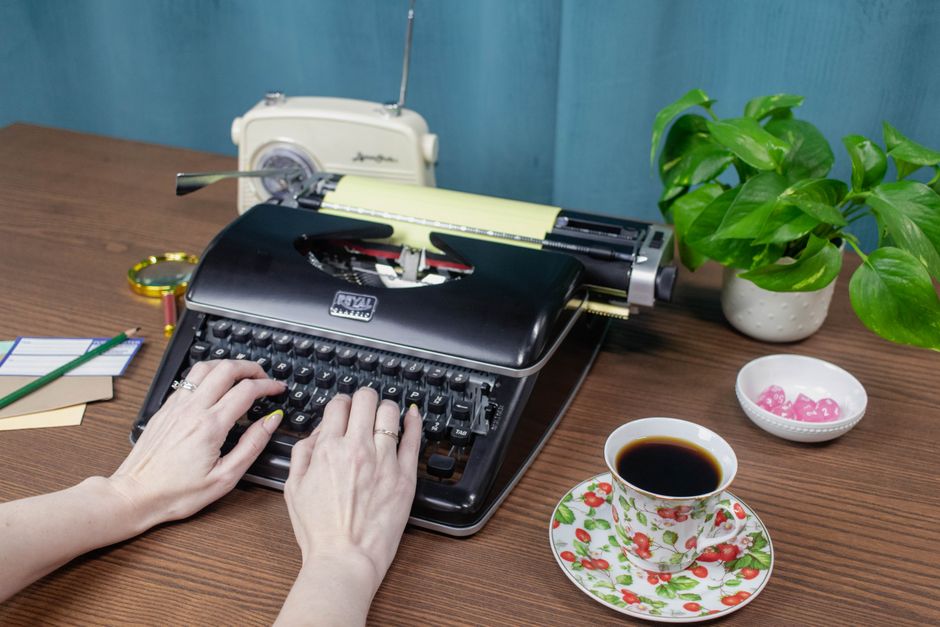
As I sit here, surrounded by the soft glow of screens and the quiet hum of machines, I find myself drawn to a small, unassuming object that has been relegated to the periphery of my daily life: a vintage typewriter. Its keys, yellowed with age and worn smooth by the touch of countless fingers, seem to whisper tales of a bygone era, one in which the act of creation was a deliberate, tactile process.
A World of Contrast
We live in a time of unprecedented technological advancement, where the boundaries between the physical and digital worlds are increasingly blurred. Our lives are a complex interplay of ones and zeros, as we navigate the intricate web of social media, online commerce, and digital entertainment. And yet, amidst this sea of innovation, there exists a growing sense of disconnection, a feeling that something essential has been lost in the relentless march towards progress.
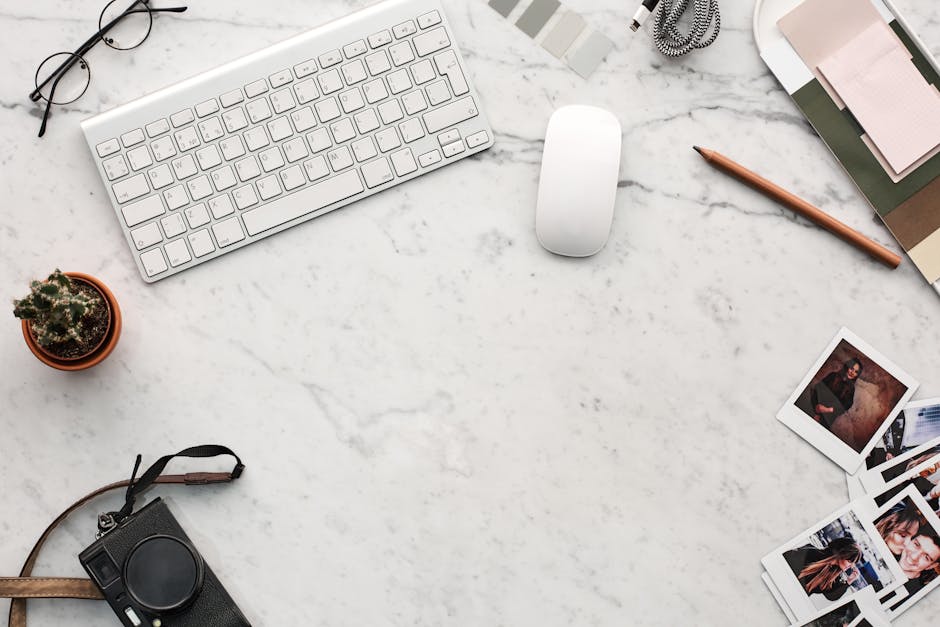
This is where the allure of analog technologies comes in – a testament to the human desire for tangible, hands-on experiences in a world that is increasingly defined by the ephemeral and the virtual. From the resurgence of vinyl records to the proliferation of film photography, it seems that many of us are seeking a sense of authenticity, a connection to the physical world that is unmediated by the cold, calculating logic of machines.
The Power of Tactile Experience
There is something uniquely satisfying about engaging with the world in a tactile way, about feeling the weight and texture of objects, the resistance of materials, and the subtle imperfections that distinguish the handmade from the mass-produced. Whether it's the feel of paper between our fingers, the smell of ink and glue, or the sound of mechanical gears clicking into place, these sensory experiences have a way of grounding us, of reminding us that there is a world beyond the confines of our screens.
This is not to say that digital technologies are inherently inferior, or that they do not have their own unique charms and advantages. Rather, it's a matter of balance, of recognizing that our lives are enriched by a diversity of experiences, and that the analog and digital are not mutually exclusive, but complementary aspects of a broader whole. By embracing the tactile, the imperfect, and the unpredictable, we may just find that our relationship with technology is transformed, that it becomes a tool, rather than a substitute, for human connection and creativity.
As I return to my typewriter, the words begin to flow, each keystroke a deliberate, physical act that imbues the page with a sense of presence, of being. It's a small, quiet moment, one that is easily overlooked in the din of our hyper-connected lives, but it's precisely this kind of experience that I believe we need to cultivate, to nurture, and to pass on to future generations – a reminder that, even in the most advanced, high-tech of worlds, there is still beauty to be found in the simple, the tactile, and the human.