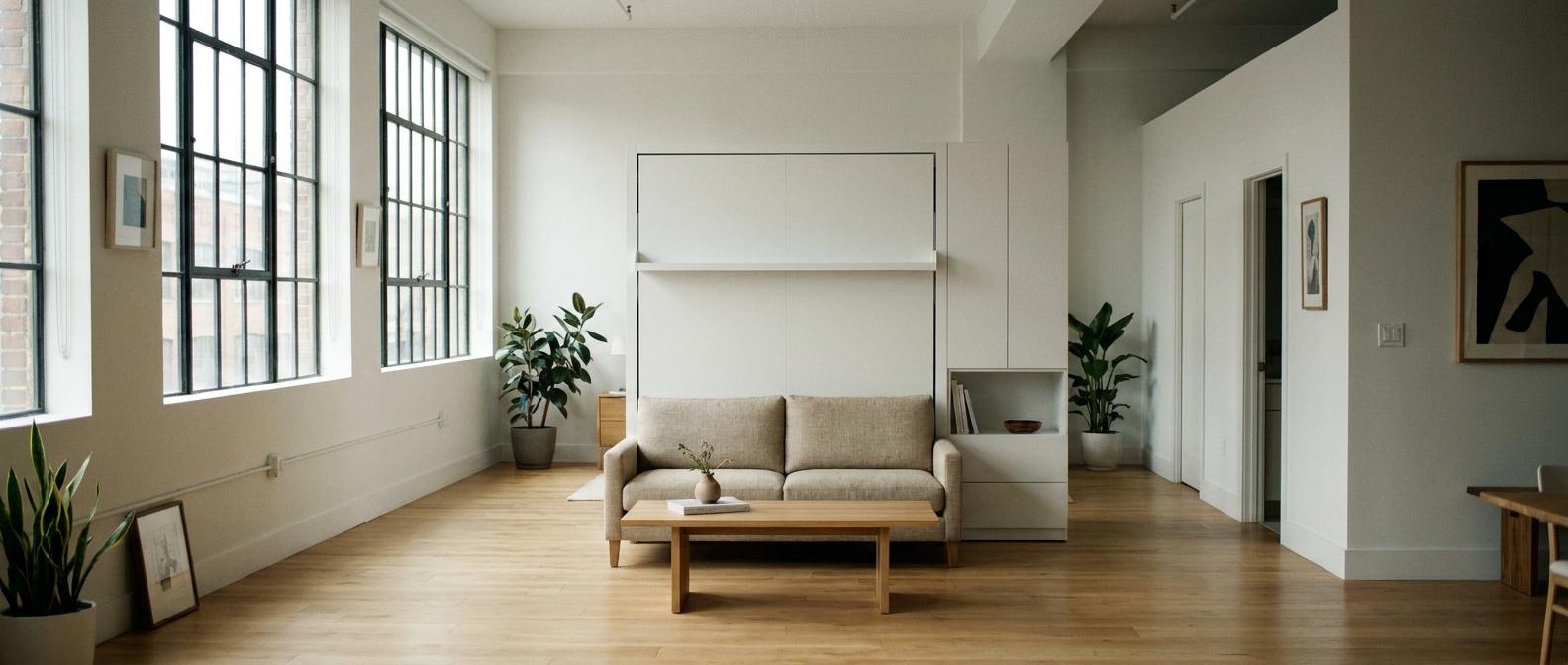
Living in a micro-apartment or a compact studio often feels like a constant negotiation between your lifestyle and your square footage. The friction of a cramped space, where your home office bleeds into your bedroom and your living room lacks the capacity for guests, can make even the most stylish home feel like a cluttered dorm room. To solve this, you need more than just space-saving gadgets. You need a strategic spatial planning framework centered on dual-purpose furniture for small apartments.
This guide moves beyond superficial listicles to explore how high-utility, transforming pieces can coexist with a sophisticated, adult aesthetic. By the end of this piece, you will understand how to select furniture that serves multiple functions without sacrificing comfort or design integrity. The goal is a home that feels twice its actual size through intentional selection and placement.
Quick Answer / Key Takeaway
The 60-Second Rule: Prioritize active transforming furniture that requires less than one minute to convert. High-friction pieces often end up stuck in one position and lose their utility.
Clearance is King: Always measure the open-state footprint of furniture to ensure a minimum 36-inch walkway remains clear for movement.
Balance Visual Weight: Use furniture with tapered legs and light-reflecting neutrals, such as Benjamin Moore White Dove, to prevent high-utility pieces from looking bulky.
Active vs. Passive: Limit a room to two active transforming pieces, like a wall bed, and supplement with passive storage, such as ottomans or benches.
Furniture Strategy Decision Matrix
Furniture Type | Best For | Primary Benefit | Spatial Requirement |
|---|---|---|---|
Transforming | Studios / Micro-units | Changes function entirely (e.g., Desk to Bed) | High (needs open state clearance) |
Modular | Growing households | Reconfigures to fit different layouts | Medium (flexible footprint) |
Integrated Storage | 1-Bedroom Apartments | Hides volume within a static footprint | Low (standard furniture footprint) |
The Spatial Planning Framework for Micro-Living
When you learn how to arrange transforming furniture in studios, you must start with the Rule of Thirds for floor space. A common mistake in small apartments is crowding every wall with storage units. To maintain breathability, never cover more than two-thirds of your floor with furniture. The remaining one-third should be open floor, which allows the eye to travel and creates the illusion of a larger room.
Visual weight is the next pillar of this framework. A sofa that sits flush to the floor with a heavy skirt feels significantly more intrusive than a sofa on tapered legs. The gap between the floor and the base of the furniture allows light to pass through, which reduces the perceived volume of the piece. This is essential when you introduce heavy-duty dual-purpose furniture for small apartments that might otherwise dominate the room.
Hard numbers are your best defense against a cramped layout. You need 36 inches for primary walkways to avoid a feeling of constriction. Between a sofa and a coffee table, maintain 14 to 18 inches of space. For dining areas, ensure you have 24 to 36 inches of clearance behind a chair to allow a person to pull it out and sit down comfortably. Understanding the difference between footprint and volume is the final step. A bed with under-frame drawers has the same footprint as a standard bed, but it utilizes the internal volume that is usually wasted.
Mastering Clearance Zones
Clearance zones are non-negotiable. If you purchase a transforming table that expands to 100 inches, you must ensure that the 100-inch state does not block the path to the kitchen or the bathroom. Use a laser measure to verify these clearances before you commit to a purchase. If a piece of furniture forces you to shuffle sideways to get past it, it is the wrong size for your apartment, regardless of how much storage it offers.
The Psychology of Visual Weight
The psychology of visual weight suggests that our brains equate "seeing the floor" with "having space." When you select pieces like a wall-mounted desk or a floating media console, you trick the brain into thinking the room is larger than its dimensions suggest. Even a large wall bed can feel lighter if it is finished in a color that matches the walls, such as Sherwin-Williams Alabaster, effectively making the unit disappear when it is closed.
The "Hideaway" Home Office: Desks that Disappear
The rise of the "cloffice" (closet office) reflects a growing need to mentally disconnect from work at the end of the day. In a small apartment, seeing your laptop and monitors while you try to relax can lead to burnout. You need a way to hide your desk in the living room or bedroom to maintain a healthy work-life boundary.
One of the most effective solutions is the West Elm Industrial Storage Pop-Up Coffee Table. This piece solves the ergonomic nightmare of working from a sofa. The top lifts up and forward to a height of approximately 24 inches, which is ideal for typing. Inside, it offers hidden peripheral storage for chargers, notebooks, and tablets. It serves as a coffee table during leisure hours and a functional workstation during the day.
The secretary desk is also seeing a revival in adult aesthetic space-saving furniture ideas. A traditional-looking cabinet can mask a full workstation with its fold-down front. When the workday ends, you simply close the lid, and the office clutter is gone. A common mistake to avoid is buying lift-top tables that extend too far forward. If the mechanism pins you against the sofa back, you will find it uncomfortable for long-term use. Verify the extension distance with the manufacturer before buying.
Lift-Top Tables vs. Secretary Desks
Lift-top tables are best for those who live in true studios where the living room is the only available zone for work. They are low-profile and serve two distinct daily functions. Secretary desks are better for those who have a small nook or a bedroom corner to spare. They offer more vertical storage for monitors and reference books, which a coffee table cannot accommodate.
Managing Cable Clutter in Dual-Purpose Zones
Cable management is the enemy of a clean aesthetic. When using dual-purpose pieces, look for integrated cord escapes. If your furniture does not have them, use adhesive cable clips to run wires down the legs of the furniture. For a coffee table desk, a portable power station or a high-capacity battery bank can eliminate the need for a permanent cord trailing across the floor.
Invisible Guest Rooms: Modern Sleeping Solutions
The evolution of the Murphy bed has moved far beyond the squeaky, spring-loaded frames of the past. Modern transforming furniture for studios utilizes hydraulic pistons and aerospace-grade aluminum for smooth, silent operation. These pieces are the gold standard for the best dual-purpose furniture for micro apartments because they reclaim the largest footprint in the home.
A standout in this category is the Resource Furniture Penelope Sofa system. This Italian-engineered piece allows a Queen-size bed to descend over a sofa without the need to remove any seat or back cushions. The sofa simply folds flat underneath the bed. This is the ultimate low-friction transformation. It takes less than 30 seconds to switch from a living room to a bedroom.
When planning for a wall bed, you must tape out the open-state dimensions. A standard Queen wall bed requires about 85 to 90 inches of clearance from the wall when open. If this extension blocks the front door or the path to the bathroom, it creates a safety hazard. Mattress selection also matters when creating a comfortable multifunctional sleeping space, and a Saatva Mattress Review can help readers compare comfort, support, and suitability for different sleeping preferences. Budget tiers for these solutions vary wildly. High-end Italian imports like Clei offer seamless integration and luxury finishes, while manual options like Lori Beds offer a more budget-friendly, wood-based approach that relies on human strength rather than pistons.
The Modern Wall Bed Revolution
The modern wall bed is no longer just a bed in a box. Many units now incorporate shelving, lighting, and even integrated wardrobes on the sides. This turns a single wall into a multi-functional hub. When selecting a unit, look for one that allows for a standard mattress height of 10 to 12 inches. Some cheaper models require thin, uncomfortable mattresses that compromise your sleep quality.
Sleeper Sofas with Passive Storage
If a wall bed is not an option, look for sleeper sofas that include passive storage. Some models feature a chaise lounge that lifts to reveal a large compartment for linens and pillows. This ensures that the items you need to convert the sofa into a bed are stored exactly where they are used. Brands like Innovation Living offer sleek, mid-century modern designs that look like high-end furniture rather than bulky pull-outs.
Entertaining in Micro-Spaces: Expandable Dining
Entertaining in a small apartment often feels impossible, but the console-to-dining transformation is a game-changer. These tables sit at a depth of 18 inches, looking like a simple hallway console. However, they can expand to seat up to 10 people when fully extended. This allows you to host dinner parties without a permanent dining table taking up half your living room.
The Transformer Table is a prime example of this technology. It uses telescoping tracks made of heavy-duty steel to expand from a small console to a full-sized banquet table. One critical factor to check is whether the table has self-storing leaves. If it does not, you will need to find a place in a closet to store the extra table segments when they are not in use.
Zoning a studio is also vital for entertaining. You can use modular apartment furniture ideas like the IKEA Kallax to create a physical boundary between your sleeping and living areas. These units act as vertical, dual-sided storage that zones the room without blocking light. They also provide a surface for drinks or appetizers during a gathering. Safety is paramount here: always anchor tall dividers to wall studs. Never rely on simple drywall anchors for furniture that people might lean against.
From Console to Banquet: Telescoping Tables
Telescoping tables are superior to traditional drop-leaf tables because they offer more stability. A drop-leaf table often has a small center base that can feel wobbly when fully extended. A telescoping table usually moves the legs to the ends of the table as it expands, providing a much sturdier surface for heavy plates and glassware.
Zoning with Functional Room Dividers
A room divider should never be just a screen. It should provide furniture that doubles as hidden storage. Use baskets or bins within the cubbies of a divider to hide clutter. If the divider is placed near the entrance, use the top shelf as a landing strip for keys and mail. This turns a simple partition into a high-utility piece of furniture.
Aesthetic Integration: Making Utility Look High-End
The biggest challenge with dual-purpose furniture is avoiding a "transformer" look that feels mechanical or cheap. To achieve an adult aesthetic, you must focus on color palettes and material mixes. Using light-reflecting neutrals is a proven tactic. For large wall units or wardrobes, match the furniture color to your wall color. A unit finished in Sherwin-Williams Alabaster against a matching wall will visually recede, making the room feel less crowded.
Material contrast is another way to elevate the space. Balance heavy, wood-toned transforming pieces with visually light materials. For example, pair a solid oak transforming table with lucite ghost chairs. The transparency of the chairs prevents the dining area from looking like a heavy block of furniture. Fluted glass is also an excellent material for cabinet doors in small spaces; it obscures the clutter inside while reflecting light and adding texture.
The Japandi influence, a blend of Japanese minimalism and Scandinavian functionality, is perfect for small apartments. This style prioritizes clean lines and hides high-utility mechanisms behind sleek wood slats or matte finishes. You can ground the space with rich accents on smaller, static items. A small armchair in Farrow & Ball Hague Blue or a velvet ottoman provides a focal point that draws the eye away from the larger, functional pieces.
Color Theory for Small Footprints
Stick to a limited color palette. When you have multiple pieces of furniture performing different tasks, a riot of colors can make the room feel chaotic. Use a base of warm whites or soft greys for 70 percent of the room. Use a secondary wood tone for 20 percent, and save the last 10 percent for bold accent colors in your textiles and art.
Material Contrast: Wood, Glass, and Acrylic
Mixing materials prevents a room from looking like a furniture showroom set. If your coffee table is a heavy lift-top wood piece, choose a floor lamp with a slim metal profile and a glass shade. This interplay of "heavy" and "light" materials creates a balanced environment that feels designed rather than just assembled.
Avoiding the "High-Friction" Trap
High-friction furniture is the primary reason why many space-saving efforts fail. If it takes more than a minute to convert a piece of furniture, or if you have to move three other items to get it to work, you will eventually stop using the feature. The 60-second rule is a mandatory filter for any purchase. If a bed requires you to move a heavy coffee table and unbolt two latches, it is a high-friction piece.
Storage furniture also needs internal organization to avoid becoming a junk drawer. An ottoman with a lift-off lid is great for hidden storage in the living room, but without internal bins or rigid dividers, it becomes a black hole for lost items. Use clear packing cubes or labeled bins to categorize the contents so you can find what you need without emptying the entire piece.
Comfort should never be sacrificed for utility. A low-quality futon that doubles as a sofa and a bed but provides a poor experience for both is a bad investment. In some cases, a high-quality air mattress with a built-in pump is better for guests than a rock-hard, cheap sleeper sofa. Finally, remember that moving parts require maintenance. Check the hydraulic struts on your wall bed and tighten the bolts on your expanding table every six months to ensure smooth operation.
The Reality of Daily Transformation
Think about your daily routine. If you are someone who hates making the bed, a Murphy bed that requires you to strap down the blankets every morning might not be for you. Look for models that have enough internal clearance to stay made up, including the pillows. The goal is to make it feel like a natural part of your day, not a chore.
Organizing the "Hidden" Volume
When using furniture that doubles as hidden storage, accessibility is key. Use the most accessible storage for items you use weekly, such as extra throw blankets. Use the harder-to-reach areas, like the back of a deep bed drawer, for seasonal items like winter coats or holiday decorations. This hierarchy of storage ensures that your dual-purpose furniture remains a help rather than a hindrance.
Expert Tips & Pro Moves
The Painter's Tape Test: Before buying any transforming piece, tape the State A and State B footprints on your floor for 48 hours. This allows you to test the traffic flow and see if the piece will actually fit your lifestyle.
Prioritize One-Handed Operation: Look for gas-strut or pneumatic mechanisms that allow for effortless movement. If you have to use significant muscle to lift a table or lower a bed, you will experience transformation fatigue within a month.
Anchor Everything: Any piece that moves or stands tall, such as Murphy beds or high shelving, must be secured to wall studs. Never rely on drywall anchors alone for heavy-use furniture. If you are a renter, look for "no-drill" anchoring kits or speak with your landlord about professional installation.
Frequently Asked Questions
What is the best furniture for a small apartment?
The most impactful piece is a high-quality wall bed (Murphy bed) with an integrated sofa or desk on the front. This allows the same footprint to serve as a living room or office by day and a bedroom by night, effectively doubling your usable square footage without moving a single wall.
How do you maximize space in a micro apartment?
Maximize space by using the Rule of Thirds to keep floor area open and by choosing furniture that utilizes vertical volume. Focus on pieces that serve at least two functions, such as a storage ottoman that acts as a coffee table and extra seating.
What is the difference between modular and transforming furniture?
Modular furniture consists of independent pieces that can be reconfigured into different shapes, like a sectional sofa. Transforming furniture physically changes its function through a mechanical process, such as a desk that folds down into a bed or a console that expands into a dining table.
How can I hide my home office in my bedroom?
Opt for a cloffice or a secretary desk with a fold-down front. These pieces allow you to physically close the lid on your workspace at the end of the day, removing the visual reminder of work and helping to maintain a restful sleep environment.
How do you make space-saving furniture look stylish?
The key is to avoid cheap particleboard and look for pieces made from solid wood, matte metals, and performance fabrics. Match the color of large units to your wall color to make them blend in, and use "visually light" accessories like glass or acrylic to balance the heavier functional pieces.
Closing
Maximizing a small apartment is not about living with less; it is about living smarter with the pieces you choose. By shifting your focus from gadgets to a structured spatial plan, you can create a home that feels both expansive and expensive. Prioritize low-friction transformations and maintain strict clearance zones to ensure your home remains functional. Your next step is to grab a roll of painter's tape and map out the open state of your dream transforming piece. Once you see the floor plan in real-time, you will have the confidence to invest in furniture that finally works as hard as you do.


